Maersk Unveils Dual-Fuel Methanol Vessel as Shipping Industry Pushes for Decarbonization
Maersk’s Latest Move Toward Sustainability
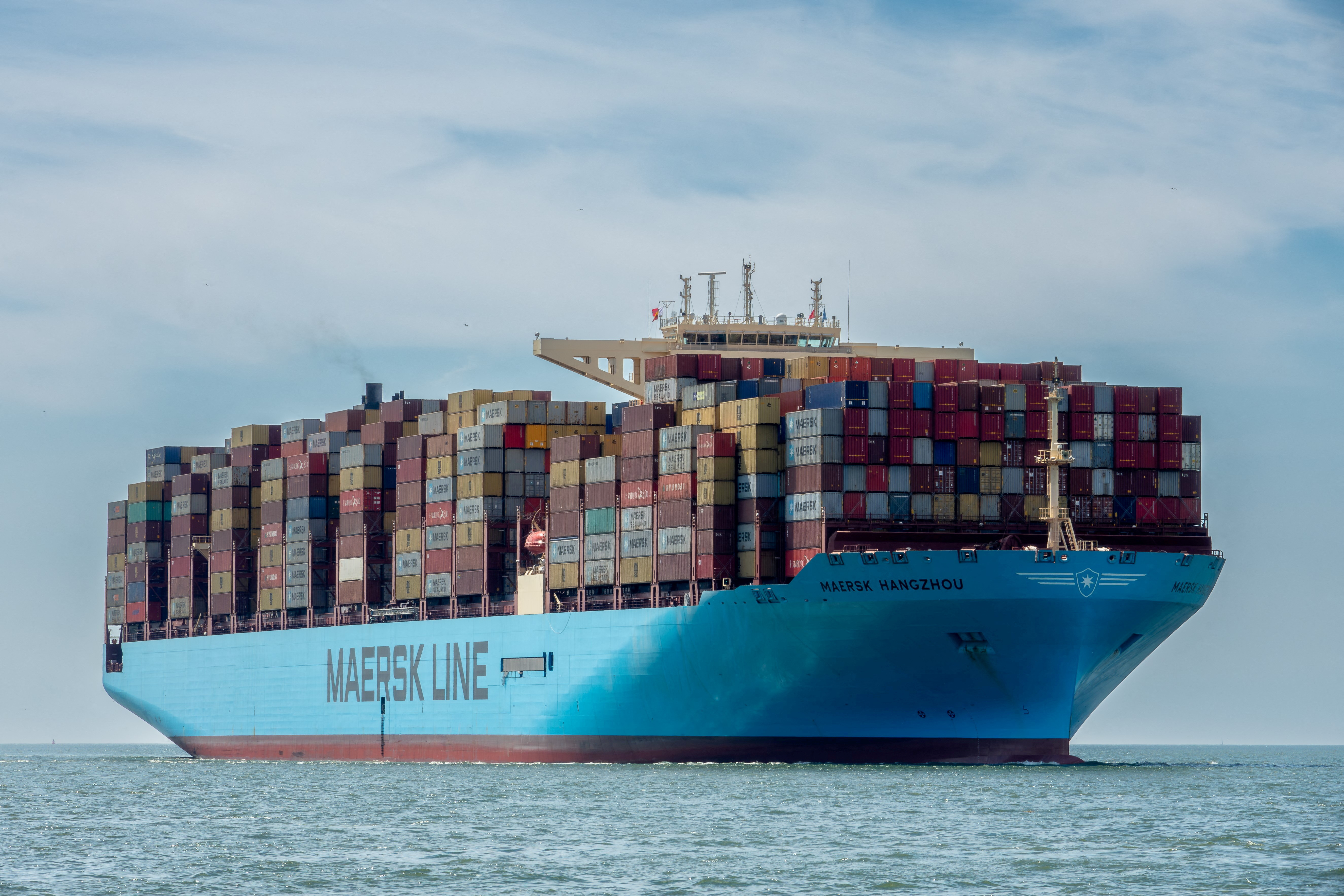
Danish shipping giant Maersk has unveiled its latest dual-fuel methanol vessel, the A.P. Møller, marking a significant step in the company’s decarbonization efforts. The 350-meter-long ship, launched in Southeast Asia, is part of a growing fleet of vessels capable of running on both traditional marine fuels and methanol, a more sustainable alternative.
Ditlev Blicher, Maersk’s president for the Asia-Pacific region, shared in an interview with CNBC’s “Squawk Box Asia” that this technology represents the cutting-edge solution for decarbonizing the shipping industry. “This allows the industry to shift from black fuels or fossil fuels into what we call e-methanol, or green methanol, significantly reducing the carbon outlets of normal shipping,” Blicher said.
Maersk defines green fuels as those offering at least a 65% reduction in greenhouse gas emissions compared to fossil fuels on a lifecycle basis. While methanol is traditionally made from fossil fuels, it can also be produced sustainably from renewable energy sources, as highlighted by the International Renewable Energy Agency.
Environmental Benefits of Green Methanol
Maersk claims that vessels running on green methanol, such as the A.P. Møller, can save up to 280 tons of CO2 per day. This aligns with Maersk’s ambitious goal to achieve net-zero emissions by 2040. In addition to reducing carbon emissions, green methanol has a lower sulfur content, which cuts down on sulfur oxides—pollutants that contribute to air pollution and acid rain.
The A.P. Møller is Maersk’s ninth dual-fuel methanol vessel out of 25 planned to be completed by 2027. According to the company, if just 12 of its existing vessels were replaced with large dual-fuel methanol ships like the A.P. Møller, the company could save 1.5 million metric tons of CO2—almost double the emissions produced by the Municipality of Copenhagen in 2022.
A Step Toward Industry-Wide Change
Maersk, the largest maritime shipper in the world, is setting the pace for the global shipping industry, with other companies also increasingly adopting methanol as an alternative fuel. Blicher noted that about 170 dual-fuel methanol vessels are currently on order across the industry, contributing to the scaling up of this sustainable technology.
As companies look to meet their own decarbonization targets, Maersk is pushing for broader adoption of methanol-based fuels. However, Blicher acknowledges that while building economies of scale is crucial, the cost of producing methanol is currently higher than traditional marine fuels. He believes that further regulatory action will be necessary to incentivize the industry to move away from fossil fuels.
“We’re talking about adding to the price of black fuel to make sure that the black fuel price is reflective of the impact that it has on the economy,” Blicher explained, advocating for regulations that would make fossil fuels more expensive and thus less attractive to the shipping industry.
Singapore’s Role in Sustainable Shipping
Singapore, the world’s largest bunkering port, has been a leader in promoting sustainable shipping practices. The country’s government has expressed strong support for Maersk’s green methanol efforts. Murali Pillai, Singapore’s minister of state for law and transport, highlighted that the arrival of the A.P. Møller reinforces the city-state’s commitment to reducing greenhouse gas emissions. Pillai emphasized the ongoing collaboration with Maersk to establish Singapore as a hub for new maritime fuels.
Maersk’s Strong Financial Performance
In addition to its environmental initiatives, Maersk has seen robust financial results. In October, the company raised its full-year forecasts after reporting strong third-quarter earnings. With revenue of $15.8 billion, up from $12.1 billion the previous year, Maersk attributed its performance to heavy demand and higher prices, particularly due to disruptions in the Red Sea.