Yazılar

Vance Warns Europeans That Heavy AI Regulations Could Stifle Innovation

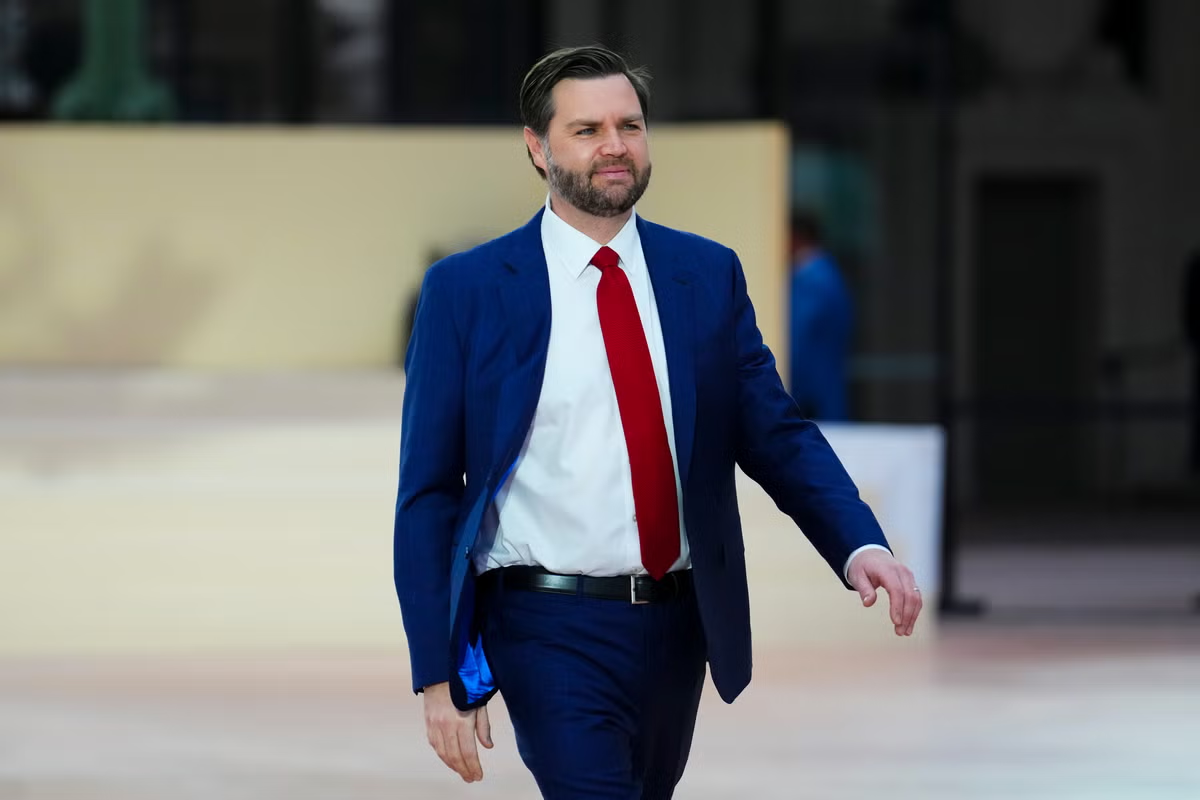
U.S. Vice President JD Vance warned European leaders on Tuesday that heavy regulation on artificial intelligence (AI) could stifle the industry’s potential, arguing that “massive” regulations in Europe might “kill a transformative industry.” Speaking at the AI summit in Paris, Vance expressed opposition to the European Union’s strict regulatory approach, particularly criticizing the Digital Services Act and GDPR privacy rules, which he argued impose legal compliance costs on smaller firms.

Vance emphasized that AI must remain free from ideological bias and rejected the idea of AI being used as a tool for “authoritarian censorship.” In his speech, he argued that while ensuring safety online is important, it should not extend to restricting access to opinions deemed “misinformation” by governments. The U.S. delegation, led by Vance, did not sign the final statement of the summit, which endorsed principles of inclusive, ethical, and safe AI, diverging from the positions of Europe and other countries.

Vance also took the opportunity to address competition from China, warning about partnering with authoritarian regimes, which he said could pose a risk to nations’ information infrastructure. His comments seemed to reference the recent rise of Chinese startup DeepSeek, which challenged U.S. AI leadership with its freely distributed AI model.

While European leaders like French President Macron and European Commission chief Ursula von der Leyen supported trimming regulatory red tape, they stressed that regulation is crucial for ensuring trust in AI. Macron called for “trustworthy AI,” while von der Leyen assured that the EU would reduce bureaucracy and invest more in AI development.

The U.S. and the UK did not explain why they did not sign the final statement, but the decision aligns with their focus on encouraging innovation over regulatory measures. Russell Wald, executive director at the Stanford Institute for Human-Centered Artificial Intelligence, noted that the U.S. policy shift suggests a focus on accelerating innovation rather than safety-focused regulations.

Apple Partners with Alibaba to Introduce AI Features for iPhones in China

Apple has partnered with Alibaba to launch artificial intelligence features for iPhone users in China, a move aimed at addressing months of uncertainty over Apple’s AI strategy in the region, according to The Information. The collaboration could help Apple regain its competitive edge in the Chinese market, where it has been losing ground to local rivals such as Huawei, which has already incorporated AI tools into its smartphones since last year.

Apple’s stock rose by 1.5% following the news, while Alibaba’s U.S.-listed shares saw a 2.6% gain. Apple had initially chosen Baidu as its AI partner, but the Chinese company’s progress in developing models for Apple Intelligence did not meet Apple’s standards. As a result, Apple considered various other AI models from Tencent, ByteDance, Alibaba, and Deepseek but ultimately chose Alibaba for its ability to leverage vast amounts of user data related to shopping and payment habits, which could enhance model training and enable more personalized services.

The Chinese AI features co-developed by Apple and Alibaba are now under review by China’s cyberspace regulator for approval. This development is crucial as Apple’s iPhone sales declined during the holiday quarter, typically its best-performing period, largely due to the absence of AI features in its latest devices. Apple remains optimistic, forecasting strong sales growth for the current quarter.

Baidu CEO Stresses Continued Investment in Cloud Infrastructure Despite DeepSeek’s Success

Baidu CEO Robin Li emphasized the ongoing need for investment in cloud infrastructure and data centers despite the recent success of DeepSeek, a Chinese AI startup. Speaking at the World Government Summit in Dubai on Tuesday, Li highlighted that while DeepSeek has demonstrated impressive efficiency in developing language models using less computing power, the demand for greater computational resources remains crucial.

“The investment in cloud infrastructure is still very much required. To develop models smarter than others, you need more compute,” Li stated, referring to the hardware that enables AI models to train, process data, and generate predictions.

DeepSeek has captured global attention for creating language models that rival leading systems like OpenAI’s GPT while utilizing significantly lower computational resources. This innovation has raised questions about the necessity for massive infrastructure investments, which has been a focal point of many AI companies’ strategies.

Baidu, one of the first Chinese companies to introduce AI products after the launch of OpenAI’s ChatGPT in late 2022, has developed its large language model, Ernie, which the company claims matches the capabilities of GPT-4. However, Ernie has seen limited adoption in the market.

Li, known for making bold statements about China’s AI industry, acknowledged the unexpected nature of innovation, citing DeepSeek’s rapid success as an example. “You just don’t know when and where innovations come from,” Li remarked.

The CEO also noted that the pressure to reduce costs and overcome compute constraints has driven Chinese companies like Baidu to innovate more efficiently. In an apparent shift from his earlier stance, Li recognized the potential of open-source approaches to accelerate AI development. “If you open things up, many people will be curious enough to try it. This will help spread the technology much faster,” he added.