Yazılar

US SEC Crypto Task Force Holds First Roundtable Amid Trump’s Push for Regulatory Overhaul

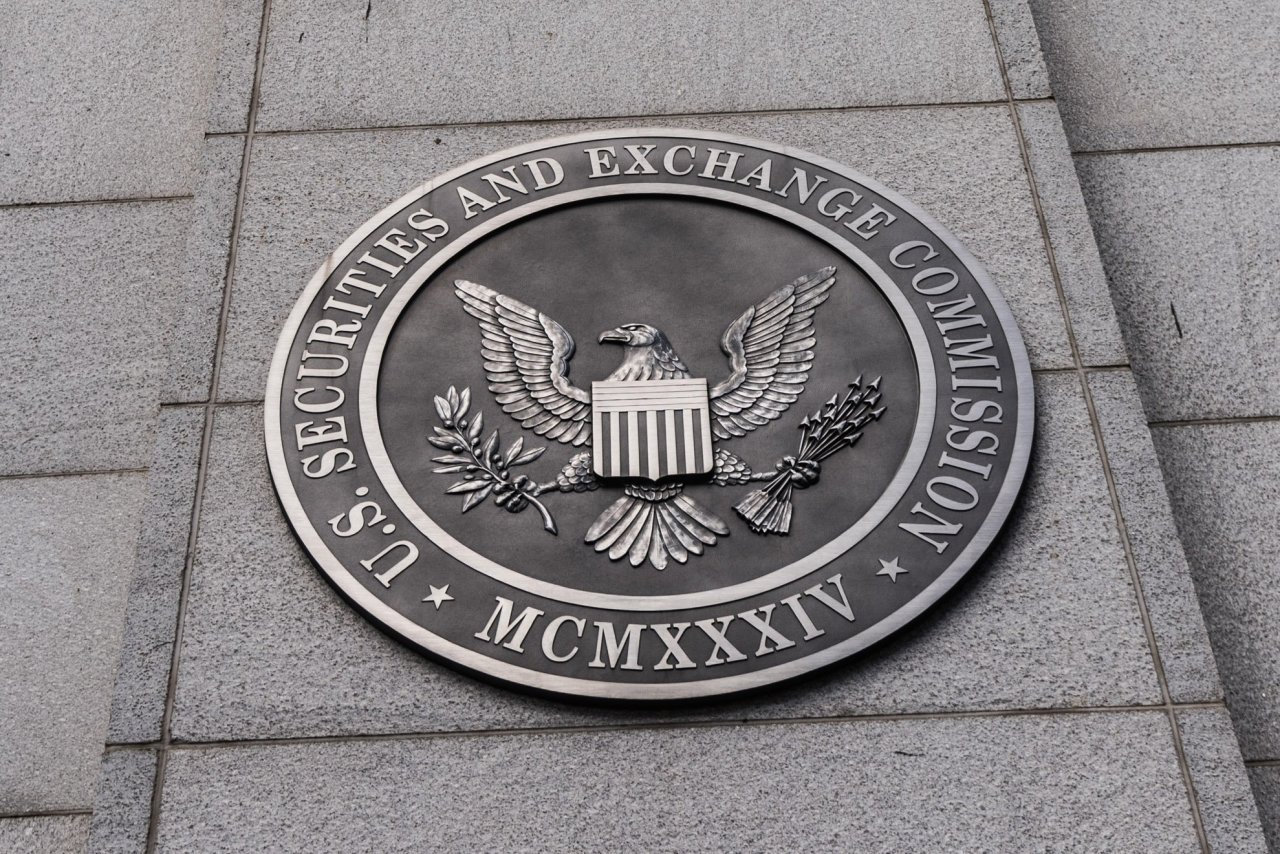
The U.S. Securities and Exchange Commission (SEC) crypto task force convened its first public meeting on Friday, focusing on how existing securities laws might be applied to the rapidly evolving digital asset market. The session is part of a broader push to establish clearer guidelines as the Trump administration looks to reshape the U.S. regulatory landscape for cryptocurrency.

Key figures at the roundtable included John Reed Stark, former head of the SEC’s Office of Internet Enforcement, Miles Jennings, general counsel for a16z crypto, and former SEC Commissioner Troy Paredes. Leading the task force is Republican SEC Commissioner Hester Peirce, who emphasized that the meeting marked a “new beginning” in the commission’s approach to crypto regulation.

The crypto industry has long contended with the SEC over how digital assets should be classified under federal securities laws. Many within the sector argue that tokens should be treated as commodities, not securities, which would exempt them from the SEC’s registration and disclosure requirements.

Trump, who campaigned as a “crypto president,” has pledged to reverse the regulatory crackdown initiated under the Biden administration. This includes withdrawing or pausing several legal cases against crypto companies like Coinbase and Kraken. The task force discussed the potential need for a distinct regulatory framework tailored specifically to digital assets, rather than applying traditional securities laws.

While some, like Jennings, advocated for a “technology-neutral” approach, others, such as Democratic SEC Commissioner Caroline Crenshaw, expressed concern over loosening regulations for cryptocurrencies. Crenshaw warned that creating a separate regulatory regime could weaken protections and harm broader market stability.

This meeting is part of Trump’s broader effort to overhaul U.S. cryptocurrency policies, including his recent executive order to establish a strategic reserve of digital assets and a summit for industry leaders at the White House.
Kraken to Acquire NinjaTrader for $1.5 Billion, Expanding into Multiple Asset Classes

Kraken, one of the world’s largest cryptocurrency exchanges, announced on Thursday that it would acquire retail futures trading platform NinjaTrader for $1.5 billion. This acquisition will allow Kraken to diversify its offerings by expanding into multiple asset classes, including futures and derivatives, while growing its user base.

The deal comes at a time of optimism within the cryptocurrency industry, as many anticipate more relaxed regulations under the leadership of U.S. President Donald Trump. Trump, known for courting crypto donors during the election, has promised support for the sector, fueling hopes of policy shifts that could encourage institutional adoption and provide clearer rules for digital asset trading.

Kraken’s acquisition of NinjaTrader follows a recent legal victory when the U.S. Securities and Exchange Commission (SEC) dismissed a civil lawsuit accusing Kraken of operating illegally as an unregistered securities exchange. Kraken, ranked as the world’s tenth-largest cryptocurrency spot exchange, according to CoinMarketCap, is poised to benefit from the growing demand for diverse financial products that blend traditional and digital assets.

This acquisition highlights the ongoing convergence between crypto companies and traditional financial firms, as the digital asset market continues to gain broader acceptance. Oppenheimer analyst Owen Lau noted that this deal is significant, marking a major crypto company’s expansion into traditional finance. Lau anticipates further deals in this sector, especially under a pro-crypto administration.

NinjaTrader, which has nearly 2 million retail traders, will continue to operate independently under Kraken, with the deal expected to close in the first half of 2025.

Bitcoin’s Bear Market Hits New Investors Hard

Bitcoin’s recent plunge has left many newcomers feeling the pinch, especially those who entered the market during its peak. The largest cryptocurrency, which soared past $100,000 just weeks after the 2024 U.S. presidential election, has since entered a bear market. As of now, Bitcoin is trading at around $80,000, down nearly 25% from its January high. This sharp decline comes amid a global stock sell-off and concerns about U.S. economic policies.

Many of the newer investors, especially those who purchased Bitcoin at its peak and used borrowed money, are now experiencing significant losses. Over the past three months, approximately 20 million new Bitcoin addresses have been created, making up about 1.5% of all Bitcoin addresses. However, the spent output profit ratio, which indicates the ratio between the prices at which Bitcoin is bought and sold, has dropped to 0.95, the lowest level in over a year. This suggests that many of the recent buyers are already locking in substantial losses.

Bitcoin reached an all-time high of $109,071 in January 2024, but has since lost most of its gains. Analysts point to factors such as concerns about U.S. tariffs, the health of the global economy, and a tech sell-off as reasons for the market’s decline. Analysts like Kevin Dede from H.C. Wainwright also express surprise at the $80,000 price level, with many anticipating further downturns.

In addition to the drop in Bitcoin’s price, traders with leveraged positions are facing severe pain. Bitfinex analysts report that daily realized losses for this group have exceeded $800 million, with some of the largest losses occurring on February 28 and March 4. Moreover, investment products tracking digital assets have experienced consistent outflows for four consecutive weeks, with total assets under management dropping to $142 billion, their lowest since mid-November 2024.

U.S. spot Bitcoin ETFs also saw a massive outflow of about $1.1 billion on February 25, marking the largest single-day outflow since their launch. While past corrections have led to calmer periods, Bitcoin’s future seems linked to broader market conditions. Volatility is at a high, with Bitcoin’s implied volatility spiking to 69% and Ether’s volatility rising to 90%. These numbers suggest that investors are bracing for more turbulence in the near term.

Some experts predict that this downturn may be temporary, similar to the market corrections seen in late 2018, and that Bitcoin may ultimately reach higher highs in the future.