
Yazılar

Kraken buys Small Exchange in $100 million deal to expand U.S. derivatives operations

Crypto exchange Kraken has agreed to acquire Small Exchange from IG Group for $100 million, marking a major step toward building a fully U.S.-based derivatives platform that can serve both retail and institutional traders.

Small Exchange holds a Commodity Futures Trading Commission (CFTC) license as a designated contract market, giving Kraken access to a regulated venue for offering futures and options — products that have become central to the digital asset industry’s push for mainstream legitimacy.

“Under CFTC oversight, Kraken can now integrate clearing, risk and matching into one environment that meets the same standards as the largest exchanges in the world,” said Arjun Sethi, Kraken’s co-CEO.

The acquisition reflects a growing trend of digital asset firms entering traditional capital markets, as cryptocurrencies gain wider acceptance and investors demand more sophisticated risk-management tools. Analysts say institutional adoption is accelerating as regulated crypto derivatives gain traction.

“Digital asset firms are no longer content being sideshow players,” said Michael Ashley Schulman of Running Point Capital Advisors. “They aim to wrest seats in the core capital markets ecosystem.”

Kraken described the acquisition as a strategic move to establish “institutional-grade markets” as crypto matures under a more crypto-friendly regulatory climate in the U.S. under President Donald Trump.

Earlier this year, Kraken also announced a $1.5 billion deal to acquire NinjaTrader, another retail futures trading platform, strengthening its position in the fast-growing derivatives segment.

Coinbase invests in India’s CoinDCX at $2.45 billion valuation

Coinbase Global announced on Wednesday that it has made a new investment in CoinDCX, valuing the Indian cryptocurrency exchange at $2.45 billion post-money. The move strengthens Coinbase’s presence in the South Asian crypto market, where India remains a growing hub for blockchain and digital assets.

The investment marks another step in Coinbase’s long-term partnership with CoinDCX, following multiple funding rounds led by its venture arm, Coinbase Ventures. In April 2022, Coinbase Ventures joined a $135 million fundraising round that valued CoinDCX at $2.15 billion.

As of July 2025, CoinDCX reported annualized group revenue of $141 million and $1.2 billion in assets under custody, signaling strong growth despite ongoing regulatory uncertainty in India’s crypto sector.

“We believe India and its neighbors will help shape the future of the global on-chain economy,” said Shan Aggarwal, Coinbase’s chief business officer. He added that the deal remains subject to regulatory approvals and closing conditions.

Coinbase’s latest investment underscores a renewed wave of interest from global exchanges seeking exposure to India’s growing crypto and blockchain ecosystem, even as the country tightens oversight and explores the framework for a digital rupee.

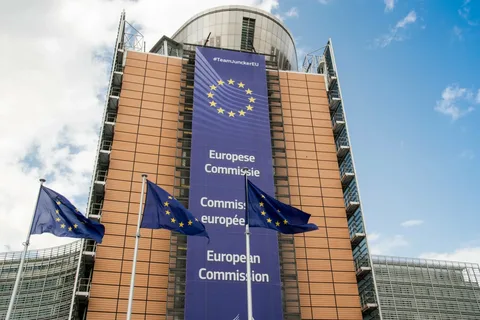
European Commission says MiCA rules already tackle stablecoin risks

The European Commission said on Friday that the EU’s landmark crypto regulation, MiCA, already provides a robust framework to handle risks linked to stablecoins, pushing back against the European Central Bank’s call for stricter safeguards.

Stablecoins—digital tokens tied to fiat currencies like the U.S. dollar or euro—have grown rapidly in recent years, prompting debate over how they should be regulated. While the United States has moved to promote their use, the ECB has warned that some models could threaten financial stability.

At the center of the dispute is whether multinational stablecoin issuers can treat tokens created inside and outside the EU as interchangeable under MiCA’s “multi-issuance” model. In a letter to EU Commissioner Maria Luis Albuquerque this week, six crypto trade groups, including Circle, urged Brussels to clarify that such structures are allowed.

A Commission spokesperson told Reuters that MiCA already provides “a proportionate framework for addressing risks” and said guidance confirming how multi-issuance operates will be published “as soon as possible.”

The ECB’s Systemic Risk Board, chaired by Christine Lagarde, argues that cross-border token issuance could lead to runs on EU reserves if holders outside the bloc attempt to redeem with EU entities during market stress. Stablecoin issuers, however, maintain that adequate reserve management can prevent such instability.

Analysts at J.P. Morgan said this week that 99% of all stablecoins are pegged to the U.S. dollar, noting that the sector’s global expansion could further boost demand for the greenback.