Yazılar

Trump Meets with Intel CEO Tan After Resignation Demands

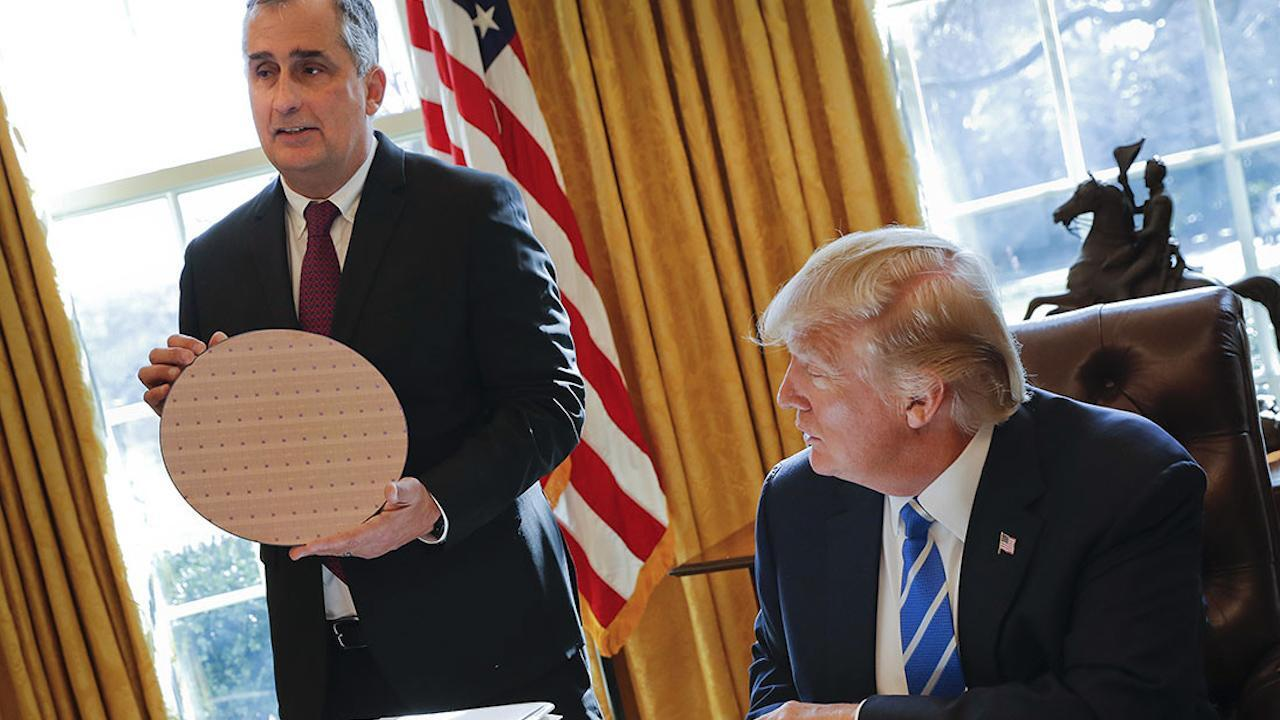
U.S. President Donald Trump met with Intel CEO Lip-Bu Tan on Monday, just days after publicly demanding his resignation over alleged conflicts of interest tied to investments in Chinese firms. Following the meeting, Trump praised Tan, calling the discussion “very interesting.” Intel’s stock rose 3% in extended trading.

Last week, Trump had accused Tan of being “highly conflicted” due to his extensive ties to Chinese companies, some of which were reportedly linked to China’s military. Though such investments are not illegal unless involving entities on the U.S. Treasury’s restricted list, the revelations created uncertainty around Intel’s ongoing turnaround effort.

During the White House meeting, Trump was joined by Commerce Secretary Howard Lutnick and Treasury Secretary Scott Bessent. Trump said the officials, along with Tan, would provide him with further recommendations next week. Despite earlier criticism, Trump acknowledged Tan’s career as “an amazing story.”

Tan, who has been Intel’s CEO for roughly six months, is leading efforts to reposition the company amid heavy losses and fierce competition from Nvidia in the AI chip market. His strategy has included major asset sales, layoffs, and resource reallocation. However, Trump’s intervention—demanding his resignation—has raised concerns among investors and industry insiders that political pressure could derail Intel’s recovery.

Intel released a statement emphasizing Tan’s constructive dialogue with Trump and reaffirming its commitment to U.S. technology and manufacturing leadership. The company pledged to work closely with the administration to “restore this great American company.”

Trump’s direct involvement highlights his unusual influence over corporate governance, following a recent deal requiring Nvidia and AMD to share 15% of their China sales revenue with the U.S. government.

Modi and Lula Discuss Trade, U.S. Tariffs, and BRICS Strategy Amid Trump’s Economic Offensive

Indian Prime Minister Narendra Modi and Brazilian President Luiz Inácio Lula da Silva held a phone call on Thursday, addressing a range of issues including new U.S. tariffs targeting both nations. The discussion came just a day after Lula told Reuters he planned to raise the matter within the BRICS group — comprising Brazil, Russia, India, China, and South Africa — to coordinate a response.

Lula confirmed he would make a state visit to India in early 2026. According to his office, both leaders reviewed the global economic climate and condemned the “unilateral tariffs” recently announced by U.S. President Donald Trump, noting that Brazil and India are currently the hardest hit.

Trump’s latest measures include an additional 25% tariff on Indian goods — raising the total duty to 50% — effective August 28, citing India’s continued purchases of Russian oil. Brazil faces a 50% tariff on most exports, with smaller increases for sectors such as aircraft, energy, and orange juice. Trump linked the move to what he described as a “witch hunt” against former President Jair Bolsonaro, who is on trial for an alleged coup plot after his 2022 election loss.

During their conversation, Modi and Lula reiterated their ambition to boost bilateral trade to over $20 billion annually by 2030, up from roughly $12 billion last year. They agreed to expand the preferential trade agreement between India and the South American trade bloc Mercosur and explored cooperation on digital payment systems.

While Modi’s statement did not explicitly mention Trump or U.S. tariffs, it confirmed that both leaders exchanged views on regional and global issues. India is signaling a possible shift in foreign policy following Washington’s tariff escalation, with Modi preparing for his first visit to China in over seven years — a move that could indicate a strategic rebalancing.

Trump Announces $100 Billion New Apple Investment Pledge to Boost U.S. Manufacturing

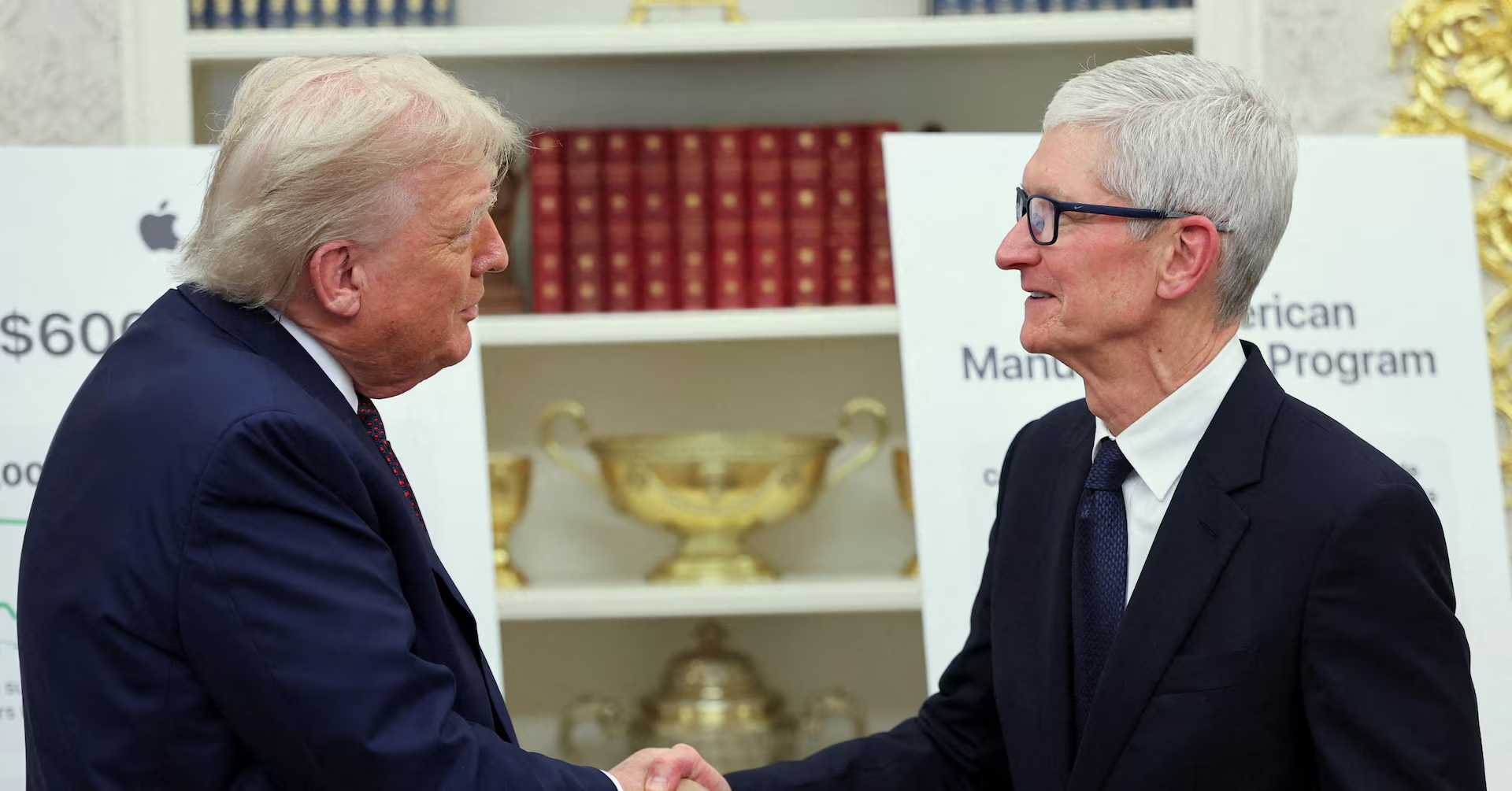
President Donald Trump announced on Wednesday that Apple will invest an additional $100 billion in the United States over the next four years, raising its total U.S. investment commitment to $600 billion. This move aims to expand Apple’s domestic supply chain and advanced manufacturing footprint, potentially helping the company avoid U.S. tariffs on imported iPhones.

Trump emphasized that companies like Apple are “coming home,” framing the investment as a step toward his goal of ensuring iPhones sold in America are also made domestically. Apple CEO Tim Cook acknowledged that while many components such as semiconductors, glass, and Face ID modules are already produced in the U.S., final assembly of iPhones will continue overseas “for a while.”

Despite the significance of the pledge, analysts note it aligns with Apple’s typical spending patterns and echoes similar commitments made under both the Biden administration and Trump’s previous term. In May, Trump had threatened Apple with a 25% tariff on products manufactured abroad—a policy reversal that cost Apple $800 million in the recent quarter.

Apple’s history with U.S. manufacturing investments has been mixed. For example, a Texas factory touted in 2019 as a new site had been producing Apple computers since 2013 and later shifted production overseas. Most Apple products, including iPhones and iPads, continue to be manufactured mainly in Asia, although some production has moved to Vietnam, Thailand, and India.

Experts agree that full iPhone assembly in the U.S. is unrealistic due to high labor costs and complex global supply chains. Nancy Tengler, CEO of Laffer Tengler Investments, called the announcement “a savvy solution” to the president’s demand for domestic production.

Apple’s U.S. investment partners include specialty glass maker Corning, semiconductor equipment supplier Applied Materials, and chipmakers Texas Instruments, GlobalFoundries, Broadcom, and Samsung. Notably, Samsung will supply chips made at its Texas plant for Apple devices, while GlobalWafers will provide silicon wafers from its Texas facility.

Following the announcement, Apple shares rose 5%, Corning shares increased nearly 4%, and Applied Materials gained almost 2% in after-hours trading.