Yazılar

Xpeng and Volkswagen Partner to Build Ultra-Fast EV Charging Network in China

Xpeng Motors and Volkswagen have expanded their collaboration to build an ultra-fast electric vehicle (EV) charging network in China, the companies announced on Monday. This partnership will allow the two automakers to share their fast-charging networks, which together consist of more than 20,000 charging points across 420 cities in China.

The companies have signed a memorandum of understanding (MoU) that enables each other’s customers to use their respective charging stations. In addition, Xpeng and Volkswagen plan to explore the construction of co-branded ultra-fast charging stations to further enhance the EV charging infrastructure in the country.

The collaboration builds on their 2023 partnership, when Volkswagen acquired a 4.99% stake in Xpeng for approximately $700 million. As part of the agreement, the automakers are also working on jointly launching two Volkswagen-branded electric models by 2026. Volkswagen has also developed a new architecture for intelligent and electric vehicles in collaboration with Xpeng, with the aim of offering more affordable EVs in China, its largest market.

 

Hyundai Launches $18,000 EV in Japan to Target Market Dominated by Local Brands

Hyundai Motor has unveiled its plans to introduce the affordable Inster compact electric vehicle (EV) in Japan, priced at 2.85 million yen ($18,000). This marks the cheapest electric vehicle in Japan’s compact car market and is part of Hyundai’s strategy to penetrate a market long dominated by local giants like Toyota, Honda, and Nissan, who have well-established petrol and hybrid vehicle technologies.

The Inster, which debuted in Europe last year and was originally launched in South Korea as the Casper Electric, aims to appeal to Japanese consumers by offering an EV at a lower price point than competitors. For instance, BYD’s Dolphin, launched in 2023, is priced at 3.63 million yen, making Hyundai’s new model a more cost-effective alternative. Deliveries of the Inster in Japan are set to begin in May, as announced by Hyundai Mobility Japan CEO Toshiyuki Shimegi during the Tokyo Auto Salon.

The Japanese EV market has been slow to adopt electric vehicles, with the Nissan Sakura, the most popular EV in Japan, priced at 2.60 million yen, seeing a 40% sales drop last year, with fewer than 23,000 units sold. Despite this, Japan’s passenger car market remains sizable, with approximately 4 million vehicles sold annually.

Hyundai, which has set a goal to increase its sales in Japan by tenfold over the next five years, has faced stiff competition in the market. In 2024, Hyundai sold only 607 vehicles in Japan, while BYD sold 2,223 units. Hyundai’s return to Japan’s passenger car market in 2022, focusing exclusively on electric and fuel-cell vehicles, follows its exit in 2009 due to low sales. The Inster is expected to play a pivotal role in helping Hyundai gain recognition and grow its presence in the Japanese market, a sector largely dominated by Toyota and other local manufacturers.


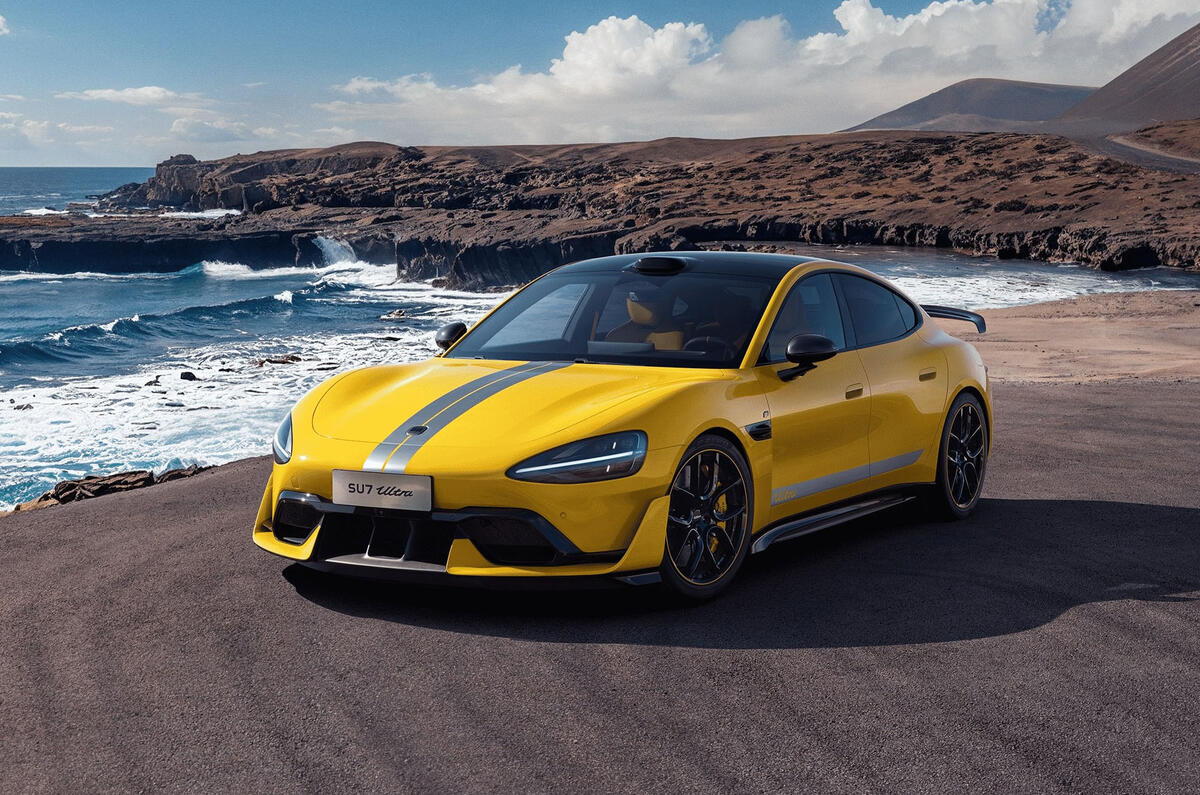
Xiaomi SU7 Ultra Featuring HyperEngine V8s Electric Motors Set for October 29 Launch: Key Details Unveiled

Xiaomi Gears Up for the Launch of Performance-Driven SU7 Ultra EV

Xiaomi’s foray into the electric vehicle (EV) industry is gaining traction with the upcoming launch of the Xiaomi SU7 Ultra, a high-performance version of its debut EV, the Xiaomi SU7. Initially introduced as a prototype in July, the SU7 Ultra has captured attention for its impressive specifications and marks Xiaomi’s expansion beyond consumer electronics into the automotive world. Following the success of the original Xiaomi SU7, a luxury-focused four-door sedan, the SU7 Ultra is set to cater to enthusiasts who prioritize speed and advanced technology in their EVs. With a triple electric motor setup, Xiaomi claims the SU7 Ultra can accelerate from 0 to 100 kilometers per hour in a lightning-fast 1.97 seconds.

As the official launch date approaches, anticipation in the Chinese market is high, with Xiaomi confirming that the SU7 Ultra will be unveiled on October 29. Months of testing have reportedly gone into fine-tuning the vehicle’s performance, ensuring it meets the demands of a growing EV market. The company has strategically timed this launch alongside its new Xiaomi 15 smartphone series, aiming to showcase its advancements across different tech sectors in a single event. This launch marks a milestone for Xiaomi, positioning it as a competitive player in the evolving EV landscape.

Xiaomi has already opened pre-orders for the SU7 Ultra on its website, allowing customers to reserve their vehicles through Xiaomi’s official partner dealerships across China. Early bookings are expected to generate strong initial sales, especially among fans eager to experience Xiaomi’s cutting-edge technology applied in the EV space. Though the price has not yet been confirmed, industry experts suggest it could align with high-end EV pricing, reflecting its premium specifications and Xiaomi’s goal to compete with established automakers.

The SU7 Ultra’s debut is part of Xiaomi’s broader strategy to diversify its product offerings, extending its reputation for innovative consumer technology into the automotive sector. Leveraging its experience in software and hardware integration, Xiaomi’s entry into EVs underscores the company’s ambition to become a key player in the smart vehicle market. As the launch date draws near, Xiaomi is setting expectations for a game-changing addition to the performance EV category.