Yazılar

France, UAE Agree to Build $30-$50 Billion AI Data Centre

France and the United Arab Emirates (UAE) reached a framework agreement on Thursday to establish a 1-gigawatt artificial intelligence (AI) data centre, representing an investment of between $30 billion and $50 billion, according to the French presidency.

The deal was finalized during a meeting between French President Emmanuel Macron and UAE President Sheikh Mohamed bin Zayed al-Nahyan. The two leaders met ahead of an AI summit scheduled for February 10-11 in Paris, which will bring together representatives from about 100 countries to explore AI’s potential and discuss strategic initiatives.

The summit aims to bolster France and Europe’s position in AI, as they seek to compete with the U.S. and China, both leaders in the development of energy-intensive AI technologies.

In a joint statement, Macron and Sheikh Mohamed expressed a shared commitment to forming a strategic partnership in AI. The partnership will encompass investments in both nations’ AI ecosystems, the acquisition of advanced chips, development of data centres, talent cultivation, and the creation of virtual data embassies to support sovereign AI and cloud infrastructures in France and the UAE.

The first announcements on investments under this partnership will be made later this year at the “Choose France” summit. Meanwhile, the French government has identified 35 potential locations for AI data centres across the country.
French Prime Minister Michel Barnier Resigns Amid Deepening Political Crisis

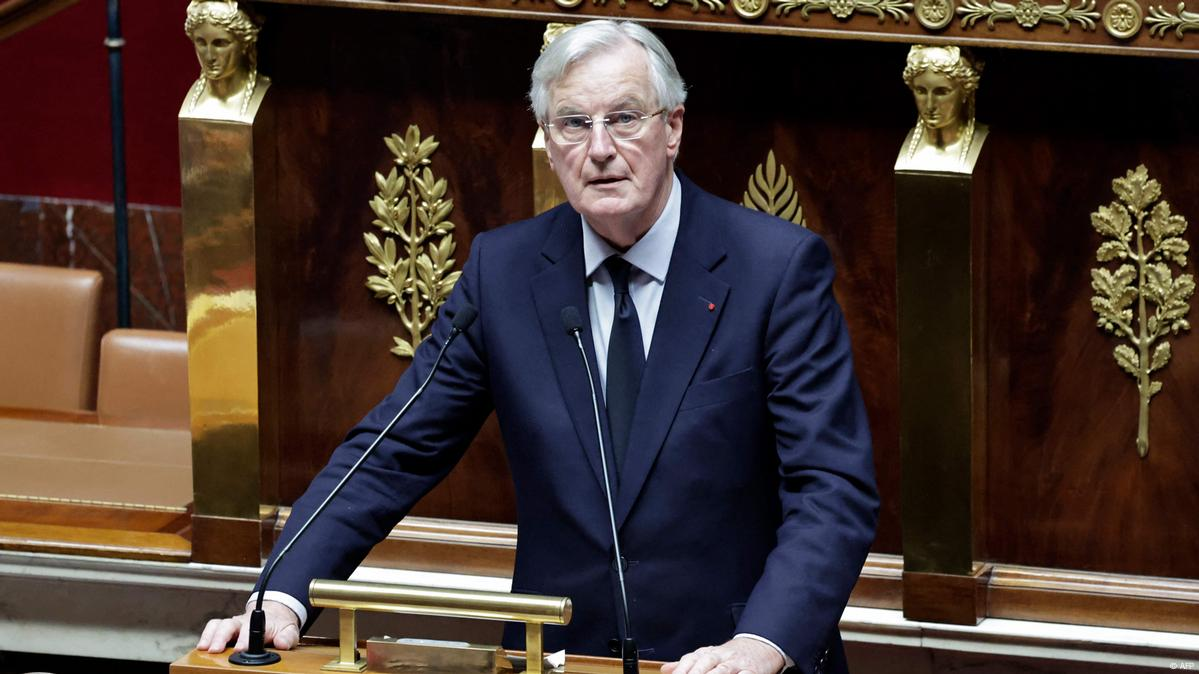
French Prime Minister Michel Barnier announced his resignation on Thursday following a no-confidence vote by far-right and left-wing lawmakers, further plunging France into political turmoil. His tenure will be the shortest in modern French history, ending as he formally submits his resignation at 10 a.m. local time (0900 GMT).

The no-confidence vote was a response to Barnier’s attempt to push through a controversial budget proposal without parliamentary approval. The proposed budget aimed to cut €60 billion ($63 billion) to reduce France’s widening deficit, a move criticized by Marine Le Pen’s far-right National Rally for disproportionately impacting working-class citizens.

A Crisis in Leadership

Barnier’s resignation marks a historic political moment, with no French government losing a confidence vote since Georges Pompidou’s administration in 1962. The crisis highlights growing divisions within French politics, as well as the diminished authority of President Emmanuel Macron, who has faced mounting calls to step down. An online poll conducted after the vote revealed that 64% of voters believe Macron should resign, though his mandate extends until 2027, and he cannot be forced out of office.

The political chaos stems from Macron’s contentious decision to call a snap election in June, leaving the current parliament fractured and unruly. Marine Le Pen blamed Macron for the ongoing instability, saying, “The dissolution [of parliament] and censorship [of the government] are the consequence of his policies and the considerable divide between him and the French.”

Economic and Political Fallout

The no-confidence vote has left France without a stable government or an approved budget for 2025. While the constitution allows for special measures to prevent a government shutdown, uncertainty over leadership is expected to weigh heavily on the economy. French sovereign bonds and stocks have already felt the impact, with the risk premium on French debt reaching its highest level in over 12 years.

Analysts at Société Générale warned that prolonged political uncertainty could dampen investment and consumer spending. “Until potential new elections, ongoing political uncertainty is likely to keep the risk premium on French assets elevated,” the analysts noted.

Xavier Bertrand, a prominent conservative politician, expressed frustration over the situation. “It’s as if the two extremes, [the hard-left] France Unbowed and the National Rally, have become the center of political life,” he remarked.

A Race to Restore Stability

President Macron is reportedly aiming to appoint a new prime minister swiftly, with sources suggesting an announcement could come before Saturday’s Notre-Dame Cathedral reopening ceremony, which U.S. President-elect Donald Trump is scheduled to attend. However, any new premier will face the same challenges in navigating a deeply divided parliament, where new elections cannot be held until July.

The broader implications extend beyond France, as the political upheaval adds to the European Union’s existing challenges, including Germany’s coalition government collapse. With critical economic policies on hold and widespread voter dissatisfaction, the crisis underscores the growing polarization in France’s political landscape.

Macron Praises Artisans for Notre-Dame Cathedral Restoration Ahead of Reopening

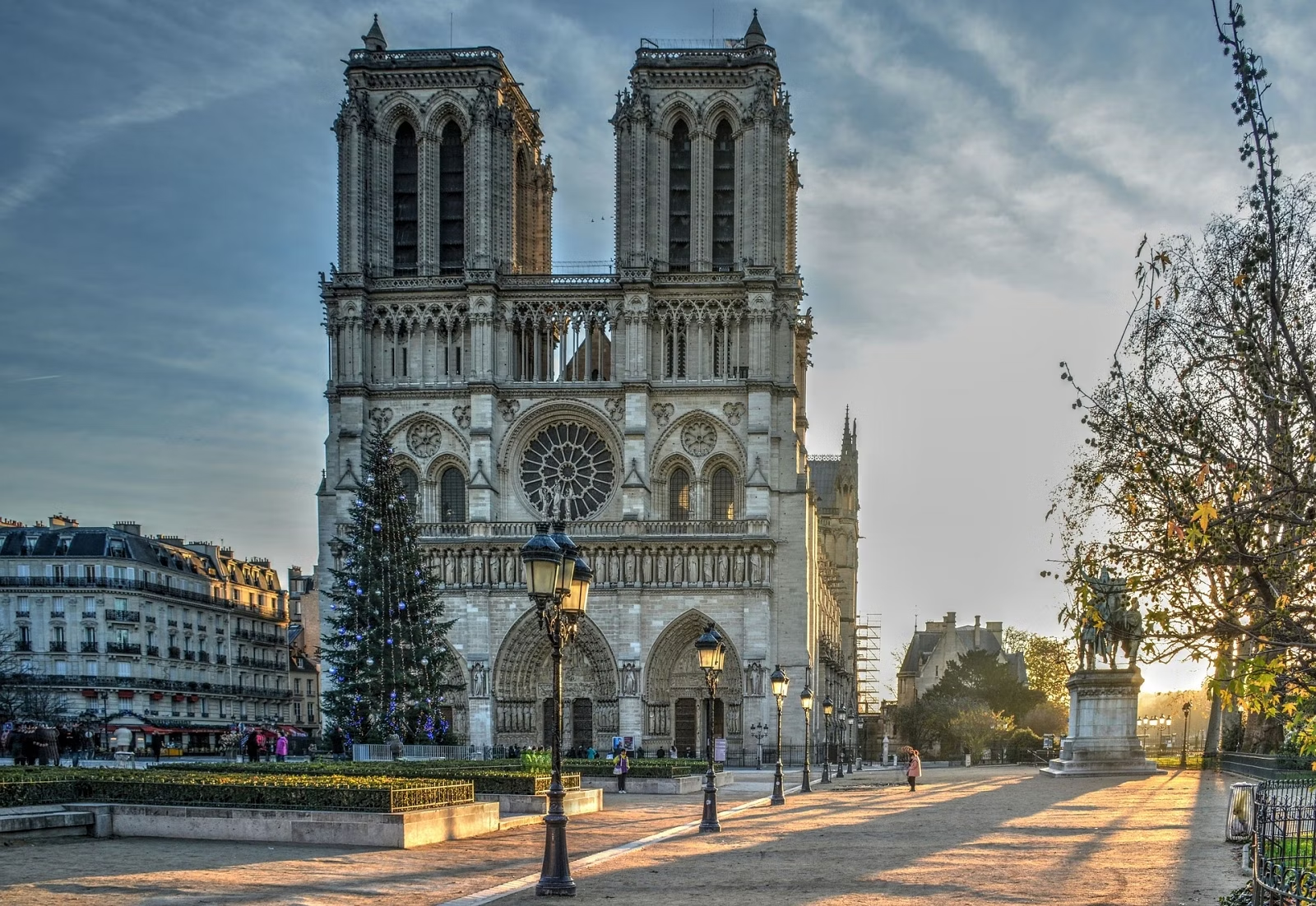
French President Emmanuel Macron commended the over 1,000 craftspeople who contributed to the restoration of Notre-Dame Cathedral, calling it “the project of the century.” The historic cathedral, a beloved Parisian landmark, is set to reopen next week, over five years after a devastating fire in April 2019 ravaged its structure.

Speaking at a ceremony on Friday, Macron addressed an audience of artisans, firefighters, donors, and other contributors, including members of the renowned Compagnons du Devoir, an elite guild of France’s top artisans. “The burning of Notre-Dame was a national wound, and you were its remedy,” Macron stated. His gratitude culminated in an enthusiastic round of applause from the attendees.

The meticulous reconstruction restored the cathedral’s iconic spire, rib vaulting, flying buttresses, stained-glass windows, and ornate gargoyles. The building now gleams with a renewed brilliance, its white stone and gold accents more vibrant than before.

The restoration is a stark contrast to the catastrophic scenes of April 15, 2019, when the cathedral’s roof and spire collapsed in a massive blaze that nearly consumed its bell towers. Macron toured the renewed nave alongside his wife Brigitte, Paris Mayor Anne Hidalgo, and senior officials, describing the experience as “overwhelming.”

Exceptional Achievement
Stone-carver Samir Abbas, one of the many workers involved, expressed relief at the project’s timely completion, calling it “an exceptional renovation project.”

The cathedral will host an opening ceremony on December 7, featuring high-profile guests, including possibly U.S. First Lady Jill Biden, although Donald Trump’s attendance remains unconfirmed. Celebratory Masses will follow, honoring those who contributed to the restoration.

Global donations exceeded €840 million ($882 million), leaving additional funds available for future investments in the cathedral. Paris Archbishop Laurent Ulrich celebrated the achievement, stating, “Hundreds of thousands of people committed to what seemed like an impossible bet: to restore the cathedral within five years.”

With the reopening, Notre-Dame is expected to welcome up to 15 million visitors annually. Local residents shared their excitement. Architect Sebastien Truchot called the restoration “amazing,” while bookseller Albert Abid described it as a long-awaited “relief.”