Yazılar

Italy’s Defence Minister Denies Any Agreement with Starlink for Secure Communications

Italy’s Defence Minister, Guido Crosetto, sought to calm political tensions on Wednesday following reports that Italy was in talks with Elon Musk’s Starlink to supply secure communications for the military. Crosetto clarified to parliament that no contracts or agreements had been signed with SpaceX, the company behind Starlink, and that the defence ministry had not approved any such deal.

Musk had earlier indicated his willingness to assist Italy, mentioning that Starlink’s satellite-based system could provide secure communications for Italian diplomats and defence officials operating in sensitive Mediterranean regions. A reported €1.5 billion ($1.6 billion) deal over five years has drawn sharp criticism from opposition parties, raising concerns about entrusting such an important service to a private company owned by Musk.

Crosetto emphasized that Italy was still evaluating various technical solutions for encrypted communications and suggested that the country could develop its own equipment if necessary. He also referred to Musk’s comments about other European countries potentially using the system once it was in place in Italy.

Opposition lawmaker Nicola Fratoianni expressed concern over Crosetto’s stance, arguing that national security should not be entrusted to a private monopolist. The possibility of Starlink offering a quicker solution compared to the EU’s IRIS2 satellite constellation has added urgency to the debate.

Ferdinando Nelli Feroci, former Italian ambassador and head of a foreign policy think tank, advised that the matter should be approached with transparency and an open public tender process. He noted that if multiple bidders were involved, and Musk’s proposal emerged as the best option in terms of cost, benefits, and quality, it could be considered.

 

EU Court Imposes Fine on EU for Breaching Own Data Protection Law

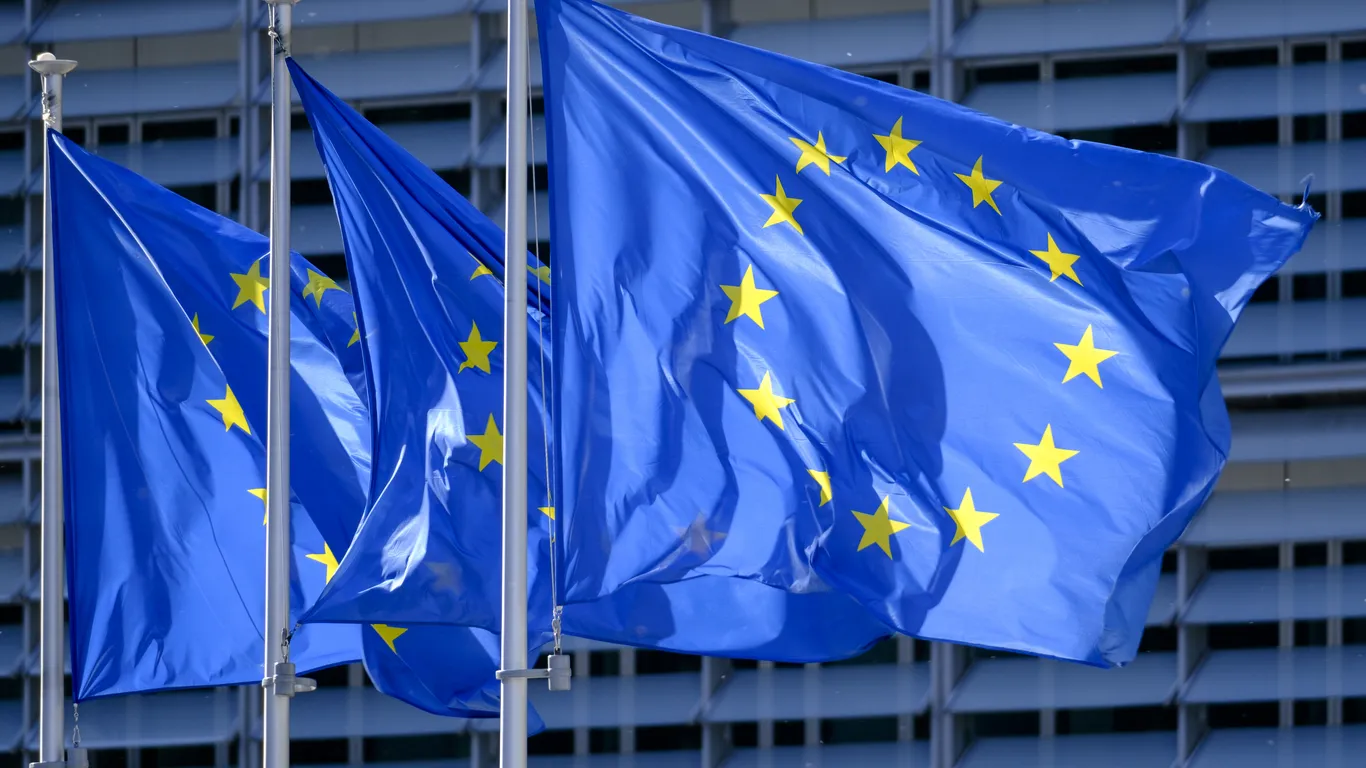
In a landmark decision, the EU General Court ruled on Wednesday that the European Commission must pay compensation to a German citizen for breaching its own data protection laws. The court found that the Commission transferred the citizen’s personal data to the United States without adequate safeguards, in violation of the EU’s General Data Protection Regulation (GDPR).

The case stemmed from the individual using the “Sign in with Facebook” option to register for a conference via the EU login page. The court concluded that the Commission’s transfer of the user’s IP address to Meta Platforms in the U.S. was unlawful, as it did not meet the required data protection standards set out by the GDPR. As a result, the Commission was ordered to pay the citizen 400 euros ($412) in damages.

A spokesperson for the European Commission acknowledged the ruling and stated that it would carefully assess the judgment and its implications. This decision marks a significant development in the enforcement of GDPR, a regulation widely considered to be among the most robust data privacy laws globally. Many major companies, including Meta, LinkedIn, and Klarna, have faced heavy fines from the EU for failing to comply with these regulations.


EU Seeks Tech Investment Review to Guard Economic Security

The European Commission has called on the 27 EU member states to conduct a comprehensive 15-month risk assessment of outbound investments in key technologies, including semiconductors, artificial intelligence (AI), and quantum technologies. This move is part of a broader effort to safeguard the EU’s economic security and prevent the transfer of critical technologies to potentially hostile foreign entities.

Overview of the Risk Assessment Request

The European Commission has requested that EU members review their companies’ investments in non-EU countries dating back to January 2021. The review should provide an interim progress report by July 2025 and a final assessment by June 2026. The aim is to identify any potential risks associated with technology transfers that could be exploited by rival states or military entities, especially in light of recent global security challenges.

Background and Rationale

This initiative is part of the EU’s ongoing efforts to bolster economic security, which have gained importance in response to multiple global crises, such as the COVID-19 pandemic, Russia’s invasion of Ukraine, and rising cyberattacks. The EU is particularly focused on technologies that could be leveraged for military or intelligence purposes by adversarial nations like China, which has raised concerns over technology leakage in the past.

The EU’s strategy, which was first laid out a year ago, includes more stringent oversight of foreign investments and exports, as well as enhanced controls on technology outflows. This is seen as a critical measure in ensuring that European companies do not inadvertently facilitate the advancement of hostile powers through uncontrolled technology transfers.

Potential for Further Action

The review will provide valuable insights into the scale of risks posed by current investment patterns and help the EU determine whether additional regulatory measures are necessary at either the national or EU-wide level. This could lead to more specific restrictions or guidelines governing investments in high-tech sectors that are deemed vital for the EU’s strategic interests.