
Yazılar

PayPal Shares Drop Amid EU Lawmaker’s Comments on Potential New Fees

PayPal’s shares experienced a 5% drop on Friday following concerns raised by European Union lawmaker Bernd Lange about the possibility of new fees on U.S. tech companies like PayPal and Google due to escalating trade tensions between the U.S. and Europe. Lange, who leads the European Parliament’s international trade committee, suggested that digital service providers, including PayPal, could face additional charges as part of the EU’s response to the U.S.’s tariff threats.

The announcement follows comments from U.S. President Donald Trump, who indicated the possibility of higher tariffs on both the European Union and Canada if they collaborate in a manner that harms the U.S. economy. While the idea of imposing tariffs on digital services is complicated, due to the reliance on digital transactions rather than physical goods, the potential for such measures has contributed to investor anxiety.

A spokesperson from the German government echoed Lange’s comments, stating that “nothing is off the table” in terms of possible retaliatory actions. Despite these tensions, PayPal declined to provide further comment.

Analysts expressed doubt over the actual likelihood of these measures being enacted, with Argus Research analyst Stephen Biggar describing the situation as “sell first and ask questions later.” The potential implementation of tariffs on finance and payments remains uncertain, but the fear of such measures has triggered volatility in the stock market.
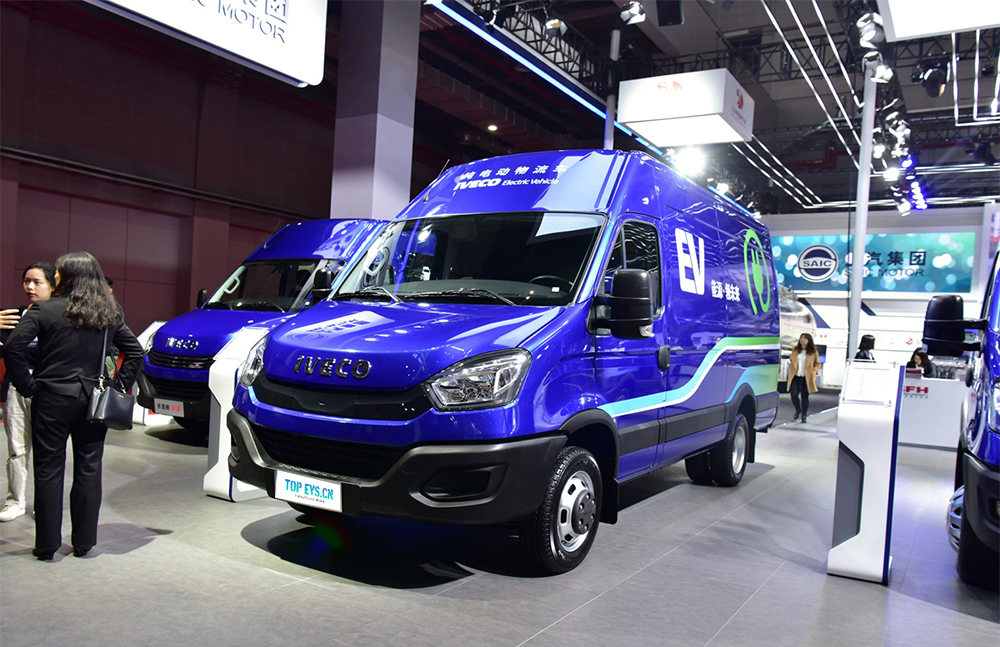
Stellantis to Provide Two EV Vans to Iveco for European Market Expansion

Stellantis and Iveco announced a new agreement on Friday in which Stellantis will supply Iveco with two fully-electric (EV) van models, marking a significant step in Iveco’s expansion of its electric vehicle lineup in Europe. The vans, produced by Stellantis, are expected to go on sale by mid-2026, under a ten-year supply agreement. Financial terms of the deal were not disclosed.

The new EV vans will be based on Stellantis’ mid- and large-sized EV van platforms, and will be manufactured at Stellantis’ plants in Atessa (Italy), Gliwice (Poland), and Hordain (France). Once produced, the vans will be distributed across Europe, including the United Kingdom, through Iveco’s established channels.

The two upcoming vans, with gross vehicle weights ranging from 2.8 to 3.1 tons and 3.5 to 4.25 tons, are designed to complement Iveco’s existing battery electric vehicle (BEV) offerings. These vans will help extend the brand’s footprint in the lighter weight segment of the European EV market.

This new partnership follows a similar agreement that Iveco reached last year with Hyundai Motor for the supply of a mid-sized electric van in the 2.5-3.5 ton weight range, further expanding its EV portfolio. Iveco Group, controlled by Exor, the investment arm of Italy’s Agnelli family, is also the largest shareholder in Stellantis.

Ecarx in Talks with Volkswagen to Develop Smart Cars for Europe, US

Ecarx, a Chinese digital cockpit system developer, is in discussions with Volkswagen to integrate its advanced technologies into smart cars for developed markets, including Europe and the United States, according to Ecarx’s CEO, Shen Ziyu. The two companies are looking to extend their current partnership, which already includes collaboration in Brazil and India. In these markets, Ecarx’s Antora 1000 digital cockpit system—featuring proprietary chips, voice recognition, and navigation services—powers Volkswagen’s smart car offerings.

The expanded partnership would bring Ecarx’s products into Skoda-branded cars sold in Europe. Shen confirmed discussions about entering the U.S. market, although the current deal with Volkswagen does not yet include this scope. However, Ecarx’s technologies are already present in Volvo and Lotus vehicles in the U.S., as both brands are owned by Geely, the parent company of Ecarx.

A Volkswagen spokesperson clarified that the cooperation with Ecarx is currently limited to providing an infotainment system for internal combustion engine vehicles sold in Brazil and India, with no other technical involvement at this stage. Meanwhile, Skoda declined to comment on the ongoing discussions.

This move highlights growing interest among Western automakers in leveraging Chinese expertise in smart driving technologies. As traditional car sales have been hit by declining demand in China, companies like Volkswagen are turning to Chinese suppliers to stay competitive in the global market. Mercedes-Benz recently made headlines by collaborating with Hesai, a Chinese firm, to equip its vehicles with lidar sensors, marking the first instance of a foreign automaker using Chinese technology for models sold outside China.

Shen emphasized that it took over a year for Volkswagen to choose Ecarx as its smart technology supplier, with other candidates including LG and Samsung from South Korea, as well as Chinese rival Desay SV. He also noted that the development of software for consumer electronics, including semiconductors, is largely still based in Asia, which has contributed to challenges in software development in Europe.

Ecarx, which generates 70% of its revenue from Geely and its affiliated brands, aims to reduce this reliance to under 50% by 2028. The company plans to diversify further by growing its international revenue, with a goal of generating half of its income from overseas by 2030. To support this, Ecarx has been building R&D teams outside of China to mitigate concerns about geopolitical risks tied to Chinese technologies.

Shen also emphasized that China’s competitive cost structure can help strengthen the company’s supply chain globally. The shorter product cycles typically seen in China—lasting just three years—can be extended to 10 or 15 years in international markets, according to Shen.