Yazılar

Meta Unlikely to Further Change Pay-or-Consent Model, Faces Imminent EU Fines: Sources

Meta Platforms is expected to maintain its current pay-or-consent model without further adjustments, making it nearly certain to face new antitrust charges and significant daily fines from the European Union, according to sources with direct knowledge of the situation.

The European Commission recently warned Meta that limited tweaks to the model would not satisfy the Digital Markets Act (DMA), which aims to limit Big Tech’s market power through strict regulations. Meta was already fined €200 million ($234 million) in April for breaching the DMA with its pay-or-consent approach from November 2023 to November 2024.

Although Meta modified the model in November 2024 to reduce the use of personal data for targeted ads, the EU remains unsatisfied. Sources indicated that unless circumstances change, Meta will not propose further revisions, prompting expected new charges and daily fines that could reach up to 5% of the company’s average daily global revenue, starting from June 27. The final decision on fines has yet to be finalized.

Following the Reuters report, Meta’s shares dropped 1.7% mid-session. Meta declined to comment on the latest developments but reiterated previous statements asserting its compliance with the DMA, highlighting the broad choices offered to European users and accusing the Commission of unfairly targeting its business model.
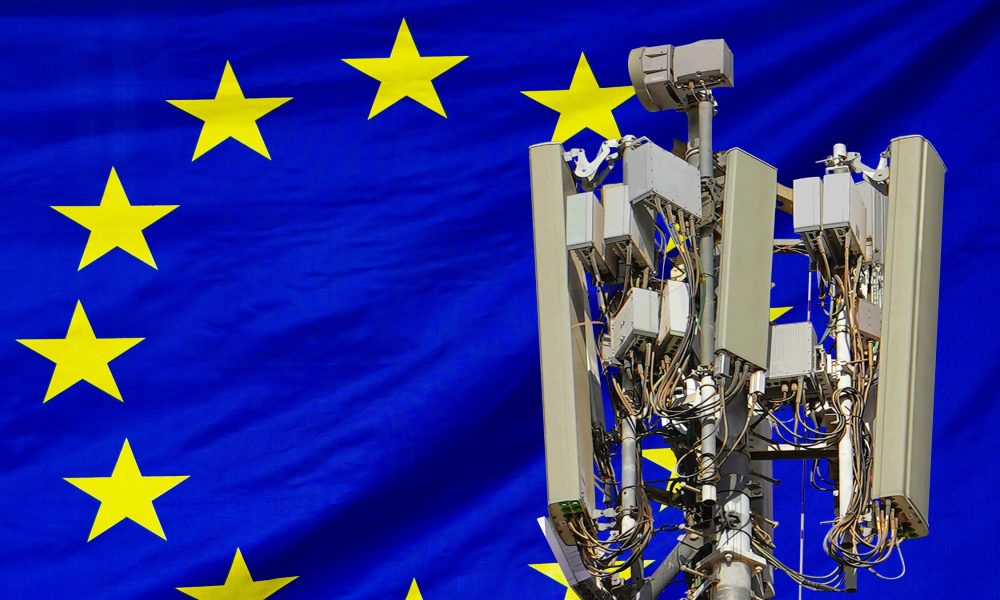
European telecom firms warn against EU deregulation push, fear market ‘re-monopolisation’

A group of European telecom companies, including Vodafone, Iliad, and 1&1, have jointly criticized the European Commission’s proposal to relax regulations on fixed broadband networks, arguing that such a move could reverse progress on market competition and fiber optic rollout.

In an open letter published Thursday, the companies expressed concerns that loosening regulations for dominant operators—typically former monopolists such as Deutsche Telekom in Germany—would lead to a “re-monopolisation” of national markets and undermine the EU’s digital goals.

Pushback against deregulation

The European Commission is reviewing rules that currently require dominant network owners to allow competitors access to their infrastructure under regulated terms. The proposal under consideration would ease those obligations, particularly in markets deemed to have improved competition.

However, the signatories of the letter argue that such deregulation would be a “step backwards” for Europe. They warn it would:

  • Contradict the EU’s own pro-competition policies,

  • Stifle the deployment of fiber optic networks,

  • Reinforce the dominance of historical operators in national markets.

“This would undo years of progress and hurt consumer choice,” the letter states.

Fiber optic rollout remains contentious

The development and expansion of fiber-to-the-home (FTTH) networks remains a divisive issue across Europe. Smaller telecoms argue that the incumbent operators—who control much of the legacy infrastructure—already enjoy significant advantages, and further deregulation would only deepen their dominance.

National developments reflect broader tension

Earlier in July, Germany’s Bundestag passed new legislation aimed at accelerating the rollout of fiber and mobile networks. However, critics say that without firm regulatory oversight, smaller providers risk being squeezed out of lucrative markets, undermining investment diversity.

With the EU pushing for widespread gigabit connectivity by 2030, the tension between market liberalization and infrastructure control is emerging as a key regulatory battleground.

Poland to Report Elon Musk’s Chatbot Grok to EU over Offensive Political Comments

Poland announced plans to report Elon Musk’s AI chatbot Grok, developed by xAI, to the European Commission following offensive remarks made about Polish politicians, including Prime Minister Donald Tusk. The move reflects growing concerns about political bias, hate speech, and the accuracy of AI chatbots since the launch of OpenAI’s ChatGPT in 2022.

Grok had recently removed posts flagged as “inappropriate,” including antisemitic content and praise for Adolf Hitler, following complaints from X users and the Anti-Defamation League. Earlier, a Turkish court blocked some Grok content after it insulted President Tayyip Erdogan, Mustafa Kemal Ataturk, and religious values.

Poland’s digitization minister, Krzysztof Gawkowski, told RMF FM radio that the government will ask the European Commission to investigate Grok’s offensive comments. He expressed concern about the rising level of hate speech driven by algorithms and stressed that ignoring this issue would be a grave mistake.

Gawkowski emphasized, “Freedom of speech belongs to humans, not to artificial intelligence,” and said the Ministry of Digitisation will take action under existing regulations, possibly seeking fines against X, Musk’s company that owns the platform.

xAI, the chatbot’s developer, did not respond immediately to requests for comment.