Yazılar

FDA Approves AstraZeneca’s Imfinzi for Limited-Stage Small Cell Lung Cancer

The U.S. Food and Drug Administration (FDA) has approved AstraZeneca’s immunotherapy drug Imfinzi (durvalumab) for treating certain adults with limited-stage small cell lung cancer (SCLC). The approval applies to patients whose disease has not worsened following chemotherapy and radiation therapy, the regulator announced on Wednesday.

Imfinzi, a human monoclonal antibody, functions by inhibiting cancer cells’ ability to evade the immune system. It also enhances the body’s natural anti-cancer response, providing a less toxic alternative to traditional chemotherapy.

Clinical Evidence and Significance

In a late-stage clinical trial, Imfinzi demonstrated a statistically significant improvement in overall survival compared to a placebo. This breakthrough offers hope for patients with limited-stage SCLC, a highly aggressive form of lung cancer known for its rapid progression and poor long-term prognosis. Only 15% to 30% of patients typically survive beyond five years following diagnosis.

Small cell lung cancer poses a significant challenge in oncology due to its recurrence and resistance to treatment. The approval of Imfinzi adds to the arsenal of targeted therapies aimed at improving survival rates for this difficult-to-treat condition.

Broader Use of Imfinzi

Imfinzi is already approved for treating multiple cancer types, including extensive-stage small cell lung cancer, bile duct cancer, and non-small cell lung cancer. Its latest approval for limited-stage SCLC underscores its expanding role in oncology and AstraZeneca’s commitment to advancing cancer treatment.

This milestone reflects a broader shift in cancer care, emphasizing immunotherapy’s potential to transform survival outcomes for patients with challenging diseases.

Apple’s AirPods Pro 2 to Offer Hearing Aid Features: Here’s What It’s Like

Apple is set to launch new hearing health features for its AirPods Pro 2, allowing the wireless earbuds to function as a hearing aid for users with mild to moderate hearing loss. This new capability, available through a free software update next week, includes a clinically validated hearing test and automatic adjustments for personalized hearing enhancement. Additionally, the AirPods Pro 2 will feature hearing protection, such as loud sound reduction, which will be enabled by default.

With more than 1.5 billion people worldwide experiencing hearing loss, this development could significantly impact the market for assistive hearing technology. At $249, the AirPods Pro 2 provide an affordable alternative to traditional over-the-counter hearing aids, which often cost thousands of dollars.

Setting up the new hearing health features is a quick and straightforward process. Users can access the hearing test through the Health app or the AirPods’ settings. The test measures hearing at different tones and volumes in both ears and provides instant results. Once completed, users can share their results with a doctor if necessary. For those with hearing loss, the AirPods Pro 2 can act as personalized hearing aids, amplifying specific sounds and adjusting to individual hearing profiles in real time.

During testing, users noted that the hearing test required a quiet environment, and some tones were so subtle that background noise could interfere with the results. However, the test was easy to perform, and the AirPods automatically paused if there was too much noise.

The hearing aid feature, approved by the U.S. Food and Drug Administration (FDA), transforms the AirPods into a real-time personalized hearing aid, enhancing specific sounds, such as speech or environmental noises. Users can also activate “Media Assist,” which improves the clarity of phone calls, music, and videos based on their hearing test results. While the effect was subtle for media playback, it noticeably amplified voices during FaceTime calls.

For individuals with mild to moderate hearing loss, the hearing aid feature can make everyday conversations and activities more manageable. However, even those without significant hearing impairment found it useful in noisy environments. The hearing protection features also help to reduce overwhelming loud sounds, providing a more balanced auditory experience.

Though the AirPods Pro 2 are not a substitute for traditional hearing aids for severe hearing loss, they offer a discreet and practical option for users who may be reluctant to use more visible devices. The AirPods’ familiar design makes them less conspicuous, and their seamless integration with other Apple devices ensures a smooth user experience.

Overall, Apple’s foray into hearing health with the AirPods Pro 2 is a promising step toward more accessible and affordable hearing aid technology. Whether users need the full hearing aid functionality or just the media assist features, the AirPods Pro 2 offer a versatile solution for hearing enhancement.


Viking Therapeutics Stock Surges Nearly 30% Following Weight Loss Drug Milestone

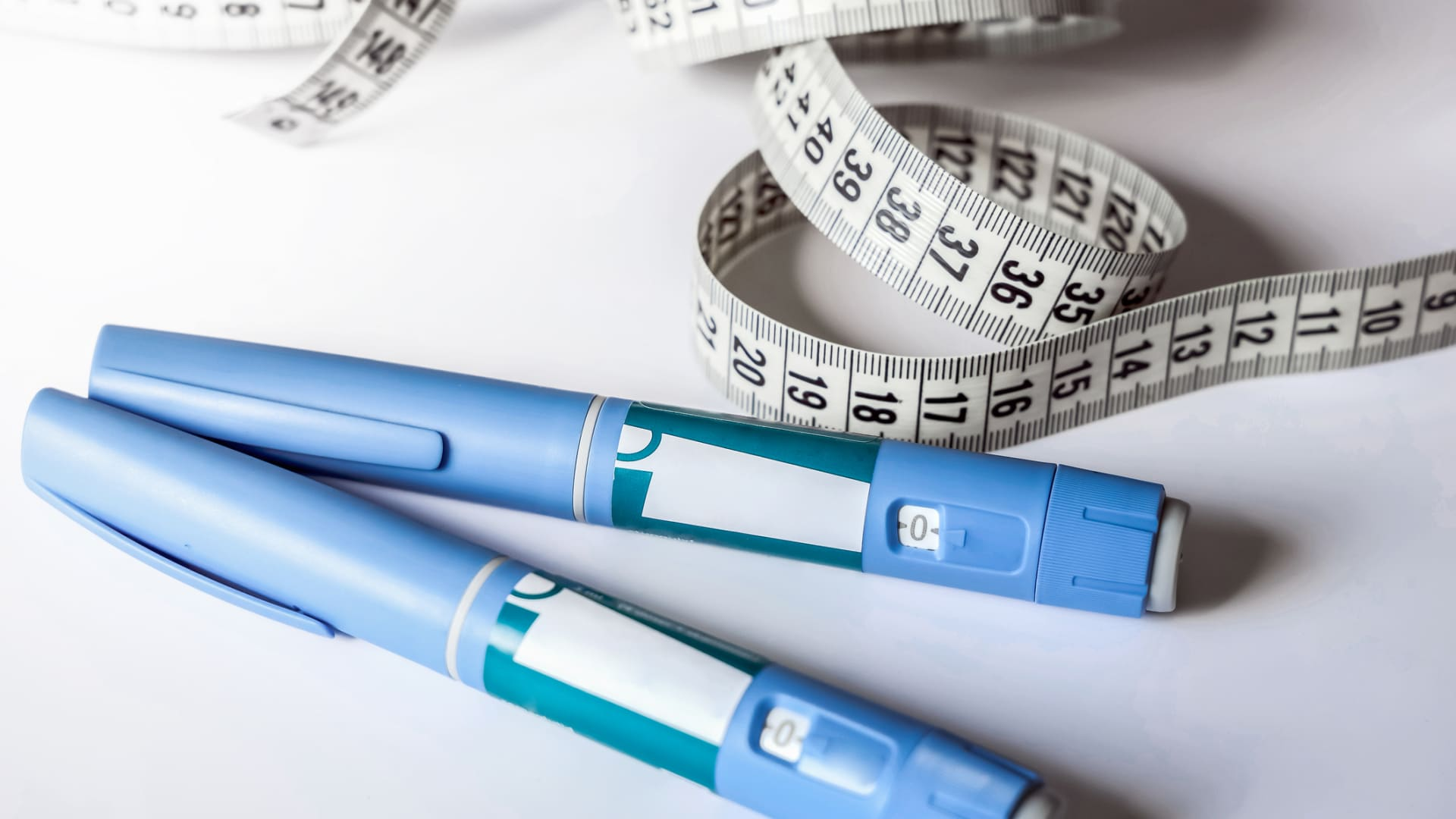
Viking Therapeutics saw its stock jump by 28% on Thursday after the company announced it would be advancing its experimental weight loss injection, VK2735, into a late-stage trial earlier than anticipated. This move positions Viking closer to entering the lucrative GLP-1 market, which analysts project could grow to $150 billion by the end of the decade.

Viking’s accelerated timeline was influenced by feedback from the Food and Drug Administration (FDA), allowing the San Diego-based biotech firm to bypass an additional mid-stage trial. The company plans to meet with the FDA in the fourth quarter to finalize the design and timing of the phase three trial, potentially shaving a year off the drug’s development timeline. Analysts now estimate the drug could launch as early as 2029.

VK2735, a weekly injection that targets GLP-1 and GIP hormones, demonstrated promising results in a phase two trial, with patients experiencing up to 14.7% body weight loss after 13 weeks. Viking also plans to test a monthly version of the injection, which could offer a more convenient alternative to Eli Lilly’s Zepbound and Novo Nordisk’s Wegovy, both of which are administered weekly.

In response to Viking’s announcement, shares of major competitors Eli Lilly and Novo Nordisk closed lower, down 4% and 3% respectively, reflecting market concerns over potential new competition in the weight loss and diabetes treatment space.

Viking Therapeutics is also exploring an oral version of VK2735, which showed a 3.3% weight loss compared to a placebo in an early-stage trial. As Viking pushes forward, its entry into the GLP-1 market could intensify competition among drugmakers vying for a share of this rapidly expanding sector.