Yazılar

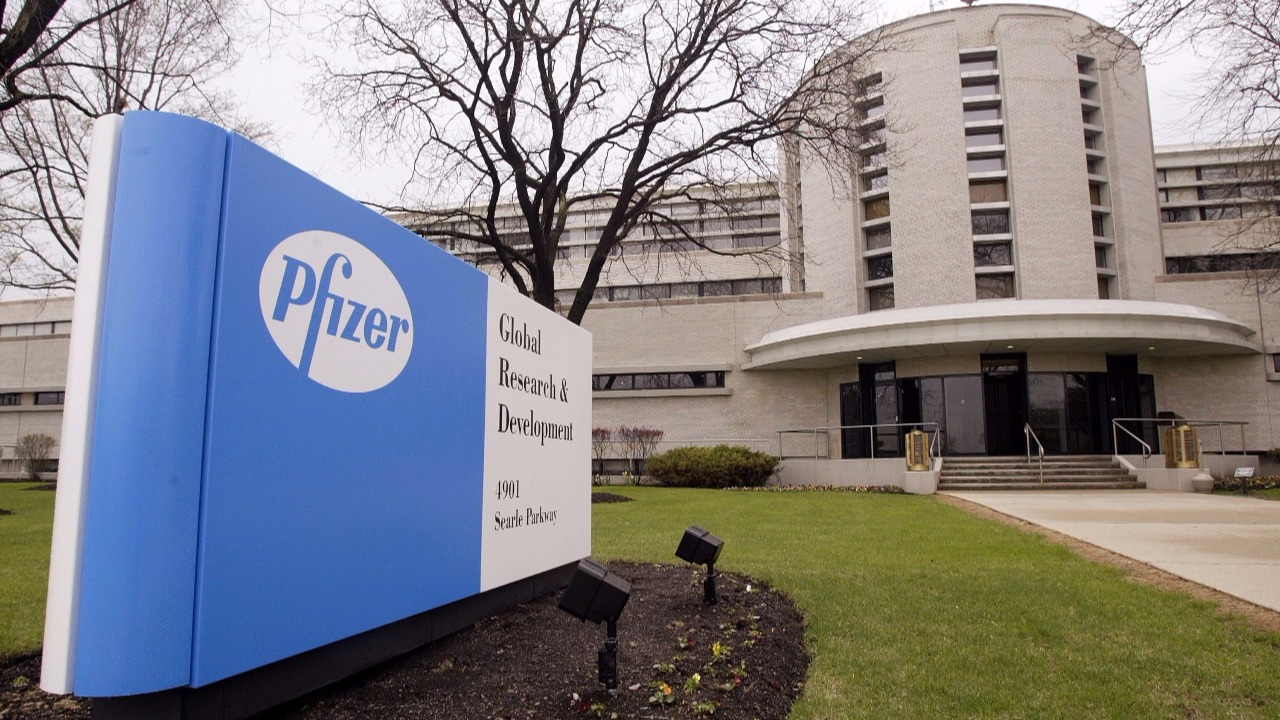
Pfizer Sees Stable Vaccine Policy Under Trump Despite RFK Jr. Appointment

Pfizer does not anticipate major changes to U.S. vaccine policies under the Trump administration in 2025, even though President-elect Donald Trump has nominated Robert F. Kennedy Jr., a vaccine skeptic, to head the Department of Health and Human Services (HHS).

Speaking at an investor conference, Pfizer CEO Albert Bourla confirmed he had met with both Trump and RFK Jr. over dinner and described their relationship as positive. “If he’s confirmed, we will work with him to advance the right policies,” Bourla said.

Kennedy has long been criticized for questioning the safety and efficacy of vaccines, which have been instrumental in combating disease worldwide. While he rejects the “anti-vaccine” label, Kennedy has indicated that he would not block access to vaccines. Trump, meanwhile, has suggested that he may end certain childhood vaccination programs if concerns about safety arise.

Bourla highlighted Trump’s commitment to reforming the role of pharmacy benefit managers (PBMs), middlemen in the U.S. healthcare system who negotiate drug prices. Trump announced plans to eliminate PBMs, which Bourla argued could significantly lower patient out-of-pocket costs for medications.

Vaccine Market Outlook

Pfizer, which produces vaccines for COVID-19, pneumococcal disease, and RSV (respiratory syncytial virus), has faced market pressure since Trump’s announcement of Kennedy as his HHS nominee. However, Bourla reassured investors that Pfizer expects 2025 sales for its COVID-19 vaccine and treatment to remain consistent with 2024 levels.

Financial Performance and Turnaround Strategy

Pfizer’s financial outlook provided some relief to investors amid ongoing concerns over its future performance. The company forecasts 2025 adjusted profit between $2.80 and $3.00 per share, in line with analysts’ average estimate of $2.88. It also projects revenue between $61 billion and $64 billion, slightly below Wall Street’s consensus of $63.26 billion.

Shares rose 3.7% to $26.20 following the forecast, though Pfizer’s stock has dropped nearly 12% this year and remains well below its pandemic-era peak. The pharmaceutical giant has faced investor criticism, most notably from hedge fund Starboard Value, over its acquisition strategy and the lack of profitable drugs resulting from recent deals and internal research efforts.

In response, Bourla defended Pfizer’s strategy, which includes aggressive cost-cutting measures and the sale of non-core businesses to reduce debt. The company is under increasing pressure to introduce new blockbuster drugs to offset revenue declines from top sellers set to lose patent protection.

Conclusion

Despite concerns surrounding Trump’s choice of RFK Jr. for HHS and broader investor criticism, Pfizer remains cautiously optimistic about vaccine policies and its financial performance in 2025. The company continues to focus on cost efficiency, innovation, and policy collaboration to stabilize its outlook in a challenging post-pandemic environment.


 

Shopify Shares Surge 22% on Strong Earnings and Positive Forecast

Shopify’s stock surged up to 22% in early trading on Wednesday after the company reported stronger-than-expected second-quarter earnings, despite a mixed consumer spending environment. The Canadian e-commerce giant’s performance exceeded Wall Street predictions, showcasing resilience amid economic uncertainty.

For the second quarter, Shopify reported earnings per share of 26 cents, surpassing the anticipated 20 cents, and revenue of $2.05 billion, beating expectations of $2.01 billion. The company’s gross merchandise volume (GMV) reached $67.2 billion, a 22% increase from the previous year and exceeding the consensus estimate of $65.8 billion.

Shopify, which offers e-commerce software, advertising, and payment processing tools, highlighted strong demand and its ability to capture market share despite the challenging economic backdrop. CFO Jeff Hoffmeister noted that the company is thriving even as consumers remain cautious and opt for cheaper alternatives.

The performance stands in contrast to recent earnings reports from rivals like Amazon, Etsy, and Wayfair, which have indicated a more cautious consumer spending trend. Shopify executives attribute their success to the diverse range of businesses using their platform, with President Harley Finkelstein emphasizing that their broad merchant base contributes to their robust performance.

Looking ahead, Shopify anticipates a revenue growth rate in the low-to-mid-20s percentage range for the third quarter, aligning with analysts’ expectations of a 21% increase to $2.07 billion.


Merck Shares Fall 9% Despite Earnings Beat and Strong Demand for Key Drugs

Merck reported second-quarter revenue and adjusted earnings that exceeded Wall Street’s expectations, driven by strong sales from its blockbuster cancer drug Keytruda and other treatments in its oncology and vaccines portfolios, as well as a newly launched cardiovascular drug. Despite this, Merck’s shares fell by 9% due to lighter-than-expected sales of Gardasil, a vaccine for HPV, exacerbated by shipment issues in China.

Merck raised its full-year sales forecast to $63.4 billion to $64.4 billion, slightly up from its previous guidance of $63.1 billion to $64.3 billion. However, it lowered its adjusted profit guidance to a range of $7.94 to $8.04 per share, down from $8.53 to $8.65 per share, reflecting one-time charges for its acquisitions of Harpoon Therapeutics and EyeBio.

For the second quarter, Merck reported adjusted earnings per share of $2.28, surpassing the expected $2.15, and revenue of $16.11 billion, above the anticipated $15.84 billion. The company posted a net income of $5.46 billion, or $2.14 per share, compared to a net loss of $5.98 billion, or $2.35 per share, in the same period last year.

Keytruda recorded $7.27 billion in revenue, up 16% year-over-year, driven by higher uptake for earlier-stage cancers and strong demand for metastatic cancers. Gardasil sales increased by only 1% to $2.48 billion due to shipment timing issues in China. Winrevair, approved in March for treating a progressive lung condition, posted $70 million in revenue, while Capvaxive, a newly approved pneumococcal vaccine, is expected to drive future growth.

Merck’s pharmaceutical division saw a 7% increase in revenue to $14.41 billion. The company’s Type 2 diabetes treatment, Januvia, faced a 27% decline in sales to $629 million due to lower demand, prices, and generic competition. Sales of Merck’s Covid antiviral pill, Lagevrio, fell by 46% to $110 million but still exceeded expectations.

Merck’s animal health division reported $1.48 billion in sales, up 2% from the previous year, but slightly below analyst expectations. Despite strong overall performance, investor concerns about Gardasil sales and future challenges in the pharmaceutical landscape influenced the decline in Merck’s stock.