Yazılar

Anduril to Take Over Microsoft’s $22 Billion US Army Headset Program

Anduril, a defense technology startup founded by Palmer Luckey, will assume control over the development and production of Microsoft’s $22 billion Integrated Visual Augmentation System (IVAS) program for the U.S. Army, the companies confirmed on Tuesday. Under the new agreement, Anduril will manage production, future hardware and software development, and oversee delivery timelines for the project.

The IVAS program aims to equip soldiers with a mixed-reality headset that combines augmented reality (AR) and virtual reality (VR) to enhance situational awareness and support the command of unmanned systems. As part of the deal, Microsoft Azure will serve as Anduril’s preferred hyperscale cloud platform for all workloads related to IVAS and Anduril’s AI technologies.

Microsoft initially developed its HoloLens technology for use in military headsets in collaboration with the U.S. Army, but Anduril will now take the lead in its execution. The agreement is still awaiting approval from the U.S. Department of Defense.

Luckey, who previously founded Oculus VR, which was acquired by Facebook in 2014 for $2.3 billion, is no stranger to the defense sector. Anduril has also formed partnerships with OpenAI and Palantir to leverage defense data for artificial intelligence training, further strengthening its position in the military tech space. The news comes as Anduril is reportedly in talks for a new funding round that could push the company’s valuation to $28 billion.
Quantum Computing Startup QuEra Secures $230 Million Funding Round

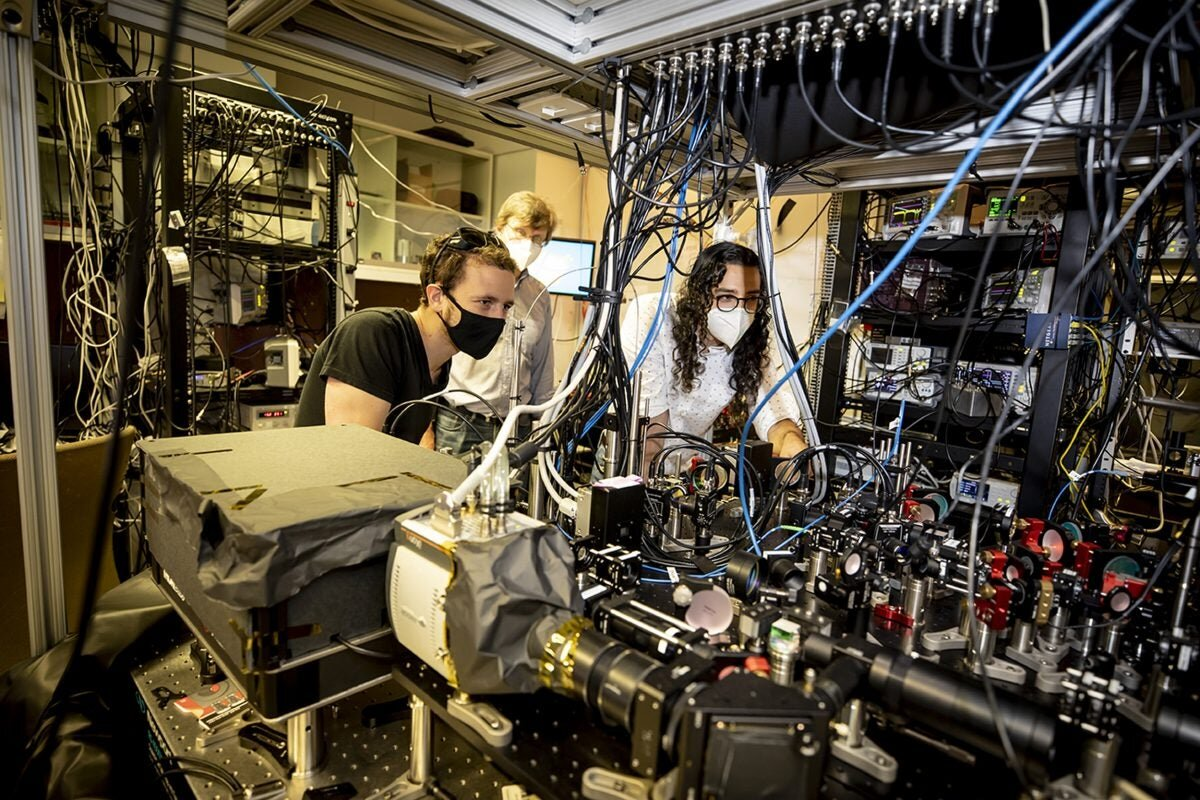
QuEra Computing, a neutral-atom quantum computing startup, announced on Tuesday that it has successfully closed a funding round exceeding $230 million. The round saw participation from significant investors, including Google’s Quantum AI business unit and SoftBank Vision Fund, among others. However, the company did not disclose the valuation at which the funds were raised.

Neutral-atom quantum computing, the core technology QuEra specializes in, offers advantages over other quantum systems by enhancing scalability and reducing error rates. This technology works by using lasers to manipulate small, uncharged atoms such as rubidium or strontium, making it a promising avenue for advancing quantum computing.

The Boston-based firm confirmed that $60 million of the $230 million raised will be received in the near future, contingent on meeting a prerequisite funding condition, which is currently underway.

QuEra plans to allocate this funding toward the development of fault-tolerant quantum computing technology. This technology aims to enable quantum computers to reliably perform computations, even in the presence of errors, a key challenge in the field.

Major tech players like Google, Microsoft, and IBM continue to support the development of quantum computing, recognizing its potential to revolutionize computing power and deliver speeds far beyond the capabilities of today’s advanced systems. Google recently made headlines in December by overcoming a major quantum computing challenge with the release of a new generation of chips. The company has also stated that it expects commercial quantum computing applications to emerge within the next five years.

OpenAI Co-founder Sutskever’s Startup SSI in Talks for $20 Billion Valuation

Safe Superintelligence (SSI), a startup co-founded by OpenAI’s former chief scientist Ilya Sutskever, is reportedly in discussions to raise funding at a valuation of $20 billion. This would mark a significant increase from its previous $5 billion valuation during a September funding round, where it raised $1 billion from investors like Sequoia Capital, Andreessen Horowitz, and DST Global.

SSI’s talks come at a time when high-profile AI ventures are facing a reappraisal of their valuations following Chinese startup DeepSeek’s release of a cost-effective AI model. Despite not yet generating any revenue, SSI’s mission is to develop “safe superintelligence” that is both smarter than humans and aligned with human interests. However, much of the company’s work and approach remains under wraps, fueling intrigue among investors.

The company’s founders include Daniel Gross, previously of Apple, and Daniel Levy, a former OpenAI researcher. While SSI’s approach to AI is still not widely known, Sutskever’s reputation for groundbreaking work in AI, particularly in scaling and inference techniques, has garnered significant attention. SSI’s focus on “scaling in peace” aims to insulate progress from short-term commercial pressures, a stark contrast to the trajectory of OpenAI, which shifted to commercial products after the success of ChatGPT in 2022.

The conversation around SSI’s valuation highlights the ongoing competition in the AI space, with OpenAI in talks to potentially double its valuation to $300 billion, and rival Anthropic nearing a funding round that would value it at $60 billion.