Yazılar

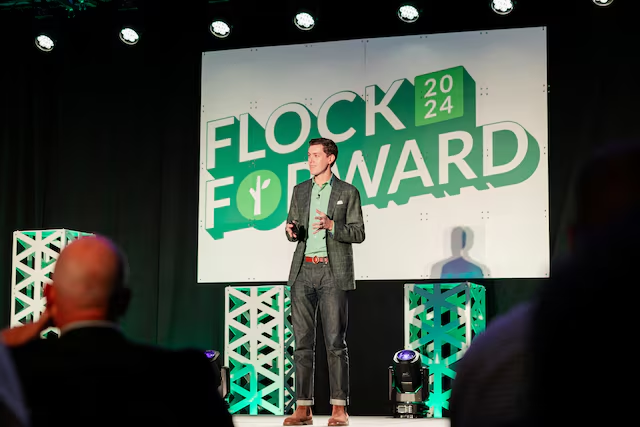
Flock Safety Raises $275 Million to Fund Manufacturing and R&D Expansion

Flock Safety, a U.S.-based startup specializing in surveillance technology, has secured $275 million in new funding, led by Andreessen Horowitz, to expand its operations. The funding will be used to support the development of a manufacturing plant and to further explore new products, including drones.

The investment has valued Flock Safety at $7.5 billion, a significant increase from its previous valuation of $4.8 billion in the previous funding round last year. With this latest funding, the startup’s total capital raised exceeds $950 million, positioning it among the most well-funded startups in the region, according to PitchBook data.

This marks the third investment by Andreessen Horowitz in Flock, a notable move by the venture capital firm. Greenoaks Capital and Bedrock Capital also participated in the funding round.

Flock Safety provides security cameras and software aimed at helping law enforcement agencies and businesses combat crime. The company has reported surpassing $300 million in annual recurring revenue (ARR), reflecting a 70% year-over-year growth. In preparation for an eventual public listing, Flock has brought in Brandon Simins as its new CFO this year, although it has not set a specific timeline for the listing.

A significant part of the funding will go toward the construction of a 100,000-square-foot manufacturing facility in Georgia, where Flock plans to begin the production of U.S.-manufactured drones by 2025. Garrett Langley, CEO of Flock, expressed excitement about bringing more manufacturing to the U.S., stating that it would provide better control over the supply chain and further their mission to combat crime.

Founded in 2017, Flock Safety’s surveillance system leverages artificial intelligence (AI) to provide insights for investigations, such as identifying car plates. The company now serves over 4,800 law enforcement agencies and nearly 1,000 businesses, including major retailers and healthcare providers. Enterprise businesses account for approximately 30% of its revenue.

Investing in startups that sell to law enforcement is somewhat uncommon for Silicon Valley investors, but David George, general partner at Andreessen Horowitz, highlighted Flock’s growth as evidence of the large market for such solutions. “Flock Safety has one of the most compelling ROI (return on investment) equations we’ve ever seen in software or hardware markets,” said George. He added that Flock’s widespread penetration into police departments and its high market share position it for a venture-scale outcome.
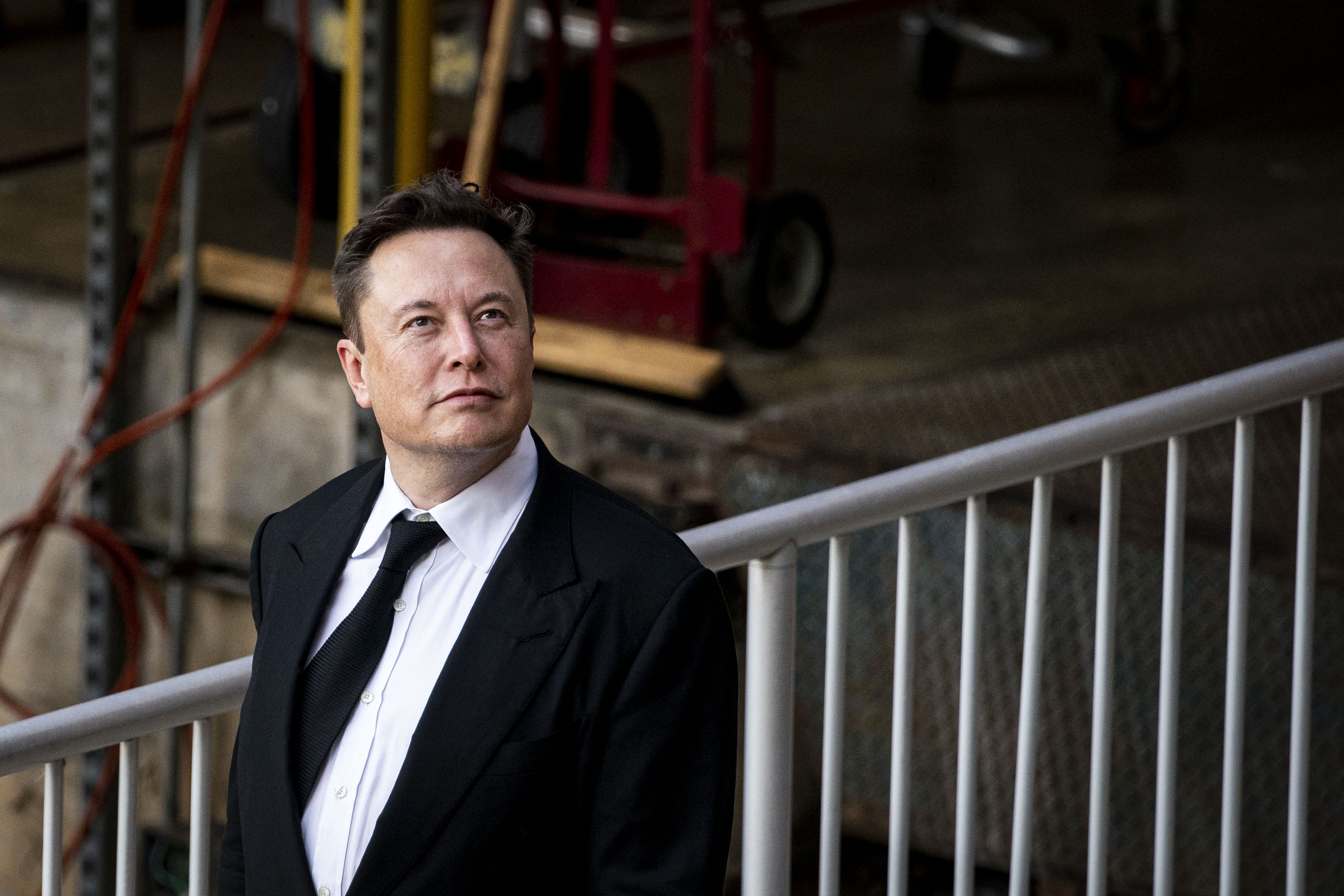
Elon Musk-Led Group Makes $97 Billion Bid for Control of OpenAI

Elon Musk and a consortium of investors have presented a $97.4 billion offer to acquire OpenAI’s nonprofit parent company, escalating tensions with OpenAI CEO Sam Altman. Musk’s bid comes as part of his ongoing efforts to prevent OpenAI from transitioning into a for-profit entity, which it claims is necessary to secure sufficient funding for advanced AI model development.

Background:

Musk co-founded OpenAI in 2015 alongside Altman, initially as a nonprofit organization. However, Musk departed from the company before it gained significant traction and later established a rival AI venture, xAI, in 2023. Recently, OpenAI has been working to convert into a for-profit company to attract the capital needed to remain competitive in the AI space.

Musk, known for his leadership at Tesla and his ownership of X (formerly Twitter), has strongly opposed this shift, arguing that it prioritizes profits over the public good. In a lawsuit filed in August 2023, Musk claimed that OpenAI’s move toward a for-profit model violated its original mission to develop AI for the benefit of humanity. He has since attempted to block this transition in court.

Musk’s Offer:

Musk’s $97.4 billion bid is designed to challenge OpenAI’s current direction and potentially block its move to for-profit status. His consortium includes his own startup xAI, Baron Capital Group, Emanuel Capital, and others. A merger between xAI and OpenAI has also been suggested as part of the deal.

While the offer has made headlines, OpenAI’s board, along with CEO Sam Altman, has firmly rejected the proposal. Altman communicated to staff that OpenAI is not for sale and has no interest in Musk’s bid, emphasizing that the company intends to proceed with its transition into a for-profit entity.

Financial Implications:

OpenAI was valued at $157 billion in its last funding round, cementing its position as one of the most valuable private companies globally. SoftBank is reportedly in talks to lead a funding round that could value OpenAI at $300 billion, including new capital. However, Musk’s offer, backed by prominent investors, adds complexity to OpenAI’s fundraising efforts and the conversion process.

Musk’s wealth, primarily tied to Tesla and SpaceX, could provide the financial backing for the deal, though it may require him to liquidate part of his holdings or take out loans against his assets.

Legal and Corporate Governance Concerns:

Jonathan Macey, a corporate governance expert, expressed concern that the bid could complicate OpenAI’s nonprofit status. OpenAI’s board is tasked with ensuring the company’s mission remains intact, and they may be legally obligated to consider Musk’s bid if it’s deemed to be in the best interest of the organization.

Analysts, including Gil Luria from D.A. Davidson, suggested that Musk’s offer could disrupt OpenAI’s current fundraising strategy and call into question any existing offers, such as the potential investment from SoftBank.

SoftBank in Talks to Lead OpenAI Funding Round at $300 Billion Valuation

SoftBank Group is in negotiations to lead a funding round for OpenAI, which could raise up to $40 billion, placing the artificial intelligence developer’s valuation at $300 billion, according to sources familiar with the matter. This potential round, which could set a record for a private company’s single funding round, is in the wake of growing competition from Chinese startup DeepSeek. DeepSeek’s new, affordable AI model has disrupted expectations about the costs of developing and deploying AI.

As part of the funding, SoftBank has valued OpenAI at $260 billion, a significant increase from its valuation of $150 billion just a few months ago. This funding is expected to be in the form of convertible notes, and similar to OpenAI’s previous round, it is contingent upon restructuring the company to remove control from its non-profit arm.

Leading the round would be a bold move for SoftBank, which has roughly $30 billion in cash to invest. While neither SoftBank nor OpenAI has commented on the discussions, it is believed that SoftBank could contribute between $15 billion and $25 billion directly into OpenAI. This money may also go towards OpenAI’s commitment to Stargate, a joint venture with Oracle and SoftBank aimed at helping the U.S. maintain a competitive edge in the global AI race, with plans for up to $500 billion in investments.

Despite the funding talks, DeepSeek’s low-cost AI model has raised concerns within the AI sector. The startup, using Nvidia H800 chips, developed its DeepSeek-V3 model for less than $6 million, spurring questions about whether OpenAI and other labs can retain their dominance as competition intensifies from more affordable alternatives.