Yazılar

ISRO Marks 100th Launch with Successful Deployment of NVS-02 NavIC Satellite via GSLV-F15

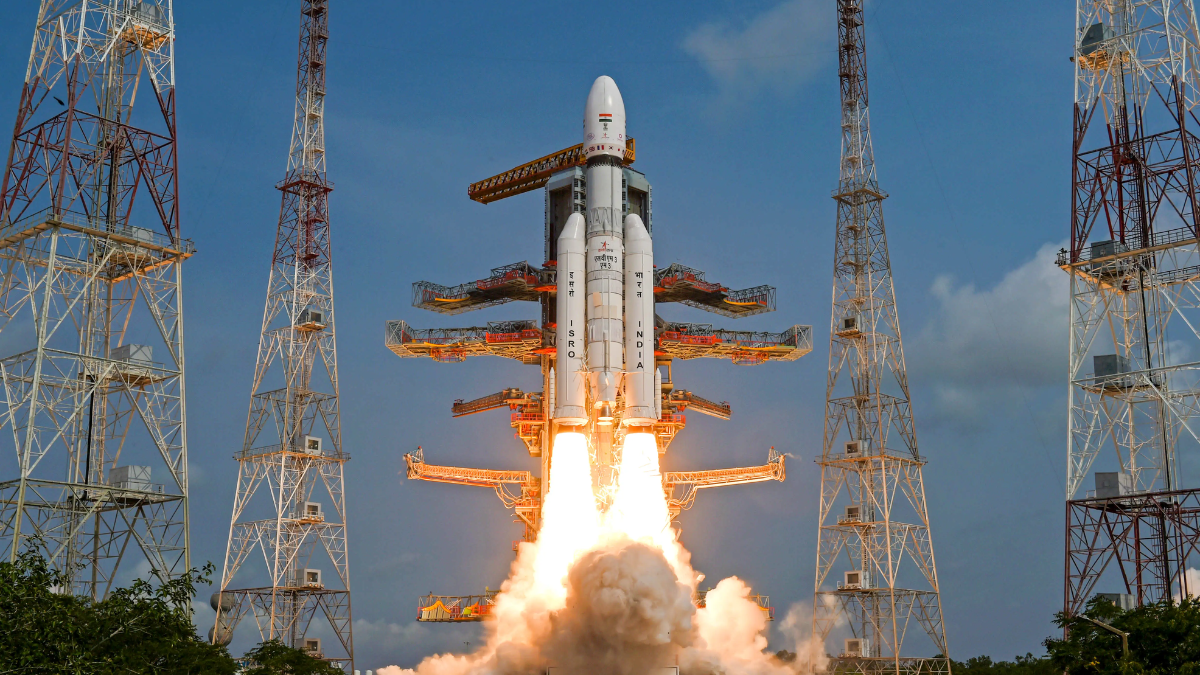
The Indian Space Research Organisation (ISRO) marked a historic achievement on Wednesday with the successful deployment of the NVS-02 navigation satellite using the GSLV-F15 rocket. The launch took place at 6:23 am from the Satish Dhawan Space Centre in Sriharikota and was ISRO’s 100th mission, highlighting the agency’s continued advancements in space technology. The satellite was precisely placed into the Geosynchronous Transfer Orbit (GTO), further strengthening India’s Navigation with Indian Constellation (NavIC) system. Notably, this was the first major launch overseen by ISRO Chairman V Narayanan since he took office on January 16, 2025.

Mission Details and NavIC Expansion

ISRO confirmed the successful launch in a post on X (formerly Twitter), noting that the 50.9-meter GSLV-F15 rocket lifted off smoothly after a 27.30-hour countdown. This mission featured an indigenous cryogenic upper stage, a key technological milestone for India’s space program. The NVS-02 satellite is the second in the second-generation NavIC series, designed to enhance India’s positioning, navigation, and timing services, covering both domestic regions and a 1,500 km range beyond national borders. The first satellite in this series, NVS-01, was launched in May 2023, paving the way for more robust and precise navigation capabilities.

Developed at the U R Rao Satellite Centre in Bengaluru, NVS-02 weighs approximately 2,250 kg and carries advanced payloads operating in the L1, L5, and S bands. It is equipped with a tri-band antenna and an indigenous Rubidium Atomic Frequency Standard, a critical technology that significantly improves the accuracy of navigation signals. This marks a major step in India’s efforts to reduce dependency on foreign positioning systems and further develop its own satellite-based navigation infrastructure.

With the successful deployment of NVS-02, ISRO continues to expand the capabilities of NavIC, ensuring better coverage and precision for civilian and military applications. This mission underscores India’s growing expertise in satellite navigation technology and reinforces its position as a key player in the global space industry. As ISRO gears up for future launches, including ambitious interplanetary missions, this achievement serves as another milestone in India’s journey toward space self-reliance.
ISRO Starts Assembling Human-Rated Launch Vehicle Mark-3 for Gaganyaan Mission

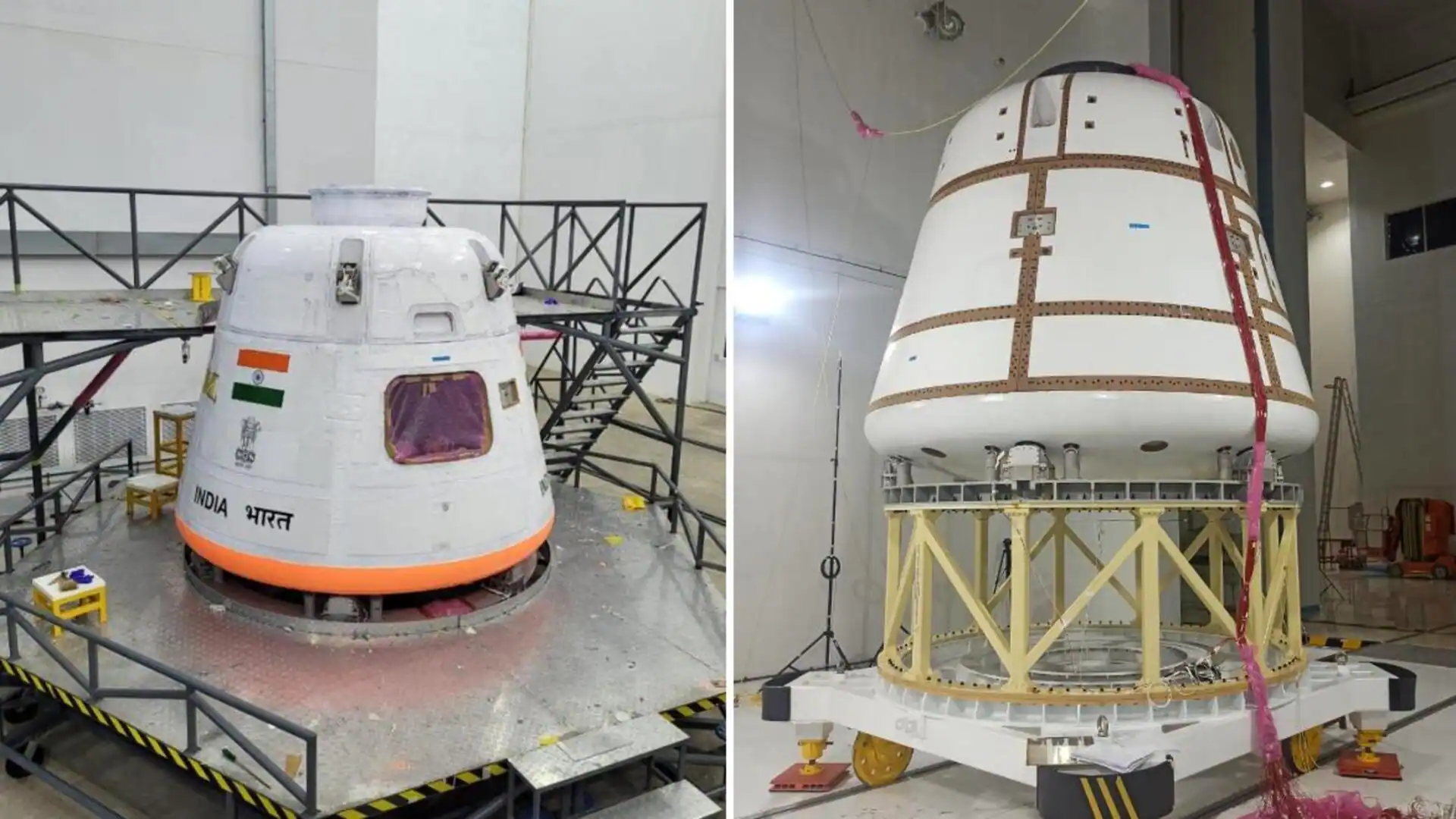
Indian Space Research Organisation (ISRO) reached a key milestone in its human spaceflight ambitions with the beginning of assembly for the Human-Rated Launch Vehicle Mark-3 (HLVM3). The assembly process started at the Satish Dhawan Space Centre (SDSC) with the stacking of the nozzle-end segment of the S200 solid rocket motor. This marks the official launch of the Gaganyaan-G1 campaign, ISRO’s first uncrewed mission as part of the Gaganyaan human spaceflight programme. Notably, this development coincides with the tenth anniversary of the LVM3-X/CARE mission, which was carried out on the same date in 2014.

The HLVM3 is an upgraded version of the LVM3 rocket, designed specifically to support human spaceflight. Standing at 53 meters tall and weighing in at 640 tonnes, the rocket is capable of carrying up to 10 tonnes to low Earth orbit. This new design features significant modifications to accommodate human spaceflight, including a crew escape system (CES) that will allow for the safe ejection of the Crew Module in case of an anomaly during ascent. These enhancements are crucial for ensuring the safety of astronauts and the success of future crewed missions.

Currently, the assembly process is underway, with the S200 motors being stacked and the L110 liquid stage and C32 cryogenic stage ready for integration at the launch complex. Meanwhile, the integration of the Crew Module is being handled at the Vikram Sarabhai Space Centre (VSSC), and preparations for the Service Module are taking place at the U.R. Rao Satellite Centre (URSC). This coordination across multiple ISRO centers highlights the collaborative effort required to successfully launch the Gaganyaan mission.

The Gaganyaan mission marks a significant leap for India’s space exploration capabilities, moving the nation closer to its goal of sending humans into space. With the successful assembly of the HLVM3 and the continued progress in the preparation of the Crew and Service Modules, ISRO is setting the stage for a historic human spaceflight. This project not only strengthens India’s presence in the global space community but also fosters technological advancements that will benefit various sectors on Earth.

India’s Gaganyaan Mission Delayed to 2026 as ISRO Prioritizes Safety, Training, and Testing

India Delays Gaganyaan Mission to 2026, Emphasizing Safety and Comprehensive Testing

India’s ambitious Gaganyaan mission, which aims to send its first astronauts into space, has been postponed to 2026. This delay comes as the Indian Space Research Organisation (ISRO) prioritizes comprehensive testing, safety protocols, and astronaut training. Originally scheduled for 2025, the new timeline reflects ISRO’s cautious approach in light of recent setbacks in the aerospace industry. The announcement was made by S. Somanath, Chairman of ISRO, who assured that India’s first crewed mission would follow a series of uncrewed test flights to ensure everything is in place for a safe and successful launch.

ISRO has committed to conducting a series of rigorous tests to guarantee the safety of the astronauts. The first of these uncrewed trials is scheduled to take place in December 2023, with further tests planned throughout the following years. These flights will verify key systems, including the spacecraft’s life support, emergency escape mechanisms, and recovery systems, all of which are critical for the success of the Gaganyaan mission. ISRO is determined to avoid any potential mishaps similar to the challenges faced by other space programs, such as the Boeing Starliner, which faced technical difficulties during its own test flights.

Somanath emphasized that the safety-first approach is integral to ISRO’s strategy. To mitigate risks and ensure reliability, the Gaganyaan mission will be preceded by four uncrewed test flights. These flights will test essential technologies, including the spacecraft’s parachute system and its ability to safely return to Earth after re-entry. One of the key elements of these tests will be the use of Vyomitra, a humanoid robot that will simulate astronaut conditions and test the spacecraft’s ability to re-enter Earth’s atmosphere, deploy its parachutes, and execute a controlled splashdown in the Bay of Bengal.

The delay in the Gaganyaan mission is seen as a step toward strengthening India’s space capabilities, ensuring that it can join the ranks of the United States, Russia, and China in sending humans to space independently. With careful planning and thorough testing, ISRO is taking a methodical approach to space exploration, aiming for a safe and successful crewed mission in 2026. As the program progresses, the agency is also focusing on astronaut training, which will be vital for the mission’s success, as India prepares to send its astronauts on a historic journey into low Earth orbit.