
Yazılar

Baidu’s Robotaxi Unit Eyes Global Expansion Amid Rising Competition

Baidu’s autonomous driving division, Apollo Go, is reportedly exploring potential expansion into international markets in the near future. According to an inside source, discussions with various firms are underway, although specifics on timelines or targeted regions have not yet been revealed.

Baidu is currently one of China’s leading operators in the robotaxi sector. The company has made significant strides in autonomous driving technology and has been allowed by local regulators in cities like Beijing and Wuhan to run commercial self-driving taxi services. Wuhan stands out as Apollo Go’s largest area of operation, where robotaxis have been in use beyond just testing phases.

The move toward global expansion comes amid increasing competition in the robotaxi space, particularly as Tesla gears up for its much-anticipated robotaxi event this Thursday. Another Chinese player in the field, WeRide, recently announced a partnership to integrate its autonomous vehicles with Uber’s ride-hailing platform in Abu Dhabi. However, that collaboration is not expected to extend to the U.S. or Chinese markets.

In July, electric vehicle giant BYD also teamed up with Uber to work on developing “autonomous-capable vehicles” for Uber’s platform, though no further details have been disclosed regarding this partnership.

In China, Baidu’s Apollo Go, along with other companies like Pony.ai, heavily subsidizes robotaxi rides to drive user adoption. While regulations currently mandate a human attendant to be present inside some of the autonomous vehicles for safety reasons, Baidu continues to push forward with its self-driving services. By late July, Apollo Go had reportedly completed over 7 million robotaxi rides.

On a separate note, Baidu announced changes to its executive leadership on Tuesday. Rong Luo, who was serving as the company’s Chief Financial Officer (CFO), will step down from that role to take on the position of Executive Vice President overseeing Baidu’s mobile ecosystem unit. Junjie He, the former head of the mobile division, will take over as interim CFO. The company characterized these shifts as part of a “management rotation.”
 

Tesla Rival Nio Slashes Price on New Onvo-Branded L60 SUV

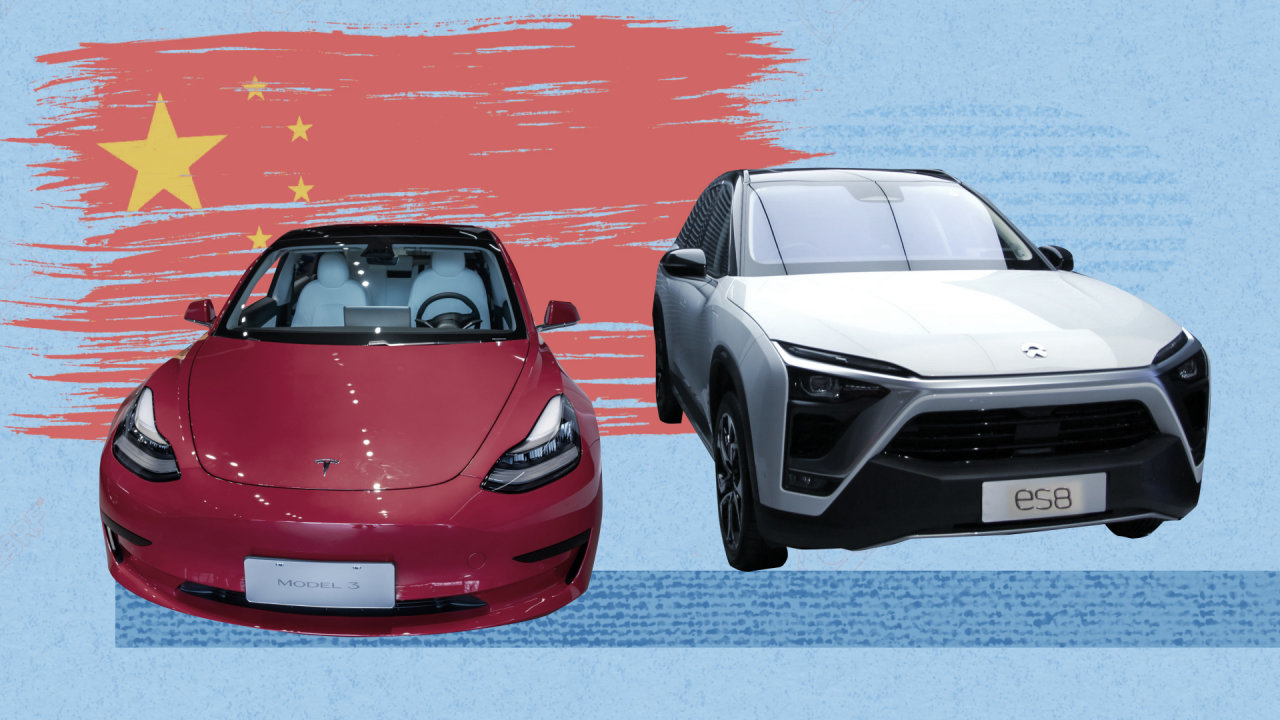
Nio, Tesla’s Chinese rival, has announced a price cut for its new Onvo-branded L60 SUV, intensifying competition in the electric vehicle market. The L60, Onvo’s first car, is now priced at 149,900 Chinese yuan ($21,210) when purchased with a battery subscription starting at 599 yuan per month (approximately $1,000 annually). Alternatively, buyers can opt for a model with both the car and the battery for 206,900 yuan. Deliveries are set to begin on September 28.

Nio’s shares briefly surged by more than 3.5% in U.S. trading after the L60’s price drop announcement. When the Onvo brand was first introduced in May, the L60 was priced at 219,900 yuan, already lower than Tesla’s Model Y, which sells for 249,900 yuan in China.

Nio CEO William Li, in an exclusive interview, hinted at plans to launch Onvo in Europe next year, although no specific timeline was provided. Li emphasized that Onvo is intended to target a different market segment than Nio’s premium vehicles, and he expects no significant overlap in customer bases. Li also noted that Nio’s deliveries have improved since the Onvo brand’s announcement, signaling the new brand’s potential to capture a broader audience.

China’s electric vehicle industry is fiercely competitive, with several companies aiming to challenge Tesla’s market share. Geely-backed Zeekr is set to launch its first midsize electric SUV, the Zeekr 7X, priced at 239,900 yuan, while Xpeng recently introduced its mass-market Mona brand, with the M03 electric coupe starting at 119,800 yuan. Tesla’s cheapest offering in China, the Model 3, costs 231,900 yuan, even after an April price cut.

Chinese electric car manufacturers have increasingly set their sights on expanding overseas, particularly in Europe. However, the European Union is on the verge of increasing tariffs on Chinese-made battery electric vehicles, which could further challenge these automakers. Nio is cooperating with the EU’s investigation into Chinese EV subsidies, and its vehicles will face a 20.8% duty, higher than the tariffs imposed on competitors Geely and BYD.

Nio plans to begin deliveries in the United Arab Emirates during the fourth quarter, according to Li, who shared these details during a recent earnings call. He acknowledged the challenges posed by Europe’s tariffs but noted that Nio is still committed to its existing markets and continues to build infrastructure, such as power swap stations, in Europe. Nio also opened its “Nio House” in Amsterdam earlier this year.

Li expects monthly deliveries of the L60 to reach 10,000 by December, with a goal of 20,000 per month by 2024. The company anticipates a 15% vehicle margin on the Onvo-branded cars and aims to have over 200 stores in China by the end of this year, with more than 100 already open. Additionally, Nio is preparing to launch its even lower-priced Firefly brand internationally next year.


Alibaba’s Taobao Launches AI-Powered English Version in Singapore, Topping Apple’s App Store

Alibaba’s Taobao shopping app has launched its first-ever English version, powered by artificial intelligence, to cater to non-Chinese users in Singapore. This update, introduced on Tuesday, quickly propelled the app to first place in Singapore’s Apple App Store, according to market intelligence firm Sensor Tower. The app had been popular in Singapore even before this, consistently ranking in the top ten shopping apps since mid-August.

The update enhances Taobao’s accessibility by offering AI-powered translations, enabling users to navigate the app and make purchases without manual translation, making shopping more convenient for English-speaking users. Singapore is the first market to receive this update, alongside neighboring Malaysia, reflecting Alibaba’s broader strategy to expand its global reach.

Strong Singapore Demand for English Interface

Alibaba highlighted the demand for an English-language interface among Singaporean users, many of whom are proficient in multiple languages. The new version of the app translates product descriptions and reviews into English and converts prices from yuan to the Singapore dollar, although some issues with currency conversion and literal translations remain.

Despite these imperfections, the app’s features have generated significant buzz on social media. A TikTok video showing how to change the app’s display to English garnered nearly a million views in just one day. Users can now more easily purchase a wide range of products, including electronics, fashion, and home goods, with direct shipping available for a small fee.

Global Expansion Strategy

Taobao and Tmall are Alibaba’s primary sources of revenue, contributing 26.55 billion yuan ($3.65 billion) for the quarter ending June 30, a 6% year-on-year increase. Though traditionally focused on the Chinese market, Alibaba has been steadily expanding its overseas presence, particularly through platforms like Alibaba.com and AliExpress. Singapore, home to a large Chinese diaspora, serves as a cultural testbed for Alibaba’s ambitions to reach global markets.

Chinese companies like Alibaba are increasingly eyeing international expansion, leveraging the entrepreneurial spirit and innovation capabilities developed domestically. Consulting firm Bain & Company noted that Chinese companies have an advantage in going global due to their large ethnic Chinese customer base abroad.

Challenges Ahead

While the English version of Taobao has been well-received, the user experience is not without its challenges. Prices in yuan have not always converted correctly to local currency, and translations can be too literal. However, with ongoing improvements, Alibaba’s Taobao is positioning itself to become a more accessible and convenient platform for international users.