Yazılar

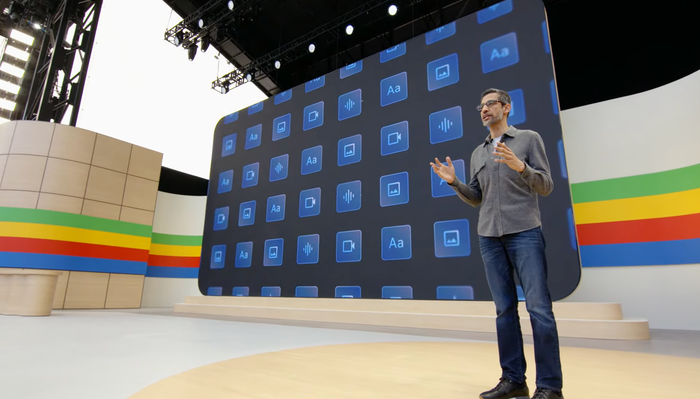
Google CEO Sundar Pichai Claims AI Now Creates Over a Quarter of All New Code

During Alphabet’s quarterly earnings call on Tuesday, CEO Sundar Pichai shared significant insights into how the company is optimizing its artificial intelligence (AI) infrastructure to drive efficiency and reduce costs. One of the key highlights was Pichai’s announcement that Google has now begun generating more than a quarter of all new code using generative AI. This shift has allowed the company to streamline its operations and become more cost-effective, leveraging AI not just for products but also for internal processes.

In a blog post summarizing the earnings call, Google emphasized the role AI is playing in improving operational efficiency. Pichai detailed how the company has overcome challenges in scaling its AI infrastructure, making it more accessible and efficient across all its products and services. Alphabet’s strong Q3 results, which saw a revenue of $88.3 billion (approximately Rs. 7.4 lakh crore), were largely driven by AI-based services that Google began offering earlier this year, marking a significant expansion in the company’s AI-focused business model.

The growth in revenue was not solely attributed to new AI services but also to Google’s careful management of expenditures. Pichai pointed out that part of the increase in revenue was the result of the company’s focus on becoming more agile and lean. By minimizing overhead and deploying smaller, more efficient teams, Google has been able to accelerate development and delivery. Pichai specifically mentioned the creation of Notebook LM, an AI tool developed by a small, dedicated team, as an example of how this new approach has allowed for quicker innovation.

Overall, the earnings call highlighted not only the financial success of Alphabet in the third quarter of 2024 but also the pivotal role AI is playing in reshaping Google’s operations. With generative AI now driving a significant portion of new code generation, the company is positioning itself as a leader in the integration of AI into business operations, aiming to stay competitive while optimizing both its product offerings and internal processes


Google Unveils AI-Powered ‘Help Me Write’ Feature for Gmail and Expands ‘Polish’ to Additional Platforms

Google is enhancing its Gmail platform with new AI-driven features designed to streamline the writing process for users. Among the most notable additions is the “Help Me Write” shortcut, which uses artificial intelligence to generate text suggestions, helping users refine their drafts directly within the text fields. This new feature is rolling out to Gmail on the web, making it easier than ever to craft polished messages without having to start from scratch. The tool is especially useful for users looking for quick assistance with drafting emails or refining existing content.

Along with “Help Me Write,” Google is also expanding its “Polish” feature, which has been designed to refine drafts further by suggesting improvements in tone and clarity. The Polish feature is now available on both web and mobile platforms. For Gmail on the web, the shortcut will appear when a draft email has been created but is still empty, offering suggestions to get the ball rolling. On mobile devices, the Polish shortcut remains accessible in the same location, ensuring users can fine-tune their drafts on the go.

The “Polish” feature is triggered for drafts containing more than 12 words, and users can activate it by swiping right on the shortcut. Alternatively, a keyboard shortcut (Control+H) can be used for the same result. Once activated, users are given three preset options to further enhance the text: “Formalize,” “Elaborate,” or “Shorten.” These options offer tailored adjustments, allowing users to adjust their emails’ tone and length based on their specific needs. Whether a user wants to make their message more professional, add more detail, or make it more concise, the “Polish” feature offers a convenient, AI-powered solution.

With the introduction of these new AI features, Google continues to integrate more advanced tools into its Workspace offerings, making everyday tasks like email composition faster and more efficient. By leveraging AI to provide real-time writing assistance, Google is positioning its Gmail platform as an even more powerful tool for professionals looking to manage their communications with ease. The new shortcuts are expected to improve productivity and simplify the process of composing and refining messages, particularly for users who want quick and effective help without leaving their inbox.

Google Unveils Secure AI Framework and Shares Best Practices for Safe Model Deployment

Google has introduced a new tool aimed at improving the safety and security of AI model deployment, offering a framework designed to mitigate risks associated with artificial intelligence. Last year, the company unveiled its Secure AI Framework (SAIF), a set of guidelines created to help both Google and other enterprises build safer large language models (LLMs). The newly launched SAIF tool expands on these guidelines by providing a questionnaire-based system that generates a personalized checklist for developers and enterprises, offering actionable insights on how to enhance the security of their AI models.

This new tool is specifically designed to guide AI developers through the complexities of deploying AI models, helping them identify potential risks and implement best practices for safeguarding against those risks. Google’s blog post highlights that, while AI models can bring about tremendous benefits, they also come with a range of risks, including the generation of inappropriate content, deepfakes, and even misinformation. The tool is geared towards minimizing these risks and ensuring that AI technologies are deployed responsibly and ethically.

One of the major concerns in AI development is the potential for “jailbreaking,” where malicious actors manipulate AI models to make them perform tasks they were not originally designed to carry out. Google’s tool seeks to address this issue by providing developers with questions related to critical areas such as model training, tuning, and evaluation, as well as access control for models and data sets. It also covers preventive measures for attacks and harmful inputs, making it a comprehensive tool for ensuring that AI models are both secure and reliable.

The SAIF tool not only reflects Google’s commitment to responsible AI development but also underscores the need for all organizations involved in AI to adopt rigorous security protocols. With the increasing power and influence of AI technologies, it is vital for companies to consider the ethical implications of their models and take steps to safeguard against misuse. By sharing these best practices and offering the SAIF tool, Google is setting a benchmark for industry standards and encouraging a safer, more secure approach to AI model deployment across the globe.