Yazılar

Chinese Hedge Funds Embrace AI, Challenging Western Dominance in Fund Management

China’s hedge fund industry is undergoing a dramatic transformation as artificial intelligence (AI) takes center stage, driven by the success of High-Flyer, a prominent Chinese hedge fund that has integrated AI into its multi-billion-dollar portfolio. High-Flyer’s innovative approach to AI in trading, along with its DeepSeek AI startup, has sparked a race among mainland Chinese asset managers to adopt AI technologies, potentially disrupting the $10 trillion fund management market.

High-Flyer‘s success in leveraging AI to process market data and develop trading strategies has prompted other Chinese hedge funds, such as Baiont Quant, Wizard Quant, and Mingshi Investment Management, to enhance their own AI research. These funds are now accelerating their AI development efforts to stay competitive. According to Feng Ji, CEO of Baiont Quant, “We are in the eye of the storm” of an AI revolution, emphasizing that skepticism about AI-powered trading is quickly fading. “Two years ago, many fund managers mocked us AI-powered quants. Today, those who don’t embrace AI could be out of business.”

While these funds are largely focused on using AI for market analysis and generating trading signals based on investor risk profiles, the ambition is clear: to develop cutting-edge AI models like DeepSeek. This AI model, which stunned Silicon Valley with its low-cost capabilities, has significantly reduced barriers for Chinese funds to incorporate AI into their operations.

As more Chinese hedge funds look to replicate the success of U.S. systematic trading firms like Renaissance Technologies and D.E. Shaw, competition for “alpha” (outperformance) is intensifying. Wizard Quant, for example, recently announced plans to recruit top AI researchers to reshape the future of science and technology in trading. Meanwhile, Mingshi Investment is expanding its AI capabilities with its Genesis AI Lab and UBI Quant has been working on AI research for years.

The demand for highly skilled coding talent is escalating as these funds race to develop superior trading strategies using AI. In response, local authorities, like the government of Shenzhen, have pledged to invest in hedge fund computing needs, with plans to subsidize AI computing power to the tune of 4.5 billion yuan ($620.75 million).

On the mutual fund front, many Chinese retail fund companies are also jumping on the AI bandwagon. Firms such as China Merchants Fund, E Fund, and Dacheng Fund have successfully deployed DeepSeek, benefiting from its cost-effective AI solutions. According to Hu Yi, Vice General Manager at Zheshang Fund, DeepSeek has made AI accessible to the wider mutual fund industry, allowing funds to automate tasks like market signal monitoring and report generation. This frees up human resources for more strategic, creative roles.

In a broader context, DeepSeek‘s open-source, low-cost large language model has leveled the playing field for smaller Chinese fund managers, previously at a disadvantage compared to their larger U.S. counterparts. As Larry Cao, Principal Analyst at FinAI Research, explains, “Before DeepSeek, AI had mostly been reserved for top-tier players due to the high cost, talent, and technology requirements.”

Baiont’s Feng Ji highlights how AI has democratized access to expertise, enabling newer firms to challenge established players. “With AI, you can acquire 20 years of experience in just two months,” he said, noting that his own five-year-old fund, managing 6 billion yuan, has already surpassed many older rivals in terms of performance.

Clearwater to Acquire Enfusion for $1.5 Billion to Expand International Reach

Clearwater Analytics (CWAN.N) has reached an agreement to acquire financial software maker Enfusion (ENFN.N) in a $1.5 billion cash-and-stock deal. The transaction, which is part of Clearwater’s strategy to enhance its international footprint and penetrate the hedge fund industry, involves Enfusion shareholders receiving $5.85 in cash and $5.40 in Clearwater stock per share. This values the Chicago-based company at $11.25 per share, a 32% premium over Enfusion’s stock price on September 19, the day Reuters first reported the potential deal.

The announcement led to a nearly 9% increase in Enfusion’s stock price. The deal is seen as an effort by Clearwater to expand its capabilities by integrating Enfusion’s services, which focus on portfolio management and risk systems primarily for hedge funds. Clearwater’s CEO, Sandeep Sahai, highlighted the complementary nature of the two companies, with Clearwater’s post-trade analytics aligning with Enfusion’s pre-trade systems.

Enfusion, which projects a revenue of $201 million to $202 million in 2024, has attracted acquisition interest in the past, including from private equity firms like Francisco Partners, Vista Equity Partners, and Irenic Capital Management. The deal has garnered support from certain major shareholders, including FTV Management Company, ICONIQ Growth, and Enfusion’s CEO Oleg Movchan, who collectively hold about 45% of Enfusion’s voting power.

J.P. Morgan Securities and Kirkland & Ellis advised Clearwater, while Goldman Sachs and Dechert assisted Enfusion’s special committee in the transaction. The deal is expected to close in the second quarter of 2025.


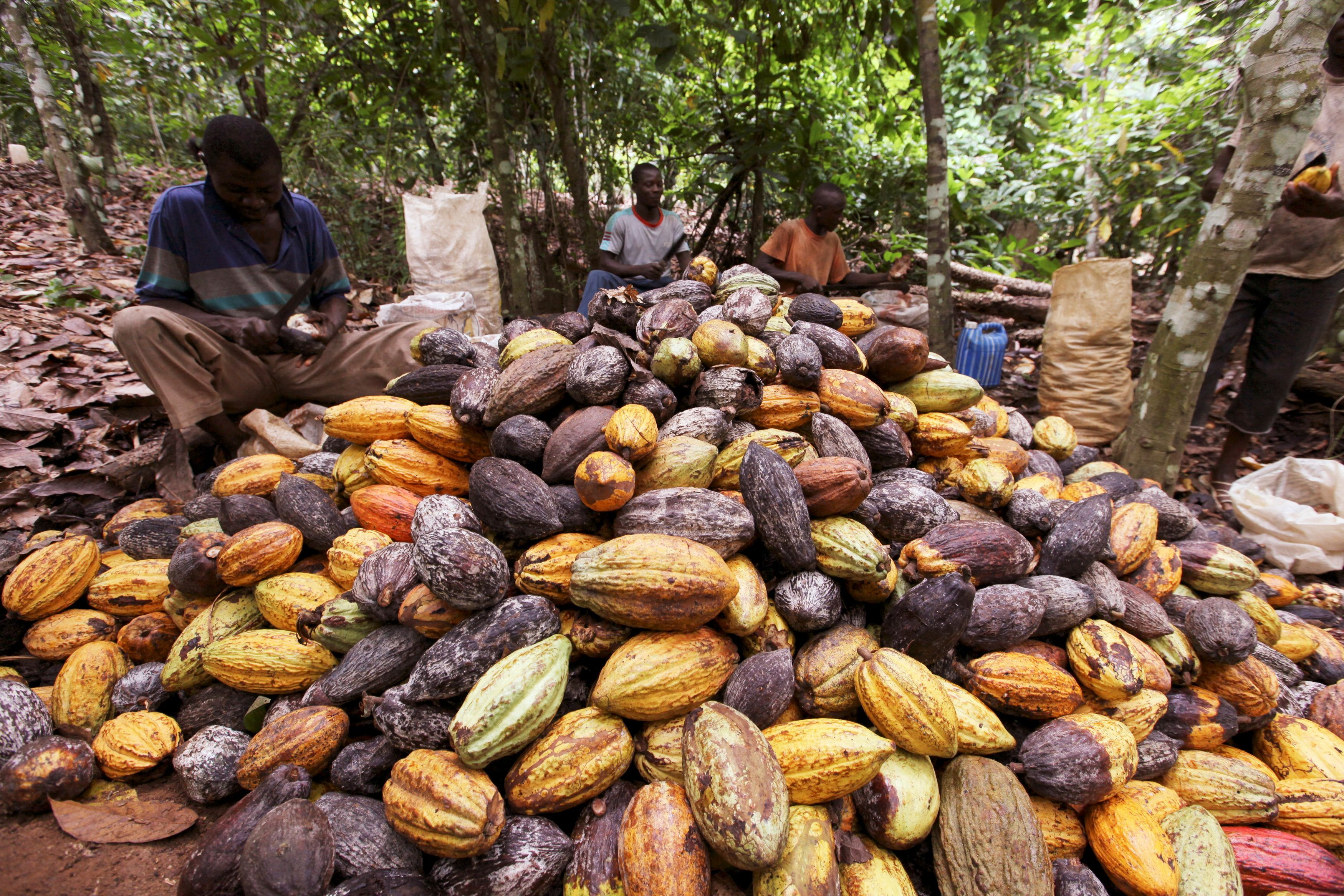
Hedge Fund Retreat Transforms Cocoa Markets Amid Price Surge

A record-breaking surge in global cocoa prices this year has exposed a dramatic shift in financial markets underpinning the cost of chocolate: hedge funds, once key players in cocoa futures trading, have largely exited the market. Their withdrawal has reshaped cocoa markets, driving unprecedented volatility and straining liquidity.

Cocoa futures, traded on exchanges in London and New York, are vital for determining the price of cocoa beans, influencing confectionery costs worldwide. However, by mid-2022, hedge funds—speculative investors that use pooled private capital—began scaling back their activity in cocoa markets. This retreat accelerated in 2023 due to heightened price swings, which increased trading costs and eroded profitability.

The market turmoil was fueled by adverse weather conditions and crop diseases in top cocoa-producing nations Ivory Coast and Ghana. These challenges drove cocoa prices to a record high in February, surpassing the previous peak set in 1977. Hedge funds, which peaked at a 36% share of the market in May 2023, reduced their presence to just 7% by late May, their lowest participation in over a decade.

Razvan Remsing of Aspect Capital, a $9.3 billion London-based hedge fund, explained that extreme volatility compelled the firm to reduce its exposure to cocoa futures. Aspect trimmed its cocoa holdings from nearly 5% of its portfolio in January to under 1% by April. Lawrence Abrams of Absolute Return Capital Management noted that the collateral required to trade cocoa futures skyrocketed, increasing costs for speculators.

The hedge fund exodus had cascading effects on the market. Liquidity—the ease of buying and selling—plummeted, leading to wider bid-ask spreads and amplified price swings. Daily price fluctuations reached $800 in May, up 15 times from the previous year, while volatility hit record highs. As a result, traders and brokers faced significant challenges executing large trades without distorting prices.

The cocoa market’s altered dynamics prompted some industry players to seek alternatives to futures contracts. Macquarie, an Australian investment bank, reported increased demand for over-the-counter products, which offer narrower price protection. However, such instruments have limited use compared to traditional futures contracts.

Major trading houses and cocoa producers also faced steep losses as Ghana delayed delivery on nearly half of its cocoa harvest for the October 2023 to September 2024 season. This disruption forced traders to liquidate positions at significant losses, compounding market instability.

Despite some hedge funds returning to the market, their collective share of cocoa trading remains well below previous levels. Short-term investors, including day traders, have partially filled the gap but lack the liquidity-providing role of hedge funds. Brokers have nicknamed these transient participants “cocoa tourists” for their fleeting involvement in the market.

The fallout from the hedge fund retreat extends to chocolate makers, particularly small and medium-sized businesses. Volatile prices and higher costs have forced many to pass expenses to consumers, reduce product sizes, or shutter operations.

For cocoa-producing nations like Ivory Coast and Ghana, the turbulence in futures markets has profound implications. These countries depend on stable futures markets to hedge income and protect farmers from price fluctuations. The market’s current volatility underscores the risks of relying heavily on speculative financial actors.

As cocoa markets navigate their transformed landscape, the episode highlights the systemic importance of hedge funds and their outsized influence on global commodity markets.