Yazılar

NASA’s Hubble Space Telescope Reveals Stunning Spiral Galaxy with Multiple Starburst Regions

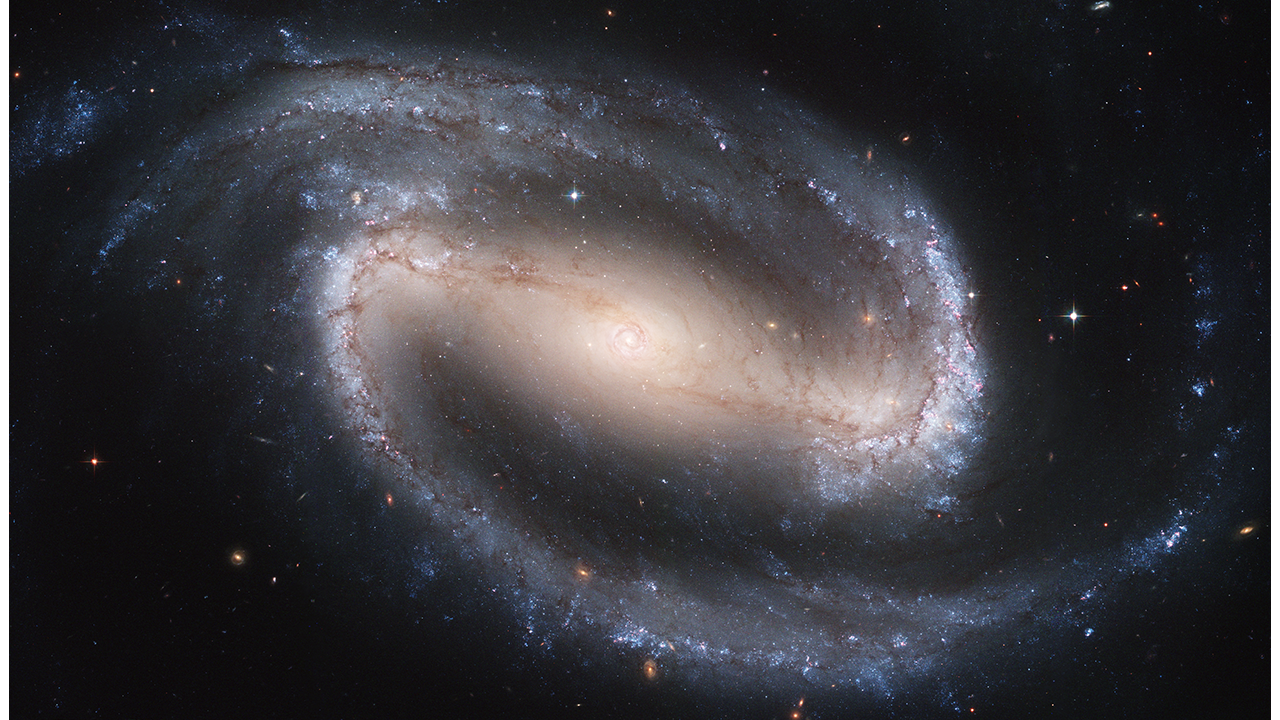
The Hubble Space Telescope has recently unveiled a stunning image of the spiral galaxy NGC 5248, located about 42 million light-years away from Earth in the constellation Boötes. Known as Caldwell 45, NGC 5248 is celebrated for its breathtaking spiral structure and vibrant starburst regions, which have made it a favorite subject for astronomers. This galaxy’s captivating features provide valuable insights into the processes of star formation and galactic evolution.

In the remarkable image captured by Hubble, NGC 5248 reveals its two prominent spiral arms that gracefully extend from a bright central region, almost reaching the edges of the frame. Dark reddish dust lanes weave through these arms, blocking some light and accentuating the intricate details of the galaxy’s structure. Scattered throughout the image are glowing points of bright pink, signifying areas where new stars are actively forming. These starburst regions contribute to the galaxy’s dynamic appearance, highlighting the ongoing processes of stellar birth and development.

Classified as a ‘grand design’ spiral galaxy, NGC 5248 features well-defined arms and a subtle bar structure at its core, although the bar is not fully visible in the Hubble portrait. The distinct morphology of this galaxy is crucial for understanding its evolutionary path. The well-defined spiral arms serve as pathways for the movement of gas and dust, influencing the dynamics within the galaxy and contributing to its star formation rates.

The dynamic flows of gas from the galaxy’s outer regions feed into the central star-forming areas, potentially directing material toward its central black hole. This interaction can facilitate the formation of an active galactic nucleus, a region of intense energy output at the core of the galaxy. As astronomers continue to study NGC 5248 and its intricate features, they gain deeper insights into the mechanisms of galaxy formation and the complex interplay between stars, gas, and dark matter in the universe. The Hubble Space Telescope’s observations of such galaxies not only enhance our understanding of the cosmos but also inspire awe and curiosity about the vastness of space.
Hubble Detects Size and Speed Changes in Jupiter’s Great Red Spot

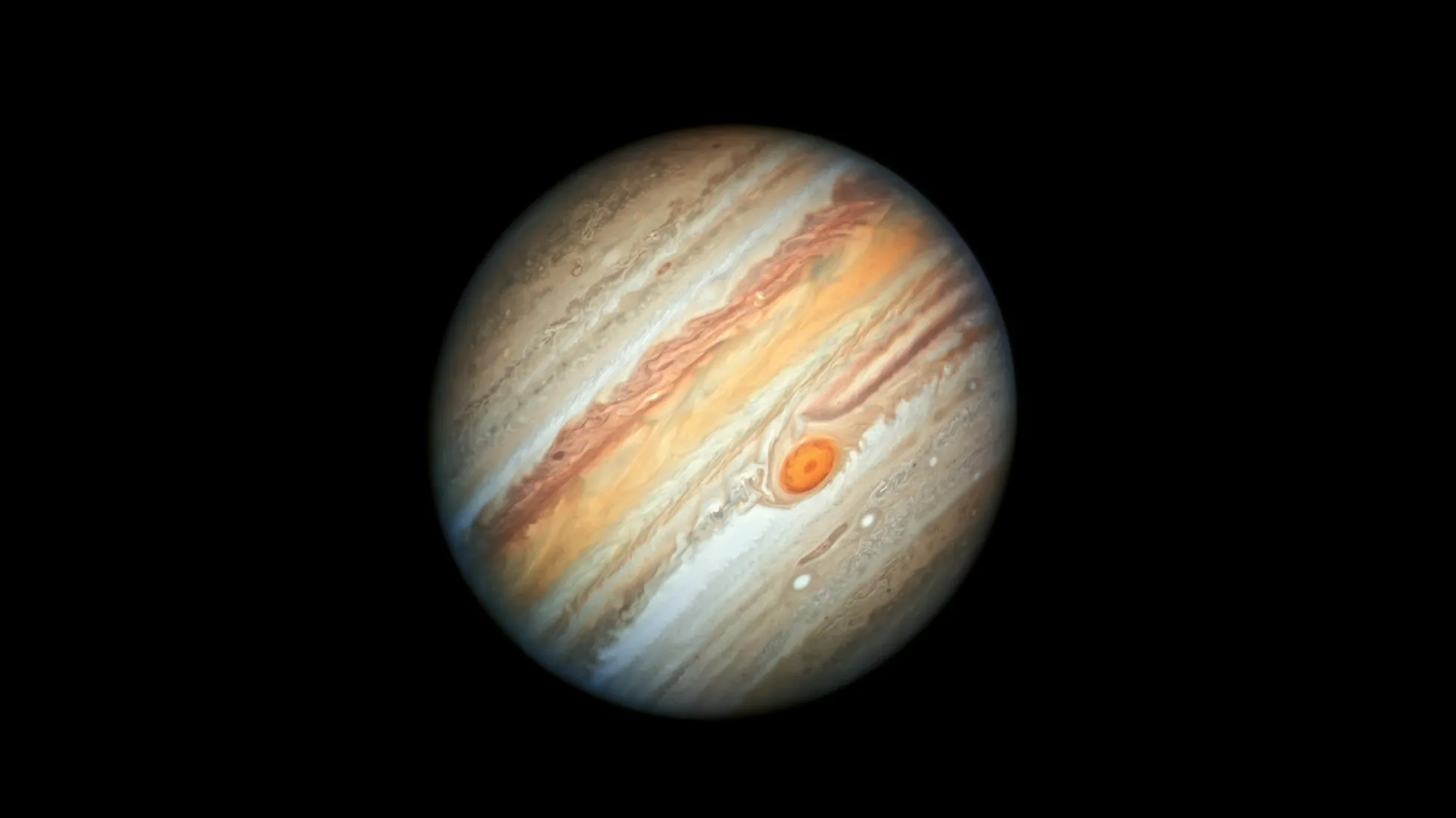
NASA’s Hubble Space Telescope has recently observed unprecedented behavior in Jupiter’s Great Red Spot (GRS), a massive storm system that has raged for centuries. Spanning a size large enough to engulf Earth, the Great Red Spot has drawn attention for its dynamic nature, but never before have scientists documented the storm exhibiting this “jiggling” effect. The oscillations in its size and fluctuations in speed are unlike any changes previously recorded, leaving astronomers both puzzled and intrigued. As the Hubble Telescope captured these unusual shifts, questions have arisen about the potential causes behind this newfound instability.

The Great Red Spot’s surprising movement comes as a major revelation in planetary science. Despite its gradual shrinking over the past decade, recent data reveal unpredictable expansions and contractions that diverge from its historical patterns. A team of astronomers, led by Amy Simon from NASA’s Goddard Space Flight Center, published these findings in The Planetary Science Journal, marking a groundbreaking moment for those studying Jupiter’s atmospheric dynamics. Simon expressed the team’s amazement, noting that while scientists have previously observed slight changes in the storm’s positioning, this ongoing “jiggle” is a completely unexpected development.

In addition to size oscillations, the Great Red Spot is now varying in speed—a feature newly documented through Hubble’s advanced imaging capabilities. According to the team’s analysis, the storm’s changes in velocity could point to fluctuations in Jupiter’s atmospheric conditions, though the exact mechanisms remain unclear. By closely examining the storm’s behavior through the telescope, researchers hope to uncover insights into the atmospheric dynamics at play, which may be driven by factors beyond Jupiter’s traditionally observed forces.

With these findings, astronomers are now exploring theories that could explain this puzzling transformation. One possibility under consideration is that internal atmospheric forces may be causing a disturbance in the storm’s structure. This unanticipated phenomenon highlights the complexity of planetary weather systems and reminds scientists of the vast unknowns within our solar system. As the study continues, further observations may provide clues to help explain the Great Red Spot’s new and mysterious behavior, potentially advancing our understanding of Jupiter’s volatile atmosphere.

NASA’s Hubble and New Horizons Team Up to Enhance Understanding of Uranus and Exoplanets

NASA’s Hubble Space Telescope and the New Horizons spacecraft have recently collaborated to explore Uranus, a planet renowned for its enigmatic atmosphere and striking features. Positioned in low-Earth orbit, Hubble was able to capture intricate images of Uranus, revealing details about its clouds and storm patterns. In contrast, New Horizons, situated approximately 6.5 billion miles away, provided a more distant perspective, showing Uranus as a mere dot against the vast backdrop of space. This joint effort not only enhances our understanding of Uranus but also serves as a vital reference point for astronomers studying exoplanets orbiting other stars.

The collaboration between Hubble and New Horizons is particularly significant for exoplanet imaging. According to lead author Samantha Hasler from the Massachusetts Institute of Technology, this partnership acts as a practical test case for observing exoplanets at considerable distances. By comparing Hubble’s detailed observations with New Horizons’ broad view, researchers can better understand how gas giants like Uranus would appear from light-years away. This understanding is crucial as astronomers strive to detect and characterize exoplanets that share similar traits to those found within our own solar system.

One of the noteworthy discoveries from this mission was that Uranus appeared dimmer than anticipated based on New Horizons’ observations. This finding has important implications for our understanding of light reflection on planetary atmospheres at various angles. By clarifying how light interacts with Uranus, scientists gain insights that are directly applicable to future missions, such as NASA’s Nancy Grace Roman Space Telescope and the Habitable Worlds Observatory. Both of these upcoming projects are designed to focus on exoplanets and their atmospheric characteristics, making this research especially timely and relevant.

As astronomers continue to analyze the data collected from this collaboration, they are paving the way for future exploration of not only Uranus but also other distant worlds beyond our solar system. Alan Stern, Principal Investigator for New Horizons at the Southwest Research Institute, emphasized the significance of these findings in understanding planetary atmospheres and preparing for missions aimed at identifying potentially habitable worlds. This collaboration between Hubble and New Horizons exemplifies how teamwork and technology in space exploration can yield valuable knowledge, enhancing our understanding of the universe and its myriad celestial bodies