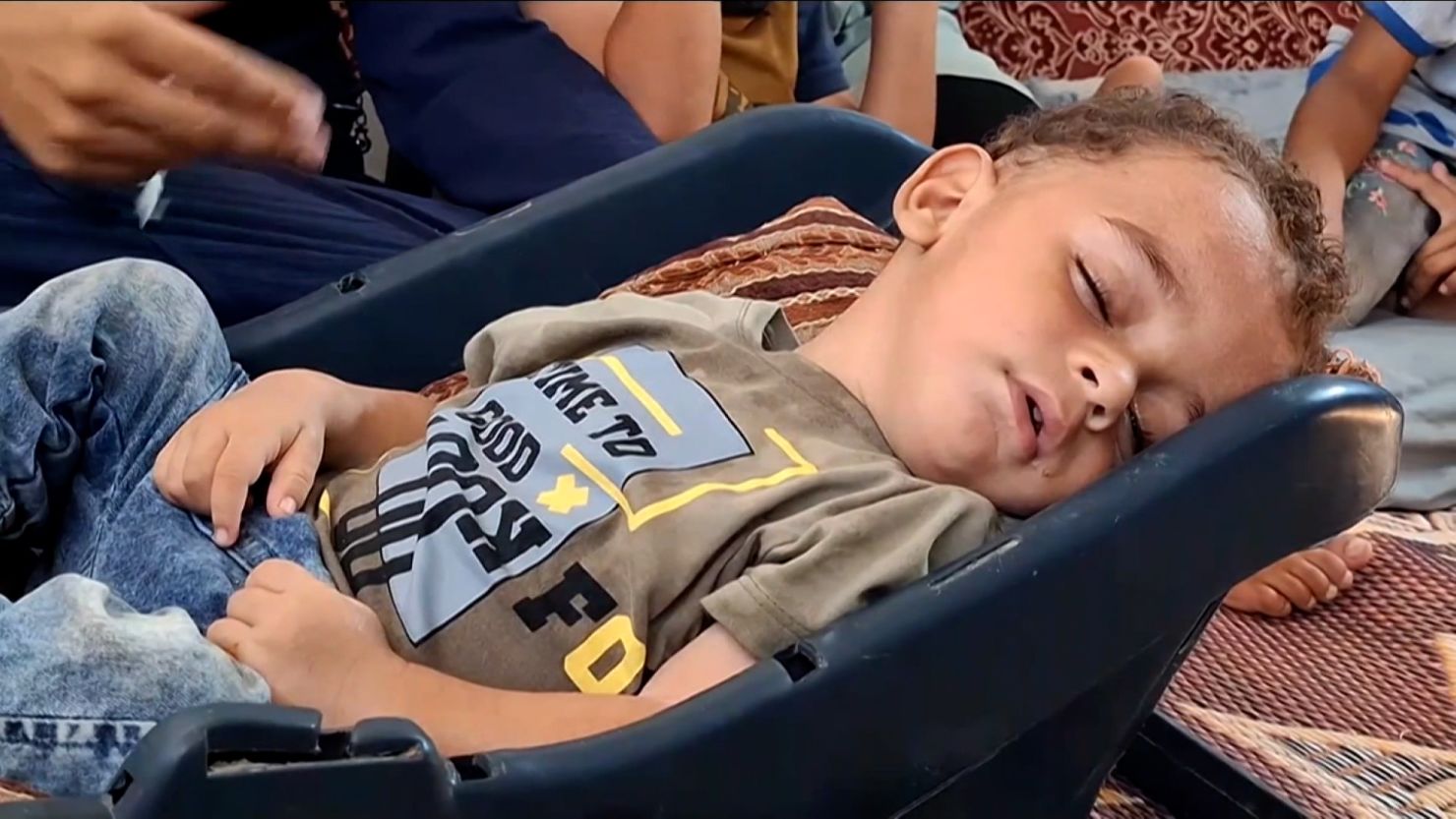
In the war-ravaged Gaza Strip, one-year-old Abdul Rahman lies in a battered car seat, too young to understand the drones circling above or the gravity of the incurable disease now paralyzing his small body. His mother, Niveen Abu al-Jidyan, watches over him in a makeshift tent at Al-Mawasi refugee camp, deeply distressed by her son’s condition. “He can’t stand, sit, or move like before. He is very weak,” she says, helpless as Abdul Rahman battles polio, the first case Gaza has seen in 25 years.
Polio, a once-feared disease that mostly affects children under five, can cause irreversible paralysis and even death, but it is easily preventable with a vaccine. However, amid the ongoing war, Abdul Rahman never received the vaccinations that could have protected him. Once boasting near-universal immunization coverage, Gaza’s rates have plummeted to just over 80%, leaving children like Abdul Rahman vulnerable to preventable diseases.
The World Health Organization (WHO) and UNICEF are working together to roll out a mass vaccination campaign aimed at inoculating 640,000 children under the age of 10 in Gaza, a vital step to prevent the outbreak from spreading. According to WHO, around 95% of the population needs to be vaccinated to halt the virus in its tracks. If this level of coverage isn’t achieved, WHO warns that thousands of children could soon fall victim to the disease.
Despite the urgency, the logistics of conducting such a large-scale vaccination drive in a war zone present monumental challenges. Ongoing Israeli bombardments have displaced up to 90% of Gaza’s population, destroyed infrastructure, and severely hampered access to food, water, and medical care. Most of Gaza’s health facilities have been destroyed, leaving only five of the original 22 health centers operational. As Sam Rose, director of planning at UNRWA, explains, “The administration of the vaccine is the easy part. The difficult part is everything else.” Repeated evacuations and the destruction of essential infrastructure continue to hinder aid efforts.
COGAT, the Israeli government agency responsible for coordinating movement into and out of Gaza, has allowed over 25,000 vials of polio vaccine into the strip, along with necessary cooling equipment to maintain the vaccine’s effectiveness. If conditions allow, the vaccination drive is set to begin on August 31. However, for Abdul Rahman, this comes too late.
With Gaza’s healthcare system devastated by war, the Abu al-Jidyan family faces an uncertain future. Polio may have no cure, but there are treatments that can help alleviate its symptoms. Unfortunately, even these limited treatments are likely out of reach for Abdul Rahman due to the lack of medical supplies and facilities in the strip. Desperate, Niveen Abu al-Jidyan pleads for help: “Take him abroad for treatment or find a solution so my son can start walking and start moving again.”
As Gaza struggles to combat both the war and a resurgence of polio, Abdul Rahman’s story is a tragic reminder of the toll that conflict takes on the most vulnerable. The urgency of the vaccination campaign is now more critical than ever, with the future health of thousands of children hanging in the balance.