Yazılar

NXP Semiconductors Eyes Up to 10 Percent of Revenue from India by 2030, According to Executive

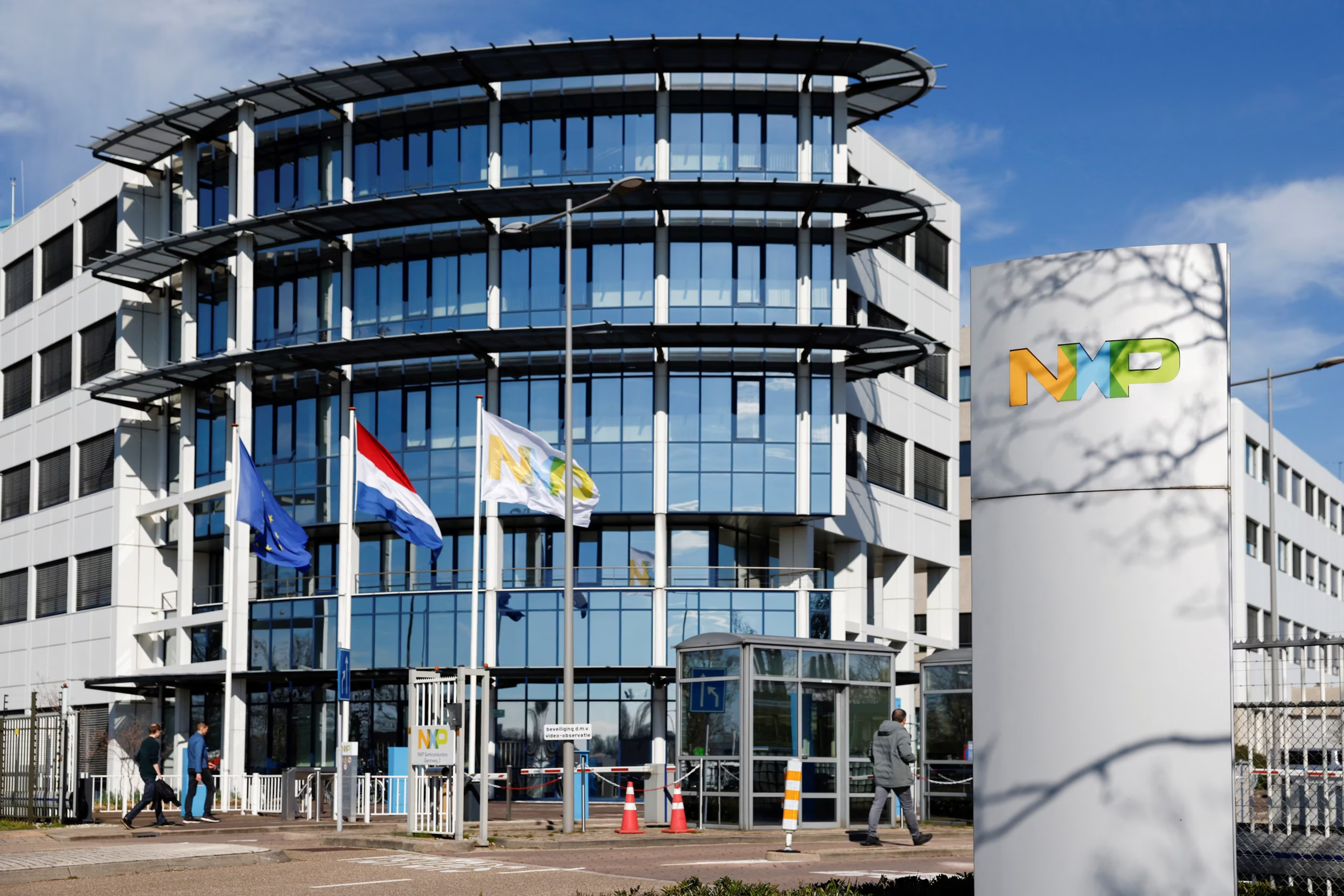
NXP Semiconductors, a leading global semiconductor company, has set its sights on India as a major growth market, projecting that the country could contribute between 8 to 10 percent of its total revenue over the next three to five years. According to Hitesh Garg, the head of NXP India, the rapidly expanding automotive and industrial sectors in India are expected to drive this surge in sales. In a statement made during an industry event in Bengaluru, Garg highlighted that India’s importance as a market for NXP will continue to rise in the coming years, with the company planning to leverage the country’s growing demand for semiconductors, particularly in automotive and industrial applications.

Despite India being a smaller market for semiconductor companies compared to regions like North America and Europe, NXP sees significant potential in the country. The company has not yet broken down its revenue figures from India, but Garg emphasized that the next few years will be crucial for the company’s strategy in the region. As India becomes a hub for automotive innovation, particularly in the electric vehicle (EV) sector, NXP is positioning itself to capture a larger share of this evolving market, which requires advanced semiconductor solutions for everything from vehicle control systems to electric powertrains.

The shift in focus towards India is also timely, as the semiconductor industry faces challenges in other major markets, particularly China. NXP, along with other automotive chipmakers, has seen its sales to China come under pressure due to China’s aggressive investments in the production of older chips, as well as the impact of European tariffs on Chinese electric vehicles. With these headwinds in key markets, NXP’s pivot towards India aligns with the company’s broader strategy to diversify its revenue streams and capitalize on new opportunities in the fast-growing Indian market.

India’s growing technological ecosystem, fueled by the government’s push for a self-reliant semiconductor industry and the rise of electric vehicles and smart infrastructure, offers significant growth prospects for companies like NXP. With the automotive and industrial sectors expected to be the key drivers of demand, NXP is well-positioned to take advantage of India’s expanding role in the global semiconductor supply chain. As the country continues to evolve as a technology and manufacturing hub, NXP’s investment in India will likely pay off, helping the company establish a strong presence in one of the world’s most promising markets.

NXP Plans to Generate 8-10% of Revenue from India by 2030

NXP Semiconductors is poised to generate between 8% and 10% of its revenue from India by 2030, driven by the growing demand in the country’s automotive and industrial sectors. Hitesh Garg, head of NXP India, shared this projection at an industry event in Bengaluru, emphasizing that the next three to five years will be crucial for the company as it targets significant revenue growth in the region.

While NXP currently does not disclose its revenue from India, the company views the country as an increasingly important market. India’s expanding automotive industry and the rise of industrial applications for chips are expected to fuel this growth. As a result, NXP is positioning itself to capture market share in the region, which is still a small but fast-growing segment for many global chip manufacturers.

This strategic focus on India comes at a time when NXP’s sales in China have faced uncertainty due to geopolitical tensions, including the expansion of Chinese production in older chip technologies and European tariffs on Chinese electric vehicles. In 2023, China represented nearly a third of NXP’s $13.28 billion in sales, with the rest of the Asia-Pacific region accounting for nearly 30%. Garg indicated that any missed opportunities in one market could be offset by expanding in others, like India.

India’s semiconductor industry is still in its early stages, but the government has been working to establish a robust ecosystem, with initiatives like a $10 billion incentive package aimed at growing the local chip market. The country expects its semiconductor market to reach $63 billion by 2026, despite not yet producing its own chips. In September, NXP announced a $1 billion investment in India, which includes a major boost to its research and development efforts. Other companies like Micron are also making investments in the Indian market, signaling growing confidence in the region’s potential.


Microsoft to Invest $3 Billion in India to Expand AI and Cloud Infrastructure

Microsoft is set to invest $3 billion over the next two years to enhance its Azure cloud and artificial intelligence (AI) capabilities in India, CEO Satya Nadella announced on Tuesday. This marks the company’s largest investment in India to date, underscoring the strategic importance of the country, which offers a robust tech ecosystem and cost-effective expertise. The initiative also includes efforts to upskill the Indian workforce in AI, with plans to further train 10 million people in AI by 2030.

The investment comes on top of Microsoft’s previously announced $80 billion plan to build AI-enabled data centers for fiscal 2025. This expansion in India is seen as a critical component of Microsoft’s strategy to tap into the country’s growing tech talent, with over 20,000 employees across 10 Indian cities. Nadella emphasized the significance of India’s developer community, which is already the second-largest on GitHub, with projections to surpass the U.S. by 2028.

In Bengaluru, where Nadella was speaking at a conference, he highlighted India’s contributions to Microsoft’s AI projects, specifically in relation to GitHub Copilot, the company’s generative AI tool for developers. Nadella also stressed that India’s involvement in AI initiatives is second only to the U.S., showcasing the country’s vital role in the company’s global AI ambitions.

This investment is part of Microsoft’s broader efforts to ensure its AI technologies generate profitable returns. GitHub Copilot has already shown success, with a reported annual run-rate of $2 billion in July. The company is also focused on empowering India’s talent pool, with plans to further upskill millions and foster innovation in cloud and AI sectors.

The announcement reflects the strong ties between Microsoft and India, where Nadella, who is of Indian origin, enjoys significant respect. The “Microsoft AI Tour,” which Nadella is currently part of, has drawn large crowds, including tech professionals eager to see new product developments and interact with the company’s leadership.