
Yazılar

India Makes Strides in Deep-Sea Mining: Varaha-3 Successfully Collects Polymetallic Nodules

The National Institute of Ocean Technology (NIOT) has recently initiated significant exploratory trials in the Andaman Sea with the Varaha-3, a specialized seabed mining machine. Conducted at a depth of 1,193 meters, these trials represent India’s commitment to responsibly explore and harness ocean resources. The Geological Survey of India previously assessed the trial locations, identifying them as promising sites for valuable mineral resources, particularly polymetallic nodules, which are crucial for various technological applications.

During the trials, Varaha-3 demonstrated its capabilities by successfully collecting polymetallic nodules ranging from 60 to 120 mm in size. These nodules are rich in essential metals such as nickel, cobalt, and copper, all of which are increasingly important for industries focused on renewable energy and electric vehicle production. The ability to gather these resources effectively marks a significant advancement in India’s deep-sea mining capabilities, paving the way for future exploration and resource extraction initiatives.

Central to this effort is a strong emphasis on sustainable practices, reflecting India’s commitment to responsible ocean resource management. The design of Varaha-3 prioritizes efficiency while minimizing environmental impact, ensuring that the delicate marine ecosystem is preserved even as valuable resources are extracted. As part of the broader Deep Ocean Mission, the Indian government has made considerable investments in developing advanced technologies for deep-sea exploration, indicating a strategic approach to tapping into the ocean’s potential.

Looking ahead, the successful trials using Varaha-3 could open new avenues for resource extraction while fostering international collaboration in ocean science and technology. With the increasing demand for critical metals, especially in the context of global efforts to transition to renewable energy, India’s advancements in deep-sea mining are timely and relevant. As the nation continues to explore its ocean resources, the focus remains on balancing economic growth with environmental stewardship, ensuring a sustainable future for both industry and the marine environment.
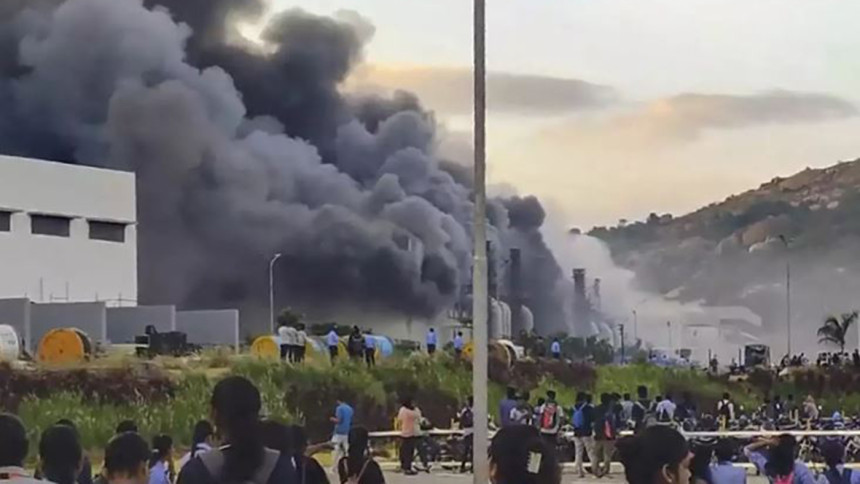

Apple May Face Increased Dependence on China Following Tata Plant Fire Incident

Apple Faces Potential Supply Chain Disruptions After Tata Plant Fire in India

A recent fire at Tata Group’s iPhone component plant in southern India may significantly affect Apple’s supply chain, potentially leading to production slowdowns ahead of the critical festive season sales period. The fire, which broke out over the weekend, has caused extensive damage to the facility, forcing an indefinite production halt. As a result, Apple may be compelled to source essential iPhone components from China or other suppliers to meet the demand spike anticipated during the holiday season. This situation could expose the tech giant to increased reliance on China, a dependence it has been trying to reduce.

The Tata Group plant in Hosur, Tamil Nadu, is the only facility in India supplying iPhone back panels and several other components. These parts are critical for Foxconn, Apple’s primary contract manufacturer in India, as well as for Tata’s own iPhone assembly operations at another facility. The fire has interrupted this supply chain at a crucial moment, as Apple ramps up production to meet the expected surge in demand for iPhone 14 and iPhone 15 models in India during the festive season, which runs from late October to early November.

Industry analysts are already predicting a supply shortfall. Counterpoint Research, a Hong Kong-based market analysis firm, has estimated that Apple could sell around 1.5 million units of its iPhone 14 and 15 models during the Indian festive season. However, due to the fire, Apple may struggle to fulfill as much as 15% of that demand. This shortage could result in a scramble for parts, with Apple likely turning to Chinese suppliers to fill the gap and maintain production levels.

This fire comes at a particularly challenging time for Apple, which has been attempting to diversify its manufacturing base outside of China. Over the past few years, Apple has made significant efforts to shift some of its production to India, part of a broader strategy to reduce its dependence on China amid geopolitical tensions and supply chain vulnerabilities exposed during the COVID-19 pandemic. The Tata plant fire, however, may force Apple to revert to sourcing more components from China, at least temporarily, which could delay its efforts to establish a more resilient, geographically diversified supply chain.

The incident also highlights the growing importance of India as a manufacturing hub for Apple. India has been a key focus for Apple’s long-term plans, not only as a production center but also as an important consumer market. The company has been steadily expanding its local manufacturing capacity, with Tata Group playing a crucial role in this effort. If the fire leads to prolonged disruptions, it could have a ripple effect on both Apple’s supply chain strategy and its sales momentum in India.

As Apple assesses the damage and formulates a recovery plan, industry experts are watching closely to see how quickly Tata’s operations can resume and whether alternative suppliers will be able to fill the gap. The situation underscores the fragility of global supply chains, particularly for high-tech products like smartphones, which rely on a delicate balance of component sourcing and manufacturing across multiple countries. For Apple, this fire serves as a reminder of the risks inherent in its ongoing efforts to shift production away from China while maintaining high production volumes.

Bharti Airtel Settles $1 Billion of 2016 Spectrum Payments

Indian telecom companies face substantial government dues stemming from unpaid spectrum fees. Devamını Oku