Yazılar

India’s Central Bank Chief Warns of Renewed Global Inflation Risks and Economic Growth Concerns

India’s central bank governor, Shaktikanta Das, cautioned that global inflation could return, and economic growth may decelerate despite recent monetary policy successes. Speaking at CNBC-TV18’s Global Leadership Summit in Mumbai, Das acknowledged that central banks have achieved a “soft landing” amid repeated global shocks, but cautioned that the risks of inflation and slower growth persist due to ongoing geopolitical and economic challenges.

Das highlighted several factors exacerbating global instability, including escalating geopolitical conflicts, economic fragmentation, commodity price volatility, and the impacts of climate change. These factors have compounded uncertainty in financial markets, with conflicting trends across asset classes. Das pointed to the U.S. dollar’s recent appreciation, even as the Federal Reserve continues with its rate-cutting strategy, as one example of global market contradictions.

Investors are closely monitoring the implications of a potential second term for Donald Trump, given his stance on trade tariffs and immigration, both of which could stoke inflation and limit the Fed’s ability to continue rate cuts. The dollar index, which measures the dollar against six major currencies, recently surged to its highest level since November of last year, reflecting its strength despite the Fed’s easing.

In light of these global tensions, Das noted several market trends that illustrate the complex economic landscape:

  1. Bond Yields: Government bond yields are climbing, even as developed economies have pursued lower interest rates.
  2. Gold and Oil Prices: The prices of these commodities, which often move in sync, are now diverging markedly.
  3. Geopolitical Tensions vs. Market Stability: While geopolitical tensions are rising, global markets have remained resilient, reflecting an unusual tolerance to risk.

Turning to India’s economic performance, Das asserted that the nation’s economy remains robust and resilient, even amid global instability. He anticipates that inflation in India will moderate over time, although some volatility is expected. India’s economy has sustained growth throughout various global challenges, affirming its economic stability.

India’s Union Minister of Commerce, Piyush Goyal, expressed a desire for more supportive monetary policy, urging the Reserve Bank of India (RBI) to lower interest rates to further stimulate growth. The RBI recently maintained its interest rate at 6.5% and adopted a “neutral” policy stance, raising market hopes for potential rate cuts in the near future. Das refrained from commenting on the likelihood of a December rate adjustment, leaving room for speculation about the RBI’s next move.
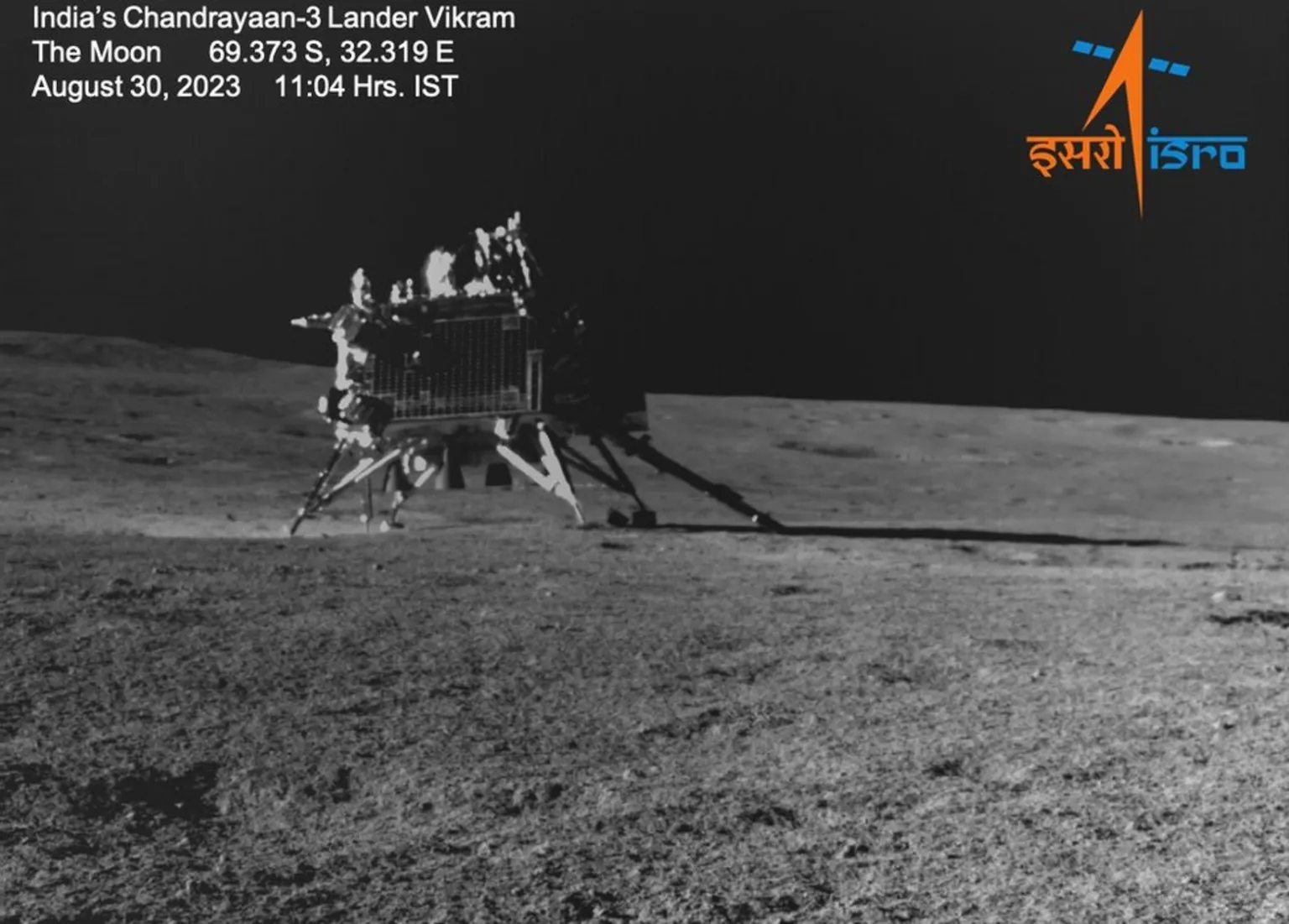
 

Why It Costs India So Little to Reach the Moon and Mars

India has recently allocated a record 227 billion rupees ($2.7 billion; £2.1 billion) for an array of ambitious space projects, which include advancing its Moon mission, sending an orbiter to Venus, establishing the first phase of a space station, and developing a new reusable heavy-lifting rocket. Despite this being the largest funding for space endeavors in India’s history, the costs of these projects remain remarkably low compared to international counterparts, raising questions about the efficiency of India’s space program.

Experts globally have noted the cost-effectiveness of the Indian Space Research Organisation’s (ISRO) missions. For instance, India spent $74 million on the Mars orbiter, Mangalyaan, and $75 million on last year’s Chandrayaan-3 mission, significantly lower than the $100 million budget for the Hollywood film Gravity. In comparison, NASA’s MAVEN orbiter cost $582 million, and Russia’s Luna-25 mission, which unfortunately crashed before Chandrayaan-3’s landing, had a budget of 12.6 billion roubles ($133 million).

Despite operating on a modest budget, Indian scientists are making substantial contributions to space research. Chandrayaan-1 was the first mission to confirm water presence on the Moon, while Mangalyaan provided critical data on methane in Mars’ atmosphere. The images and data sent back by Chandrayaan-3 have garnered worldwide interest among space enthusiasts.

So, what allows India to maintain such low costs?

According to Sisir Kumar Das, a retired civil servant who managed ISRO’s finances for over two decades, the frugality of India’s space program dates back to its inception in the 1960s. At that time, ISRO’s founder, Vikram Sarabhai, had to convince the government that a space program could serve practical purposes in a newly independent and resource-strapped country. Sarabhai emphasized that satellites could help improve the lives of citizens, justifying the investment in space exploration.

ISRO has consistently operated under tight budgets, shaped by the country’s competing priorities. Historical photographs depict scientists transporting rockets and satellites using bicycles or bullock carts, reflecting their resourcefulness. Currently, ISRO’s budget is approximately 130 billion rupees ($1.55 billion), in stark contrast to NASA’s annual budget of $25 billion.

A critical factor in ISRO’s low-cost operations is its commitment to developing homegrown technology. Following India’s first nuclear test in 1974, which prompted Western nations to impose technology transfer restrictions, ISRO saw this as an opportunity to foster domestic technological advancements. Consequently, all required equipment is manufactured in India, benefiting from significantly lower labor costs compared to the U.S. or Europe.

Science writer Pallava Bagla explains that while ISRO handles satellite manufacturing internally, NASA outsources much of this work to private companies and incurs additional costs through insurance. Furthermore, ISRO typically forgoes extensive engineering models used for testing before launches, opting instead to create a single model meant for flight. This approach carries inherent risks but allows for cost savings due to the nature of government funding.

Mylswamy Annadurai, who led India’s first two Moon missions and the Mars mission, notes that ISRO operates with smaller teams and lower salaries, making projects more competitive. Often, team members work extended hours out of passion for their work without additional compensation. The tight budget constraints often push scientists to innovate and find efficient solutions.

For instance, during Chandrayaan-1, budget constraints prompted scientists to reduce the spacecraft’s thrusters from 16 to 8 and streamline other components, which resulted in maintaining a strict launch schedule to avoid solar eclipses that could affect power supply.

The low cost of Mangalyaan was partly due to using hardware designed for Chandrayaan-2, which faced delays. This reuse of components is indicative of ISRO’s resourcefulness.

Despite ISRO’s impressive achievements at minimal costs, Bagla warns that as India expands its space ambitions, expenses are likely to rise. The current reliance on smaller rocket launchers means longer travel times for spacecraft. For example, Chandrayaan-3 orbited Earth multiple times before reaching the Moon, while Russia’s Luna-25 utilized a powerful Soyuz rocket for a quicker trajectory.

Looking forward, India has announced plans for a manned Moon mission by 2040, necessitating a more powerful rocket for faster travel. The government has already approved work on a new Next Generation Launch Vehicle (NGLV), expected to be ready by 2032, which will enhance payload capacity but also increase costs. Additionally, the opening of the space sector to private players is likely to drive expenses higher, potentially altering the cost-effectiveness that has characterized India’s space program.

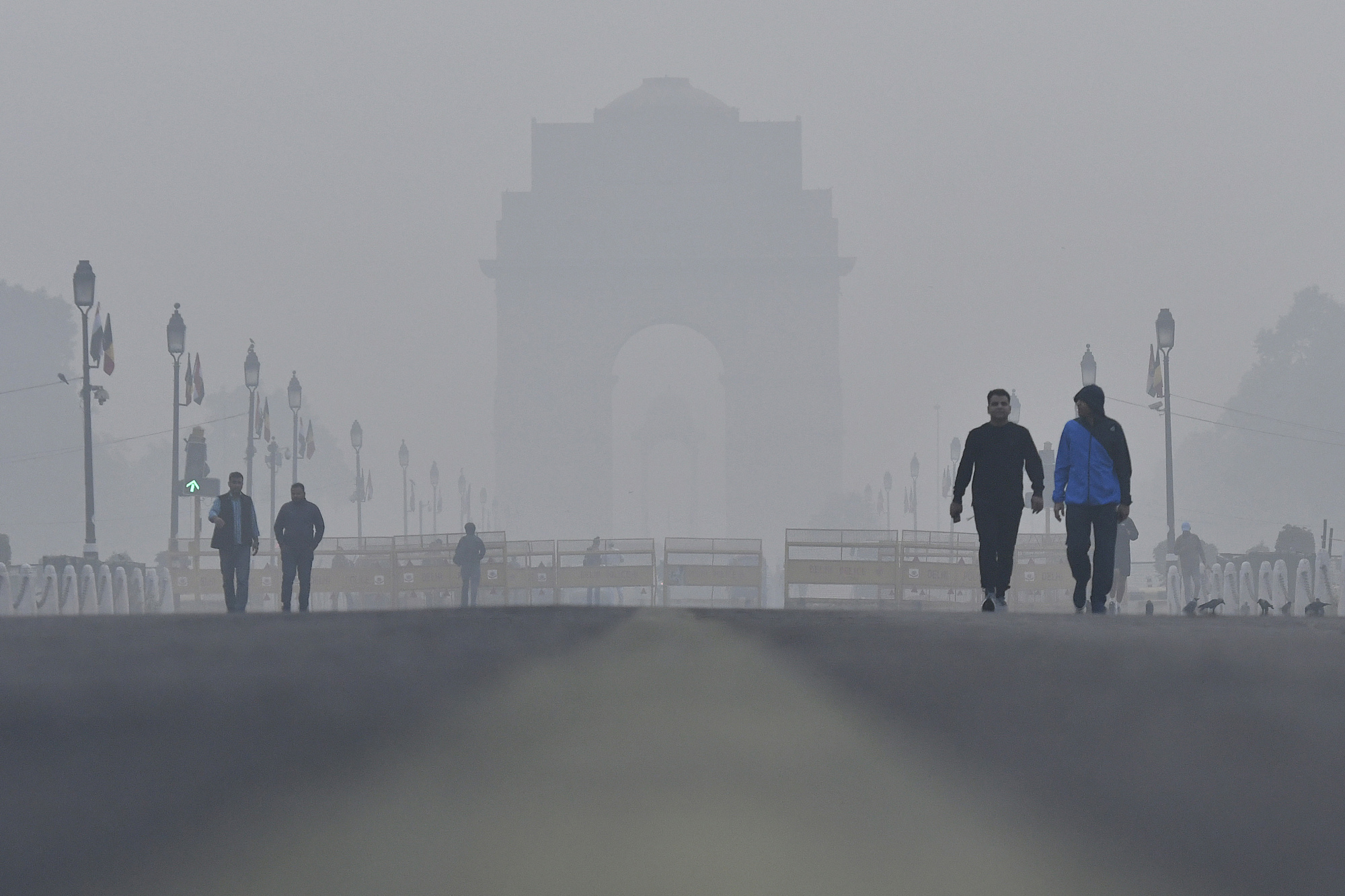
Toxic Smog Blankets Northern India and Eastern Pakistan Just Before Diwali

Northern India and eastern Pakistan are once again covered in a dense, toxic smog, just days before the Diwali festival, when air pollution traditionally spikes due to widespread firework celebrations. Air quality in Delhi was recorded at around 250 on Monday, placing it in the “very unhealthy” category, while Lahore, only 25 kilometers from the Indian border, registered air quality levels over 500—nearly 65 times the World Health Organization’s guidelines for healthy air, making it the world’s most polluted city, according to IQAir.

As winter approaches, the seasonal smog is expected to worsen, fed by agricultural waste burning, emissions from coal-fired power plants, heavy traffic, and stagnant air. Diwali celebrations, which begin on Thursday, typically involve firecracker use, often in violation of local bans, which exacerbates pollution levels. The thick smog not only creates eerie scenes of orange haze but also poses severe health risks, with experts warning that prolonged exposure could reduce life expectancy by years.

Delhi authorities have banned firecrackers in an attempt to curb pollution, but enforcement remains challenging. The Supreme Court of India recently criticized Punjab and Haryana officials for failing to limit illegal stubble burning, a major contributor to smog. Local authorities claim the practice has been curbed significantly, yet smog persists across the region.

India’s government initiated a nationwide Clean Air Programme in 2019, targeting a 40% reduction in particulate matter by 2026 through measures such as stricter coal plant regulations, increased air monitoring, and bans on biomass burning. Temporary measures, including sprinkling water on streets and inducing artificial rain, have been implemented to manage smog, but experts warn that these are short-term fixes that do not address the underlying pollution sources.

While some Indian cities report slight improvements in air quality, New Delhi’s pollution levels remain largely unchanged over recent years. Activists like Jyoti Pande Lavakare, founder of Care for Air, argue that stronger political commitment is necessary to combat pollution on a national scale, as the health consequences of inaction continue to mount.