Yazılar

Reddit Misses Daily Visitor Estimates Due to Google Algorithm Change, Shares Drop

Reddit (RDDT.N) fell short of market expectations for daily active unique visitors in the fourth quarter, impacted by a change in Google’s search algorithm that reduced its visibility in search results. This announcement sent Reddit’s shares tumbling 15% in after-hours trading on Wednesday.

The San Francisco-based company, which launched its IPO in March 2024, saw its stock surge nearly five-fold last year. However, volatility with Google search at the end of the fourth quarter affected traffic from “logged-out users”—those who browse without signing in, CEO Steve Huffman said in a letter to shareholders. Despite the setback, Huffman noted that traffic from Google search has since recovered in the first quarter of 2025.

Reddit’s daily active unique visitors grew by 39% to 101.7 million for the quarter ending December 31, but this fell short of analysts’ average estimate of 103.3 million, according to LSEG data. Growth has also slowed sequentially.

“Reddit shares are down due to missed expectations on daily active users, but it’s not a reason to lose faith in the company,” said Jeremy Goldman, senior director of briefings at eMarketer. He added that Reddit’s international expansion and AI advancements could help it become a digital advertising powerhouse.

Reddit has been leveraging AI deals with Alphabet’s Google and Microsoft-backed OpenAI, as well as conversation placement ads—where brands can advertise directly within subreddit discussions. These factors have helped Reddit forecast first-quarter revenue between $360 million and $370 million, surpassing analysts’ average estimate of $358.1 million.

The company reported fourth-quarter revenue of $427.7 million, beating the $405.3 million estimate, largely driven by holiday season ad spending. Profit per share came in at 36 cents, surpassing the 25-cent estimate. Reddit’s global average revenue per user increased by 23% to $4.21.

Additionally, Huffman mentioned ongoing discussions for data licensing deals with major industry players.

Google has yet to respond to inquiries about its algorithm changes.

Clearwater to Acquire Enfusion for $1.5 Billion to Expand International Reach

Clearwater Analytics (CWAN.N) has reached an agreement to acquire financial software maker Enfusion (ENFN.N) in a $1.5 billion cash-and-stock deal. The transaction, which is part of Clearwater’s strategy to enhance its international footprint and penetrate the hedge fund industry, involves Enfusion shareholders receiving $5.85 in cash and $5.40 in Clearwater stock per share. This values the Chicago-based company at $11.25 per share, a 32% premium over Enfusion’s stock price on September 19, the day Reuters first reported the potential deal.

The announcement led to a nearly 9% increase in Enfusion’s stock price. The deal is seen as an effort by Clearwater to expand its capabilities by integrating Enfusion’s services, which focus on portfolio management and risk systems primarily for hedge funds. Clearwater’s CEO, Sandeep Sahai, highlighted the complementary nature of the two companies, with Clearwater’s post-trade analytics aligning with Enfusion’s pre-trade systems.

Enfusion, which projects a revenue of $201 million to $202 million in 2024, has attracted acquisition interest in the past, including from private equity firms like Francisco Partners, Vista Equity Partners, and Irenic Capital Management. The deal has garnered support from certain major shareholders, including FTV Management Company, ICONIQ Growth, and Enfusion’s CEO Oleg Movchan, who collectively hold about 45% of Enfusion’s voting power.

J.P. Morgan Securities and Kirkland & Ellis advised Clearwater, while Goldman Sachs and Dechert assisted Enfusion’s special committee in the transaction. The deal is expected to close in the second quarter of 2025.


Oura Plans International Expansion and New Features as Smart Ring Market Heats Up

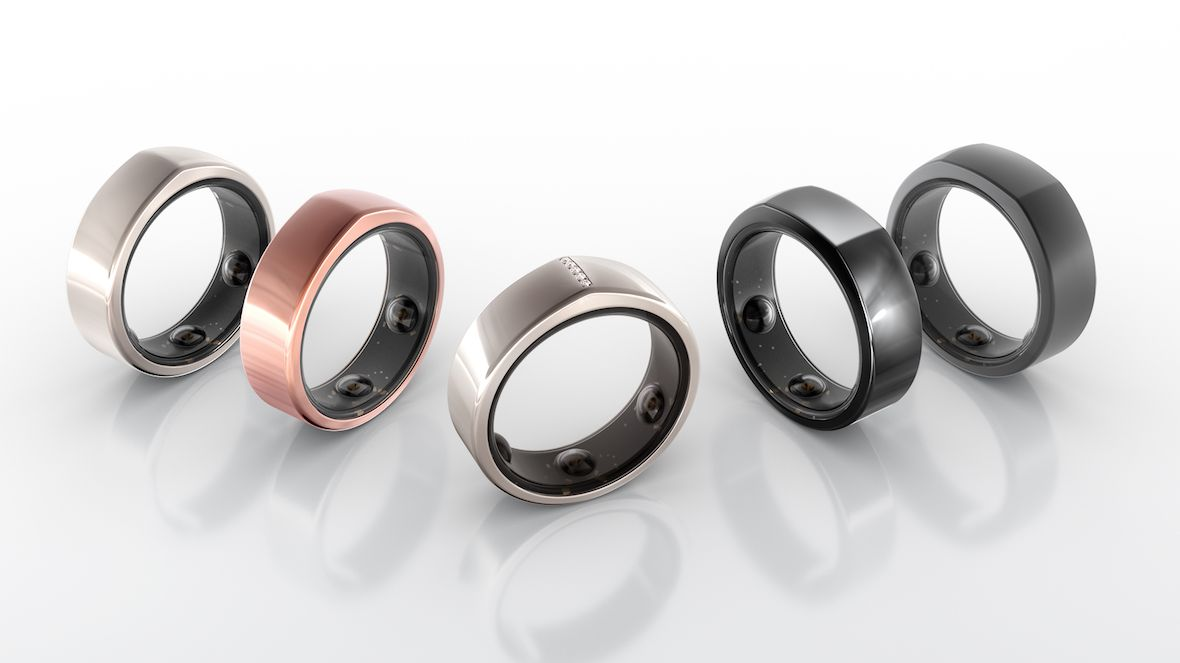
Oura, a pioneer in the smart ring market, is accelerating its international expansion and enhancing its features, positioning itself as a leader in health-focused wearable technology. CEO Tom Hale believes the company’s focus on health and scientific rigor distinguishes it in an increasingly competitive field, where even tech giants like Samsung are now entering the market with products like the Galaxy Ring.

Oura’s flagship product, the Oura Ring 4, is packed with health-tracking sensors, providing insights into users’ sleep quality, daily readiness, and physical activity levels. Founded in Finland in 2013, Oura has established itself as a key player in the smart ring market, selling over 2.5 million units and currently holding an estimated 49% market share, according to CCS Insight.

Hale sees the entry of major tech brands as an endorsement of the smart ring’s potential. He notes that rather than negatively impacting Oura, the increased awareness has actually strengthened its business. In an interview at the Web Summit in Lisbon, Hale detailed Oura’s plans to extend its international presence, particularly in Western Europe. Countries like the U.K., Germany, France, and Italy are high on Oura’s list for expansion, driven by growing interest in the unique benefits of smart rings.

Oura’s dedication to health-focused innovation is evident in its ongoing effort to receive U.S. FDA approval for diagnostic use of its ring, though Hale refrains from providing specific details. The company emphasizes user privacy as central to its mission, distinguishing itself from traditional tech companies that treat data as a business asset. “Our approach to data privacy is unique because we see ourselves as a healthcare company,” Hale explains.

Oura’s subscription model supports its service-based approach, with nearly 2 million users paying $5.99 monthly for insights provided through the Oura app. According to Hale, this model gives Oura the profile of a software company despite its core hardware product, proving effective as subscribers continue to see value in the insights provided.

The company’s next frontier is nutrition tracking, an addition Hale says will form a new pillar of user health insights. Recently, Oura acquired Veri, a metabolic health startup that uses continuous glucose monitors (CGMs) to analyze blood sugar levels. Together with Oura’s meal-tracking feature, this integration can show users how specific meals impact glucose levels, helping them make informed dietary choices.

However, Hale is cautious about predicting the development of non-invasive glucose monitoring technology, often considered a “holy grail” in wearable tech. He acknowledges it as a complex challenge that may remain unsolved for the foreseeable future, though he remains open to future advances.

Oura is also exploring artificial intelligence to deliver more personalized insights to users. The company is testing “Oura Advisor,” an AI-powered virtual assistant designed to act as a “doctor in your pocket,” delivering tailored health recommendations based on users’ data.

Looking to the future, Hale hints at Oura’s plans to introduce new hardware products, expanding beyond rings. Although he did not reveal specific details, this move aligns with Oura’s strategy to cement itself as a holistic health brand. Additionally, Hale hints that Oura may consider partnerships with other devices, even those not directly under its brand, to expand its health ecosystem.

While an initial public offering (IPO) could be on the distant horizon, Hale emphasizes that remaining private currently offers Oura greater operational freedom. This flexibility allows the company to prioritize long-term goals, even if it means taking on risks that may not immediately generate profit.

As Oura continues to push the boundaries of wearable health technology, its health-centric approach and international expansion strategy underscore its commitment to establishing smart rings as essential health-tracking tools in global markets.