Yazılar

Azerbaijan Airlines Plane Crashes in Kazakhstan, Killing 38

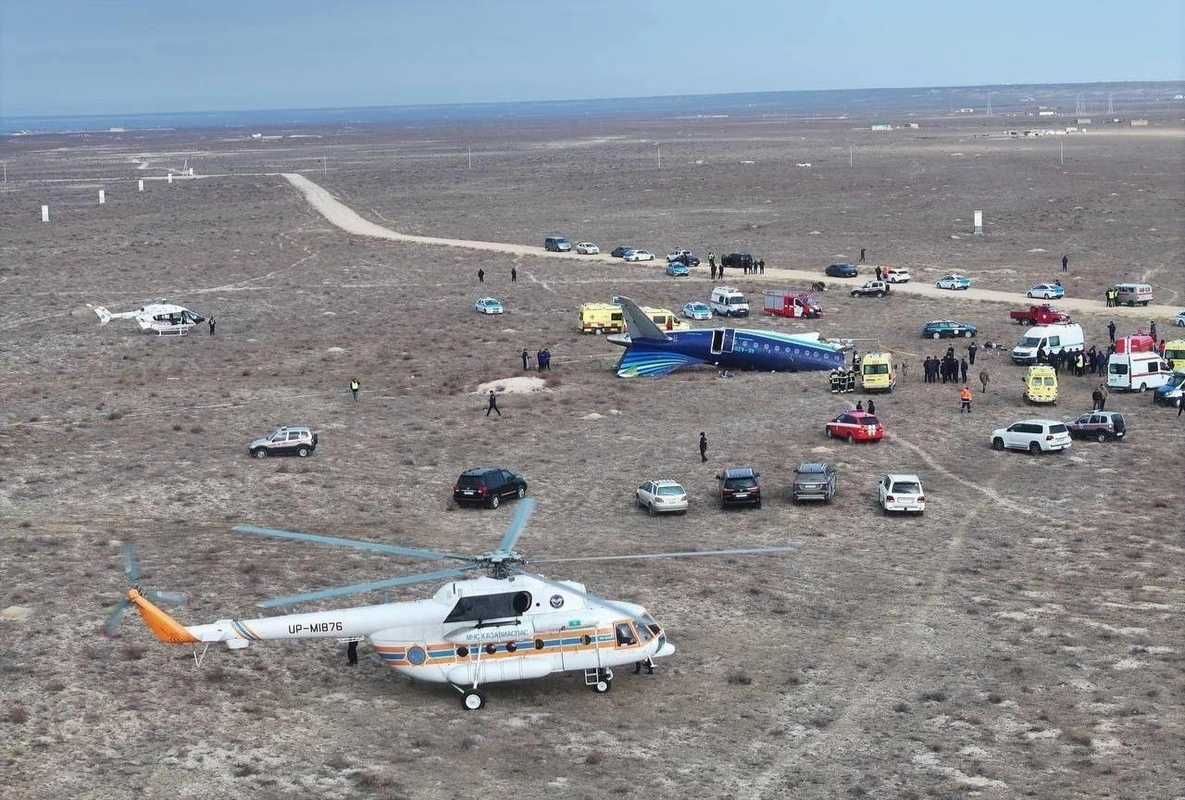
An Azerbaijan Airlines Embraer 190 passenger jet crashed near Aktau, Kazakhstan, on Wednesday, claiming 38 lives and leaving 29 survivors hospitalized. The crash occurred after the plane diverted from its scheduled route between Azerbaijan and Grozny, Russia, crossing the Caspian Sea before descending rapidly and bursting into flames near the shoreline.

The flight, J2-8243, was reportedly forced to reroute due to an emergency situation that may have been caused by a bird strike, according to Russia’s aviation watchdog. However, aviation experts, including Richard Aboulafia of AeroDynamic Advisory, questioned this explanation, noting that bird strikes typically result in landings at the nearest airfield rather than significant deviations from the flight path.

Video footage of the crash, verified by Reuters, showed the aircraft crashing into the seashore and erupting in flames. Emergency responders extinguished the fire and transported survivors, including two children, to a nearby hospital. Efforts to recover the bodies of the deceased are ongoing.

Kazakhstan’s transport prosecutor, Timur Suleimenov, confirmed the recovery of the plane’s black box, which will aid in determining the cause of the crash. Preliminary flight tracking data indicated the plane had veered off its course along the west coast of the Caspian Sea before disappearing and later reappearing near Aktau, where it circled before crashing.

Officials have not clarified why the plane diverted across the sea. However, the crash follows reports of Ukrainian drone strikes in southern Russia’s Chechnya region earlier this month. These strikes led to temporary closures of several Russian airports, including Makhachkala, the nearest airport on the flight’s original route.

Azerbaijan President Ilham Aliyev expressed his condolences, describing the tragedy as a “tremendous sorrow for the Azerbaijani people.” He stated that while poor weather might have influenced the flight’s deviation, the crash’s cause remains under investigation. Azerbaijan Airlines suspended flights from Baku to Chechnya until the probe is complete.

Kazakhstan’s government has formed a commission to investigate the incident and provide support to the victims’ families. Both Kazakhstan and Azerbaijan pledged cooperation in the investigation. Russian President Vladimir Putin, along with Chechen leader Ramzan Kadyrov, extended condolences. Kadyrov noted that some injured passengers remain in critical condition.

Brazilian aircraft manufacturer Embraer, the maker of the crashed jet, also expressed its sympathies and pledged support for the investigation.

 

Three Individuals Face Preliminary Charges Over Liam Payne’s Death in Argentina

Three people are under investigation in Argentina following the death of former One Direction member Liam Payne, according to the country’s public prosecutor’s office. The individuals are facing preliminary charges related to the death, including “abandonment of a person before a death” and “supply and facilitation of narcotics.”

Payne, 31, died on October 16 after falling from the third floor of a hotel in Buenos Aires. Toxicology reports revealed that he had alcohol, cocaine, and a prescription antidepressant in his system at the time of death. The findings suggest Payne may have lost consciousness before the fall.

The prosecutor’s office confirmed that his injuries were consistent with a fall from a height, ruling out self-inflicted harm or foul play. An autopsy and further investigation have been carried out, including a forensic analysis of Payne’s mobile phone, which provided insight into his activities during his stay at the CasaSur Palermo Hotel, where he was found.

Authorities have identified three individuals under suspicion. The first is someone who reportedly spent time with Payne daily during his visit and is suspected of both abandonment and narcotics facilitation. A hotel employee is also under investigation for allegedly providing cocaine to Payne on two separate occasions. The third suspect is believed to have supplied drugs to Payne on October 14.

The investigation has been extensive, involving over 800 hours of video footage, and interviews with two female escorts who were with Payne in the hours leading up to his death. The women stated that while they did not witness Payne using drugs, he did consume alcohol.

Payne, who had previously been open about his struggles with substance abuse and mental health, had celebrated six months of sobriety in the summer of 2023 following a rehabilitation stint. His death occurred shortly before his planned South American tour, which had been postponed earlier that year due to a kidney infection.

As investigations continue, authorities are working through the legal process, with the possibility of formal charges pending. The suspects are yet to be publicly identified, and it remains unclear whether any are in custody.


WFP Under Investigation Amid Sudan Famine Crisis

The U.N. World Food Program (WFP) has launched an internal investigation into two senior officials in Sudan, following allegations of fraud and the concealment of information from donors regarding the program’s ability to deliver aid. The investigation, conducted by the Office of the Inspector General (OIG), arises as Sudan faces one of the world’s most severe food crises, exacerbated by ongoing conflict between the Sudanese army and the paramilitary Rapid Support Forces (RSF).

The WFP probe focuses on whether the officials, including Deputy Country Director Khalid Osman, concealed the Sudanese army’s role in blocking humanitarian aid. Osman, who has been temporarily reassigned, is alleged to have withheld information from donors about logistical challenges imposed by the army, including a notable incident in June 2024, where 15 trucks carrying life-saving aid were delayed for seven weeks. Another senior official, Mohammed Ali, is also under investigation in connection with the disappearance of over 200,000 liters of fuel in Kosti, Sudan.

Picture background

The investigation comes at a critical time for the WFP, which is responsible for feeding millions of people in Sudan, a country where over 25 million individuals—more than half of the population—are facing crisis levels of hunger. The Integrated Food Security Phase Classification (IPC) has confirmed famine conditions in at least one area of Sudan’s Darfur region, with many more regions at risk. The WFP has been challenged by severe operational hurdles, including logistical constraints, ongoing fighting, and alleged obstruction by both the Sudanese army and the RSF, who deny any interference in aid distribution.

USAID, the WFP’s largest donor, has been informed of the potential fraud and is conducting its own investigation in coordination with the U.N. agency. The situation has raised concerns among humanitarian organizations and diplomats, who fear that mismanagement within the WFP may have contributed to the failure to deliver adequate aid to the most affected areas, prolonging the crisis. Aid workers have reported that both factions in the Sudanese conflict have hindered their ability to reach vulnerable populations by withholding permits and looting supplies.

The WFP, which won the Nobel Peace Prize in 2020 for its efforts in combating global hunger, is currently seeking $22.7 billion to assist 157 million people worldwide. However, the organization’s operations have been increasingly plagued by issues of diversion and theft, as seen in countries like Somalia, Yemen, and Ethiopia, where aid was temporarily suspended due to widespread corruption. In Sudan, the scale of the crisis continues to grow, with hunger, severe malnutrition, and diseases such as cholera posing additional challenges to the population.

As the investigation continues, there are growing calls for transparency and accountability within the WFP and the broader U.N. system. Many fear that without significant changes to the way aid is managed and delivered in Sudan, the humanitarian crisis could deepen further. The probe’s outcome could also have far-reaching implications for the credibility of international aid organizations working in conflict zones, where the need for assistance is critical, but where operational challenges can sometimes obstruct life-saving efforts.