Yazılar

Atos Announces Reverse Stock Split to Boost Investor Confidence

French IT company Atos (ATOS.PA) announced on Friday that it will implement a reverse stock split to restore investor confidence following a financial restructuring plan completed last year to address a severe debt crisis. The reverse stock split will begin on March 25 and conclude on April 23, with new shares trading from April 24.

Under the split, every 10,000 old shares, each with a nominal value of 0.0001 euros, will be consolidated into one new share valued at 1 euro. The new shares, which are expected to be priced at around 49 euros ($53.02), will start trading on April 24.

Atos’ shares have dropped to all-time lows, trading at approximately half a cent, following a 233-million-euro capital increase last year that led to significant dilution for shareholders. The reverse stock split is intended to reduce stock price volatility and create a more favorable stock market dynamic.

The company, which owns the supercomputers integral to France’s nuclear deterrent, plans to hold a capital markets day in May to unveil its new strategic direction.

Atos to Launch Reverse Stock Split Amid Investor Confidence Push

French IT company Atos (ATOS.PA) will proceed with a reverse stock split, set to take effect by May 1, in an effort to restore investor confidence. CEO Philippe Salle confirmed the decision on Wednesday, stating that the board will finalize approval in the coming days before initiating the process. The move follows a major financial restructuring last year, which significantly diluted shareholder value.

The reverse split was overwhelmingly approved at a general meeting in January. Atos shares have plummeted to historic lows, now trading at approximately one-third of a cent, after completing a 233-million-euro ($248.49 million) capital increase.

The company reported an annual revenue decline of 5.4% to 9.58 billion euros, missing previous forecasts. Market weakness and contract terminations contributed to the downturn. However, Atos highlighted a recovery in order intake, securing significant contracts such as a 165-million-euro extension with Eurotower and a deal to construct Finland’s latest national supercomputer.

Atos, once valued at 10 billion euros, now has a market capitalization of 600 million euros following governance instability and a failed restructuring attempt. While the company has not issued a 2025 outlook, Salle is set to outline his vision and mid-term strategy at the Capital Markets Day event on May 14.

The French government remains in exclusive negotiations to acquire Atos’ advanced computing segment, deemed critical for national defense. This division includes supercomputers essential for France’s nuclear deterrence and military communications.

Salle, who took over as CEO last month—Atos’ sixth in two years—reaffirmed that no additional asset sales would take place in 2025. “We’re not going to rip the group apart,” he stated, citing a strong cash position of 2.2 billion euros. He also dismissed any plans to raise the asking price for Atos’ mission-critical systems business, despite increasing military expenditures in Europe.

Banks Sell $5.5 Billion of Musk’s X Debt to Investors

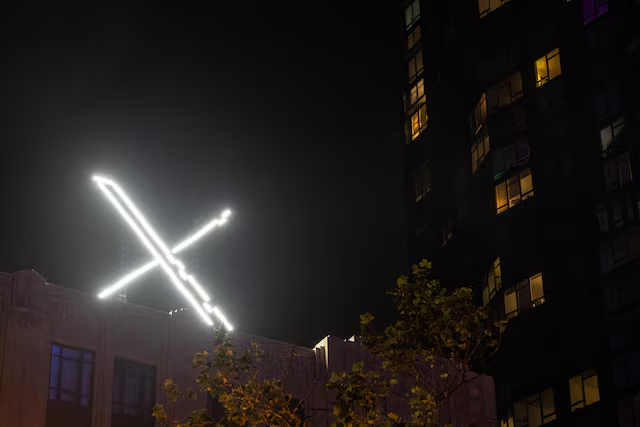
Banks led by Morgan Stanley have successfully sold $5.5 billion of the $13 billion debt incurred to finance Elon Musk’s $44 billion acquisition of Twitter, now rebranded as X. This sale is part of an effort to offload a significant portion of the debt, which includes a combination of secured and unsecured loans.

The deal, which was marketed to a select group of investors, included banks such as Bank of America, Barclays, Mitsubishi UFJ, BNP Paribas, Mizuho, and Societe Generale. The debt was initially offered at a price range of 90-95 cents on the dollar, but it was ultimately priced at 97 cents, resulting in a potential profit for the banks involved. Investors in this loan will receive a yield of 11%.

This marks the second attempt by these banks to sell down the debt since Musk’s 2022 acquisition. A prior attempt in late 2022 to sell the unsecured loan failed, as the bids were significantly lower, at 60 cents to the dollar, potentially causing a large loss for the banks. This time, however, investors seem to be more confident in X’s prospects, partly due to Musk’s ties to the newly elected Trump administration and his involvement in the AI startup xAI, which may drive further interest in the platform.

Despite the improved pricing, some investors have been hesitant to buy into the debt, given X’s challenges with advertisers and uncertain revenue growth after Musk’s changes to the platform. Additionally, X still has no official credit rating, which raises concerns among potential buyers. Nevertheless, the sale signals growing investor confidence, despite the risk that the platform’s revenue might not justify the price of the debt.