Yazılar

IonQ to Acquire Oxford Ionics for $1.08 Billion to Boost Quantum Computing Research

U.S.-based quantum computing company IonQ announced on Monday that it will acquire British peer Oxford Ionics for $1.08 billion in a cash-and-stock deal, aiming to strengthen its expertise in the rapidly growing quantum technology sector. IonQ’s shares rose nearly 4% in premarket trading following the announcement, with the company’s market valuation standing at $10.15 billion as of the last close.

Quantum computing, which leverages quantum bits or qubits to perform complex calculations faster and more efficiently than classical computers, has attracted significant investments from tech giants like Microsoft, Google, and IBM. Oxford Ionics specializes in innovative methods to control qubits, a critical focus area in advancing quantum computer performance.

The founders of Oxford Ionics, Chris Balance and Tom Harty, who are also researchers, will continue to work with IonQ after the acquisition closes. The transaction price per share will be set between $30.22 and $50.37 based on IonQ’s stock price in the 20 days preceding deal closure, expected within this year.

Although revenues remain modest for quantum computing companies including IonQ and competitor Rigetti, the technology is viewed as vital for national security and has promising applications in fields such as medical research and cybersecurity.

IonQ has actively expanded its capabilities through acquisitions, including last year’s purchase of Boston startup Lightsynq, which focuses on quantum memory. Meanwhile, Nvidia’s CEO Jensen Huang announced plans to open a quantum computing research lab, signaling growing industry momentum, despite some skepticism about when the technology will be practically applicable.

Nvidia to Launch Quantum Computing Lab in Boston in Partnership with Top Universities

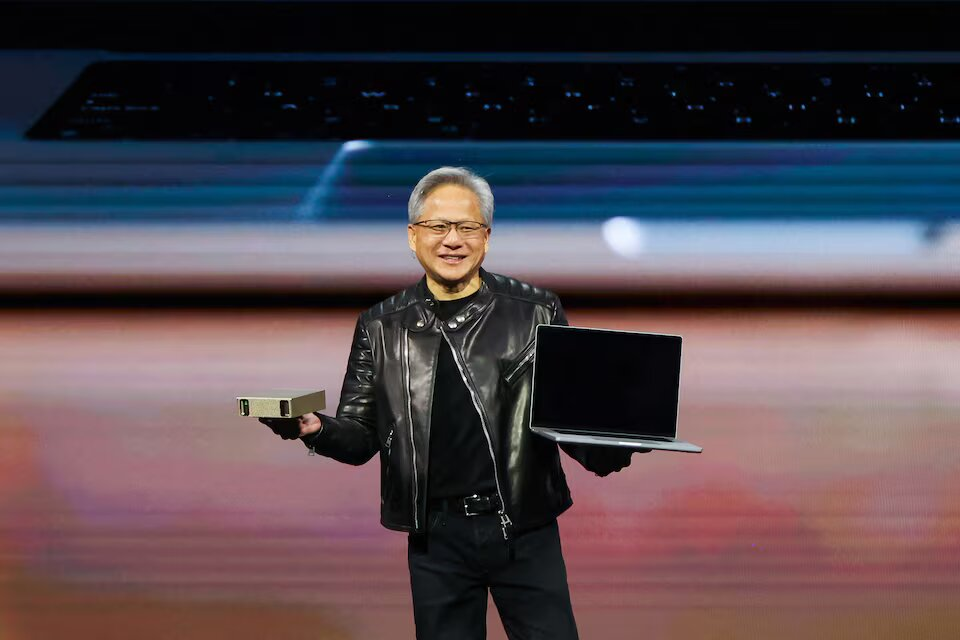
Nvidia has announced plans to open a quantum computing research lab in Boston, aiming to collaborate with leading academic institutions such as Harvard University and the Massachusetts Institute of Technology (MIT). CEO Jensen Huang revealed the initiative during Nvidia’s annual software developer conference in San Jose, California, where the company held a dedicated day for quantum computing discussions.

The new lab, named the Nvidia Accelerated Quantum Research Center (NVAQC), will foster partnerships with prominent quantum computing firms, including Quantinuum, Quantum Machines, and QuEra Computing. The center is set to begin operations later this year. Huang’s announcement followed his earlier statement in January, where he suggested that practical quantum computers could still be two decades away—comments he sought to clarify during the event.

The quantum computing industry, which is still in its early stages, sees companies like Quantinuum and IonQ exploring commercial applications of quantum technology. Even though some quantum machines may eventually outperform Nvidia’s renowned graphics processing units (GPUs) in tasks like simulating atomic interactions, industry leaders emphasized that quantum computers are unlikely to replace classical systems. Instead, quantum and classical computing will likely work in tandem.

Huang highlighted the continued importance of Nvidia’s GPUs in current computational tasks, with quantum machines complementing traditional systems, not replacing them. He expressed optimism about the future of quantum computing, indicating that Nvidia’s involvement would further accelerate the industry’s growth.

Quantum Computing Stocks Surge Following D-Wave’s Positive Forecast

Shares of quantum computing companies saw notable gains on Thursday, outperforming the broader market after D-Wave Quantum (QBTS.N) issued a strong quarterly revenue forecast. D-Wave‘s stock jumped 15%, reaching $6.71, after the company projected its current-quarter performance would exceed analysts’ expectations. This followed an 8% increase on Wednesday, which was fueled by the publication of a peer-reviewed paper in Science, showing that its quantum computer surpassed one of the world’s most powerful classical supercomputers.

Quantum computing relies on quantum mechanics, which gives it a performance advantage over traditional computers, allowing faster and more efficient processing through parallel operations and the ability to predict multiple outcomes simultaneously.

Other quantum computing stocks also saw significant gains. Quantum Corp (QMCO.O) surged 26%, marking its largest daily percentage increase since February. Quantum Computing Inc (QUBT.O) also rose by 2%, while the broader market struggled, with the Nasdaq Composite down more than 2% in the afternoon.

The quantum sector is gaining increasing attention, with experts comparing it to the early stages of artificial intelligence (AI). Jake Dollarhide, CEO of Longbow Asset Management, noted that quantum computing is still in its “embryonic stage” and predicted rapid growth, with the sector becoming a focal point on Wall Street.

While most stocks in the sector saw gains, IonQ (IONQ.N) struggled, with its shares falling 5.3% to $20.68 after Kerrisdale Capital announced a short position on the stock. IonQ has seen significant volatility, down nearly 50% year-to-date following a more than 200% rise in 2024.