JWST Identifies Jupiter-Sized Binary Objects in Orion Nebula, Revealing New Insights
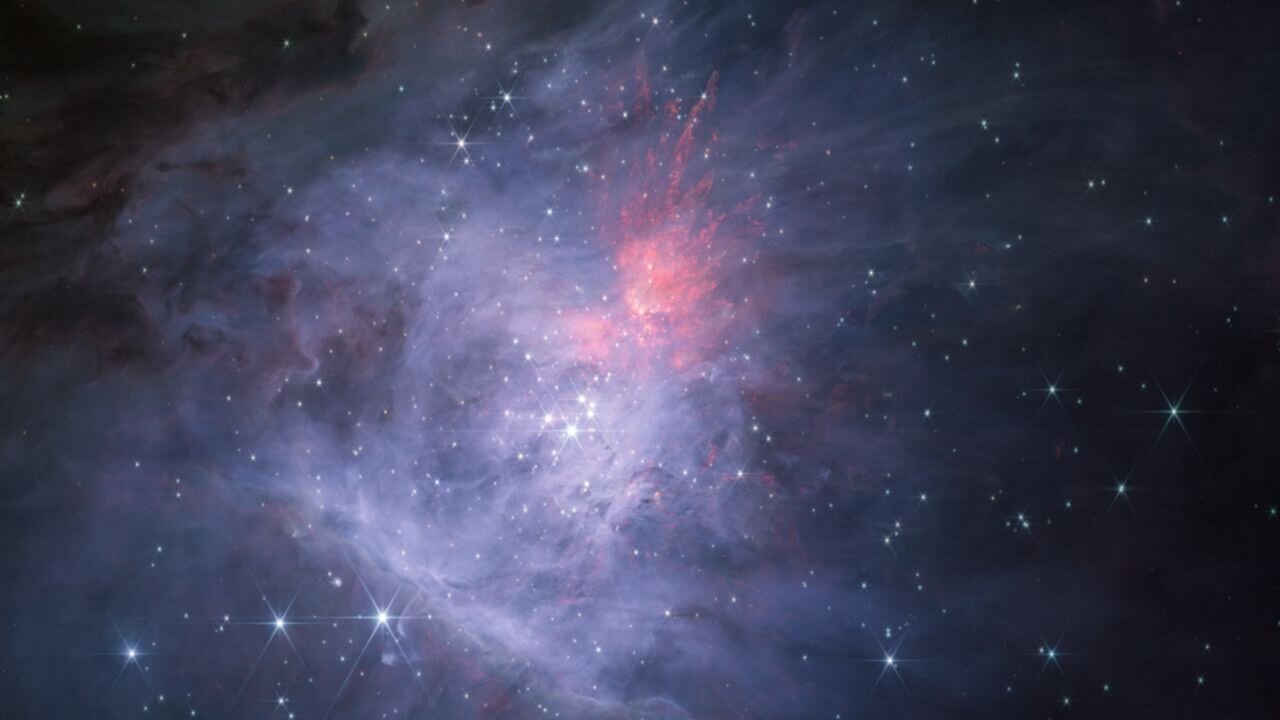
The James Webb Space Telescope (JWST) has made a groundbreaking discovery in the Orion Nebula, identifying dozens of massive, planet-like objects known as Jupiter-mass binary objects (JuMBOs). These objects, consisting of pairs of rogue gas giants, range in mass from 0.7 to 30 times that of Jupiter. The intriguing feature of these binary systems is their large separation distances, ranging from 25 to 400 astronomical units (AU). These findings are offering new insights into the processes behind stellar formation and the possible disruption of planetary systems.
The JuMBOs are located in the trapezoid region of the Orion Nebula, an area known for being a stellar nursery where new stars and planetary systems are born. Their discovery and the study of their origin were published in The Astrophysical Journal on November 5. Scientists believe that these objects might have formed under conditions not typically seen in other parts of the galaxy. There are a variety of theories about their formation, including the possibility that they were ejected from their home star systems due to gravitational dynamics or that they originated close to stars but were later forced into independent orbits.
A new hypothesis emerging from the study suggests that the JuMBOs might be “failed stars,” formed when nascent stars lost mass due to intense radiation. This radiation would have stripped away the outer layers of the forming stars, leaving behind smaller objects that failed to ignite fully as stars. These objects could represent a critical stage in star and planetary formation, offering valuable clues about how stars and planetary systems evolve in environments like the Orion Nebula.
Richard Parker, a senior lecturer in astrophysics at the University of Sheffield and a co-author of the study, explained that the wide separations observed between the JuMBO pairs make them distinct from other known brown dwarfs in the galaxy. The research delved into whether these binary systems might have formed from pre-stellar cores that were exposed to extreme radiation from nearby massive stars. The idea, first proposed by Anthony Whitworth and Hans Zinnecker two decades ago, is that such intense radiation could erode the outer layers of a forming star’s core while compressing its center, potentially resulting in the creation of JuMBOs. This theory presents a fascinating new perspective on how objects like the JuMBOs could form in the extreme conditions of stellar nurseries.