Yazılar

Trump’s NASA Pick, Jared Isaacman, Sends Shockwaves Through Space Community

President-elect Donald Trump’s nomination of tech billionaire Jared Isaacman for NASA administrator has stirred significant reactions within the space community. Isaacman, known for his spaceflight ventures with SpaceX, has sparked both excitement and concern among industry leaders. While some view his appointment as a transformative choice, others worry about potential conflicts of interest, given his ties to SpaceX and other private ventures.

At 41, Isaacman has built a reputation in the space industry despite not following the typical path to NASA leadership, which often involves experience in government, academia, or engineering. Instead, Isaacman has become a prominent figure in the private space sector. He is the CEO of Shift4 Payments, which he founded as a teenager, and has an extensive background in aviation and defense contracting. In recent years, he has focused on space exploration, particularly through his partnership with SpaceX.

Isaacman first garnered international attention in 2021 when he funded and led the Inspiration4 mission, which marked the first all-civilian spaceflight to Earth’s orbit. Following this success, he launched the Polaris program with SpaceX, which includes historic milestones such as the first-ever commercial spacewalk. His direct involvement in space exploration through SpaceX has earned him significant credibility within the industry.

If confirmed, Isaacman would be only the fourth NASA administrator in the agency’s history to have actually traveled to space. His relationship with SpaceX, however, raises questions regarding potential conflicts of interest. NASA’s reliance on SpaceX for critical contracts, such as the Artemis lunar program and the development of the Starship spacecraft, may make Isaacman’s position at the helm of the agency controversial, especially considering his financial stake in SpaceX.

Despite these concerns, Isaacman’s nomination has received positive reactions from many in the space industry. Isaac Arthur, president of the National Space Society, praised Isaacman as a “perfect pick” due to his entrepreneurial experience and his knowledge of both NASA and SpaceX. Garrett Reisman, a former NASA astronaut and current SpaceX advisor, echoed this sentiment, calling Isaacman an “excellent choice” who will push NASA to advance further and faster.

Isaacman’s confirmation would come at a pivotal time for NASA, as the agency prepares for the first crewed moon landing in over fifty years under the Artemis program. While some have questioned his lack of government or academic experience, others believe his private-sector experience makes him well-suited to navigate NASA’s increasing reliance on commercial partnerships.

In addition to his business and spaceflight ventures, Isaacman’s political stance has also attracted attention. Unlike his friend Elon Musk, who has become politically active, Isaacman has positioned himself as politically neutral, emphasizing unity over division. This approach mirrors the traditional strategy of NASA administrators, who must work across party lines to secure funding and achieve the agency’s goals.

However, Isaacman’s close relationship with Musk could fuel suspicions that his leadership could prioritize SpaceX’s interests. Isaacman has been vocal about his opposition to NASA’s decision to fund two competing lunar lander projects, one from SpaceX and one from Blue Origin. His criticism of NASA’s spending decisions suggests a willingness to challenge established priorities, which could be either beneficial or contentious.

Despite these complexities, Isaacman’s vision for space exploration is closely aligned with SpaceX’s ambitious goals. He has repeatedly expressed his belief in the potential for humanity to establish permanent settlements on Mars and other celestial bodies. “SpaceX is on — for our time — the most incredible adventure imaginable,” Isaacman said in an interview, underscoring his commitment to advancing space exploration and addressing fundamental questions about humanity’s place in the universe.
 

Trump’s NASA Nominee Jared Isaacman: A Boost for SpaceX, Political Challenges Ahead

U.S. President-elect Donald Trump has chosen Jared Isaacman, a private astronaut and CEO of Shift4 Payments, as the nominee to lead NASA. Isaacman, a close ally of SpaceX and a prominent figure in commercial spaceflight, represents a bold shift toward privatized space exploration but will likely face significant political hurdles as NASA administrator.

Isaacman has participated in two historic SpaceX missions, including the first privately funded spacewalk, and has championed a vision for a “thriving space economy.” In his acceptance, he pledged to push humanity toward becoming a true spacefaring civilization.

Challenges in Overhauling NASA

Isaacman’s leadership is expected to align with Trump’s cost-cutting agenda, emphasizing privatized spaceflight and trimming NASA’s reliance on traditional government-owned programs. Key targets for potential budget reductions include the $24 billion Space Launch System (SLS) rocket and the lunar Gateway space station, which are over budget and delayed.

Despite the focus on cutting costs, Isaacman will need to navigate political resistance, especially from lawmakers keen to preserve NASA’s more expensive, contractor-driven programs. These include partnerships with legacy aerospace giants like Boeing and Lockheed Martin, which involve a large, nationwide workforce.

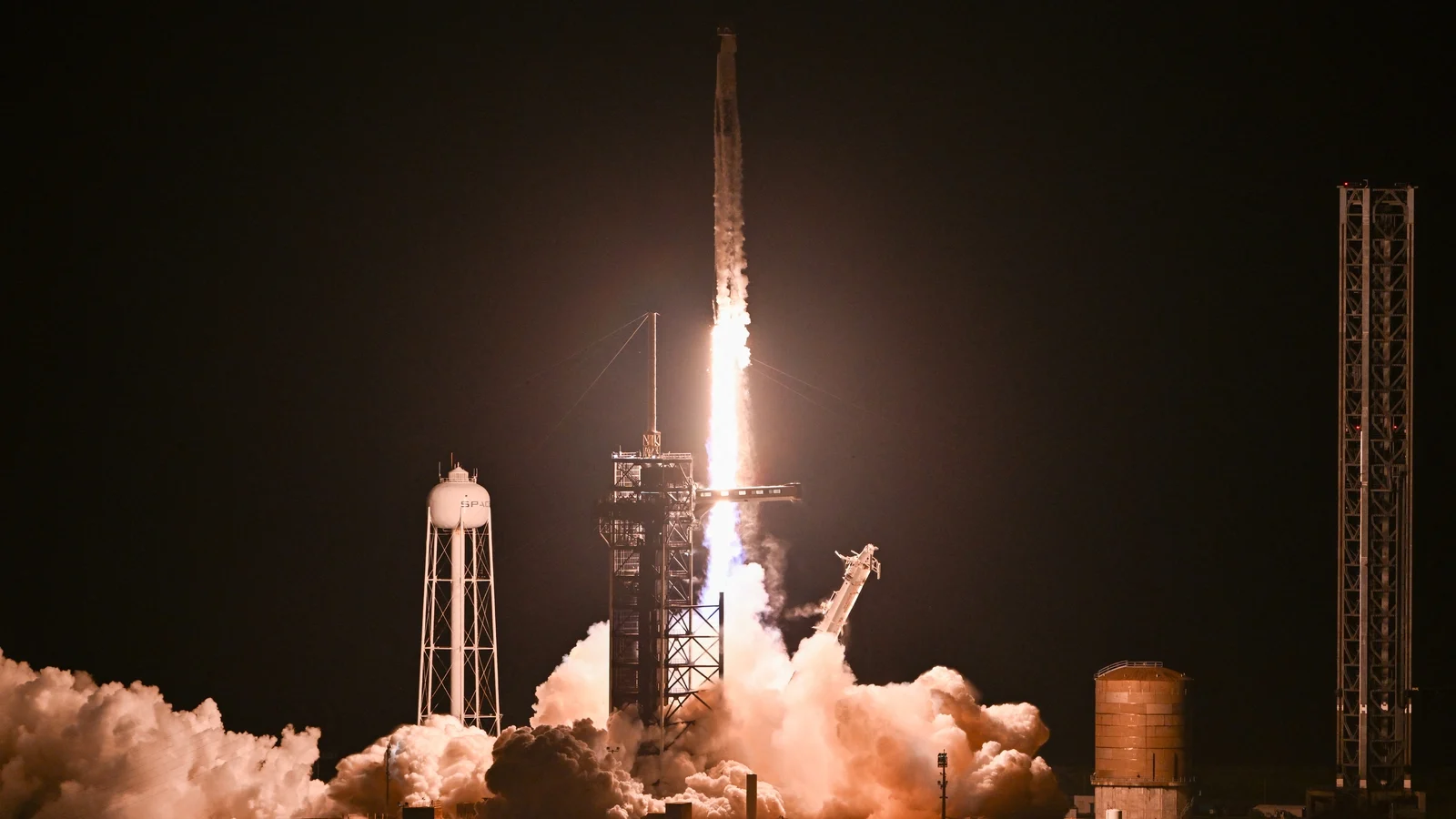
Isaacman’s approach is likely to favor private-sector solutions like SpaceX’s reusable rockets, which have already demonstrated cost savings and operational efficiency. SpaceX’s Crew Dragon capsules, for example, provide a cheaper alternative for transporting astronauts to the International Space Station, bolstering NASA’s commercial partnerships.

Support and Criticism

Elon Musk, CEO of SpaceX, has been a vocal supporter of Isaacman, describing him as a man of “high ability and integrity.” Musk reportedly recommended Isaacman to Trump, seeing him as someone capable of pushing NASA toward privatized, faster-paced space exploration.

Jim Bridenstine, Trump’s first NASA administrator, praised Isaacman’s nomination, highlighting his successful private-sector track record and vision for exploration. However, Isaacman’s nomination has also drawn skepticism from industry stakeholders, such as Allen Cutler, CEO of the Coalition for Deep Space Exploration, who raised concerns about budget limitations and workforce impacts under Isaacman’s leadership.

NASA’s Future Under Trump and Isaacman

If confirmed by the Senate, Isaacman will inherit ongoing challenges with NASA’s Artemis program, which aims to return astronauts to the moon. The program has faced cost overruns and delays, pushing its first crewed lunar landing to 2027. SpaceX’s Starship rocket is expected to play a central role in these missions, further embedding NASA’s reliance on commercial partnerships.

Bill Nelson, NASA’s current administrator, expressed optimism about Isaacman’s nomination and the potential collaboration between Trump’s administration and Elon Musk to secure NASA funding. “The relationship between Musk and the president-elect is going to be a benefit,” Nelson said.

While Isaacman’s commercial focus could transform NASA’s operational model, balancing political and economic pressures will be critical to achieving his vision for a more privatized, spacefaring future.

Four Civilians on SpaceX Mission Complete Historic First Commercial Spacewalk

A crew of four civilians aboard SpaceX’s Polaris Dawn mission achieved a groundbreaking milestone by completing the first-ever commercial spacewalk. At 6:12 a.m. ET, the crew unlocked the hatch of their Crew Dragon capsule and exposed themselves to the vacuum of space for the historic event, also known as extravehicular activity (EVA). This event marks a significant step forward in the realm of private space exploration, as it’s the first time non-government astronauts have conducted a spacewalk.

The five-day mission, which had already set records by traveling farther into space than any human has since NASA’s Apollo program, saw the Crew Dragon vehicle depressurized, exposing the entire crew to space. The team included Shift4 Payments CEO Jared Isaacman, who funded the Polaris Dawn mission, former US Air Force pilot Scott “Kidd” Poteet, and SpaceX engineers Anna Menon and Sarah Gillis. They had been training for this moment since their launch at 5:23 a.m. ET on Tuesday.

Before exiting the spacecraft, the crew underwent a “pre-breathe” process to purge their blood of nitrogen, preventing potentially fatal gas bubbles from forming in their bodies. Isaacman was the first to leave the capsule, stepping onto a mobility aid, dubbed “skywalker,” to venture into the vastness of space. “Back at home we all have a lot of work to do, but from here — looks like a perfect world,” Isaacman commented as he took in the breathtaking views.

Historic EVA and Spacesuit Testing

Although the spacewalk was brief, with Isaacman and Gillis spending a combined 20 minutes outside the spacecraft, it was an essential demonstration of SpaceX’s newly designed EVA suits. These suits, developed in just two and a half years, are designed to be more flexible and functional than traditional spacesuits, which are often bulky and expensive. SpaceX’s goal is to create spacesuits that are mass-produced and affordable for the future of space travel, which could one day involve large numbers of people living in space.

The new EVA suits do not include a Primary Life Support System (PLSS) like those used by astronauts on the International Space Station. Instead, life support is provided by long hoses connected to the Crew Dragon capsule. This technology could represent a step toward making space exploration more accessible and cost-effective. SpaceX founder Elon Musk has previously discussed the importance of affordable space suits for large-scale space settlement, and this mission plays a key role in that vision.

Isaacman and Gillis’s spacewalk also tested the mobility of the new suits, with Gillis noting the experience of “wiggling around” to assess their flexibility in the weightlessness of space. While the other crew members remained inside the capsule, they still enjoyed stunning views of Earth from their windows, witnessing sunrises and sunsets every 106 minutes.

Picture background

Scientific Research and Future Space Exploration

In addition to the historic spacewalk, the Polaris Dawn crew is conducting nearly 40 scientific experiments during their time in orbit. These studies focus on various challenges faced by humans in space, including space adaptation syndrome, which affects about half of all astronauts. The crew will also use special contact lenses equipped with pressure sensors to study how the eyeballs respond to pressure changes in microgravity, a project affectionately known as “the cyborg experiment.”

The crew’s mission is expected to last five or six days, with their return to Earth potentially occurring early Sunday morning. They have been communicating with Earth via SpaceX’s Starlink satellite system, sharing breathtaking images of their journey and expressing gratitude for the support they’ve received.

The Future of Commercial Space Travel

This mission represents a significant leap forward for the commercial space industry. As NASA Administrator Bill Nelson remarked after the spacewalk, “Today’s success represents a giant leap forward for the commercial space industry and NASA’s long-term goal to build a vibrant U.S. space economy.”

The mission’s success highlights the growing role of private companies like SpaceX in pushing the boundaries of human space exploration, paving the way for future missions that may involve civilians traveling even deeper into space.