Yazılar

SoftBank Profit More Than Doubles to $16.6 Billion on OpenAI Valuation Gains

SoftBank Group reported a stunning surge in quarterly profits, more than doubling its net income to 2.5 trillion yen ($16.6 billion) in the July–September period, thanks largely to massive valuation gains from its stake in OpenAI, the creator of ChatGPT.

The figure far exceeded analyst expectations — three LSEG analysts had forecast an average profit of just 207 billion yen — and also dwarfed the 1.18 trillion yen profit recorded during the same period last year.

SoftBank’s Vision Fund unit, which manages the company’s global technology investments, posted a 3.5 trillion yen investment gain, with 2.16 trillion yen attributed directly to its OpenAI holdings.

The result comes amid a surge in AI-related stocks and infrastructure spending, pushing SoftBank’s shares to record highs. The company has emerged as one of the biggest beneficiaries of the AI investment boom, fueled by global demand for computing power and data centers.

In March, SoftBank led a $40 billion funding round valuing OpenAI at $300 billion. By October, it joined a group of investors purchasing $6.6 billion worth of OpenAI shares from employees at a $500 billion valuation, marking one of the largest private valuations in tech history.

Still, some investors are wary of an emerging “AI bubble”, questioning whether such vast capital inflows can sustain their expected returns.

SoftBank is also ramping up other AI and semiconductor bets. It recently sold 32.1 million shares of Nvidia for $5.83 billion, raised more than 620 billion yen in bonds across three currencies, and secured bridge loans totaling over $15 billion to fund its OpenAI and Ampere chip ventures.

Founder and CEO Masayoshi Son, known for high-stakes investments in transformative technologies, remains confident in AI’s potential despite a mixed record that includes triumphs like Alibaba and failures such as WeWork.
SoftBank to buy ABB’s robot unit for $5.4 billion in AI-robotics merger push

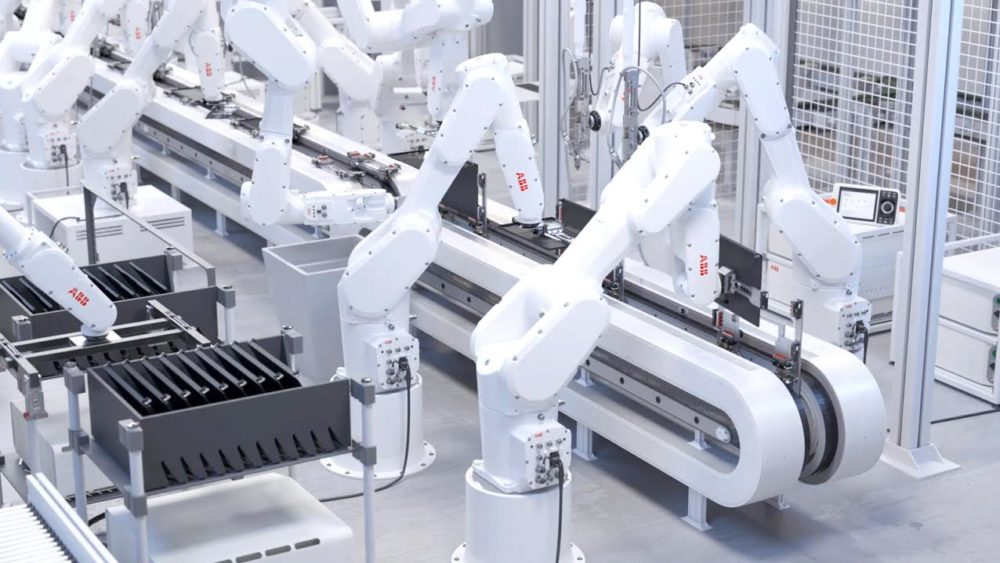
SoftBank Group has agreed to purchase the robotics division of ABB for $5.4 billion, marking a major step in CEO Masayoshi Son’s plan to unite artificial intelligence and robotics into what he calls “Physical AI.” The acquisition, announced Wednesday, gives the Japanese conglomerate control of one of the world’s leading industrial robotics makers as it deepens its bet on AI-driven automation.

The deal signals ABB’s decision to cancel its planned spin-off of the robotics unit, opting instead for a direct sale that delivers immediate liquidity. ABB CEO Morten Wierod said the sale provides stronger financial flexibility to invest in electrification, automation, and potential new acquisitions.

ABB’s robotics arm employs about 7,000 people and generated $2.3 billion in 2024 sales, roughly 7% of ABB’s total revenue. Despite its technological strength, the division struggled with volatile margins and limited overlap with ABB’s core business.

For SoftBank, the acquisition builds on a decade-long robotics journey that began with its humanoid Pepper robot and now extends into advanced factory automation. The company has recently invested in Berkshire Grey, AutoStore, and OpenAI, and earlier this year bought chip designer Ampere for $6.5 billion.

The transaction is expected to close by late 2026, subject to regulatory approvals. ABB shares rose 2% in Zurich after the announcement, while SoftBank’s stock slipped 2% in Tokyo trading.

SoftBank’s Masayoshi Son Proposes $1 Trillion Arizona AI and Robotics Hub

SoftBank Group founder Masayoshi Son is planning a $1 trillion industrial complex in Arizona focused on robotics and artificial intelligence, Bloomberg News reported Friday, citing sources familiar with the matter. The ambitious project aims to revive high-end tech manufacturing in the U.S. and create a hub akin to China’s manufacturing powerhouse, Shenzhen.

Son is reportedly seeking to partner with Taiwan Semiconductor Manufacturing Co. (TSMC) for the venture, codenamed Project Crystal Land, though the exact role TSMC would play and its interest level remain unclear. TSMC is already investing heavily in U.S. chip manufacturing with planned investments totaling $165 billion.

SoftBank officials have engaged in discussions with U.S. federal and state officials, including Commerce Secretary Howard Lutnick, to explore tax incentives for companies that build factories or invest in the industrial park.

The project also seeks interest from other tech giants such as Samsung Electronics. However, the plans are preliminary and dependent on support from the Trump administration and state authorities.

If realized, the $1 trillion investment would surpass the scale of the $500 billion “Stargate” project, a U.S. data center expansion funded by SoftBank, OpenAI, and Oracle.

SoftBank and TSMC have declined to comment on the report. The White House and Department of Commerce did not immediately respond to requests for comment.

This proposed initiative follows several major SoftBank investments this year, including its $6.5 billion acquisition of semiconductor designer Ampere and up to $40 billion commitment to OpenAI, part of which may be syndicated to other investors. Recently, SoftBank also raised $4.8 billion by selling shares in T-Mobile.