Yazılar

FTC Appoints Former Heritage Foundation Tech Policy Expert as Chief Technology Officer

The U.S. Federal Trade Commission (FTC) has appointed Jake Denton, a former tech policy researcher from the conservative Heritage Foundation, as its new chief technology officer. Denton, who graduated from American University in 2021, shared the news of his appointment on X on Monday. He replaces Stephanie Nguyen, who served in the role since 2022 under former FTC Chair Lina Khan.

The FTC introduced the role of chief technologist during the Obama administration to offer guidance on emerging technology policy issues, with a focus on digital markets, competition, and consumer protection. Denton’s appointment comes as Andrew Ferguson begins his tenure as the new chairman of the FTC. Ferguson has voiced concerns about the dominance of Big Tech companies but has also cautioned against over-regulating the tech industry in a way that might hinder U.S. innovation.

Denton has previously expressed his views on artificial intelligence (AI) policy, calling for Congress to pass AI legislation in a Fox News interview in July 2023. In an opinion piece co-authored with Kara Frederick, the Heritage Foundation’s tech policy director, Denton emphasized the need for the U.S. and its allies to take a leading role in setting international AI standards. They warned that if democracies don’t write the rules for emerging technologies like AI, authoritarian regimes may take the lead in shaping them.

Before joining the Heritage Foundation, Denton interned in Congress and completed a fellowship with the Federalist Society. His appointment signals the FTC’s continued focus on regulating emerging technologies like AI and digital markets, areas where the agency has launched investigations in the past under Chair Khan, particularly into AI partnerships such as Microsoft’s and OpenAI’s collaboration.

It remains to be seen whether Ferguson, along with Denton, will continue investigations into Big Tech, including ongoing probes into Microsoft and OpenAI’s potentially anticompetitive conduct and whether OpenAI violated consumer protection laws. The FTC is also preparing for a high-profile trial in April over Meta Platforms’ acquisitions of Instagram and WhatsApp, and continues to pursue legal action against Amazon over alleged anti-competitive practices.
Brazil Denies Report of Tax on US Tech Firms Amid Trump Steel Tariffs

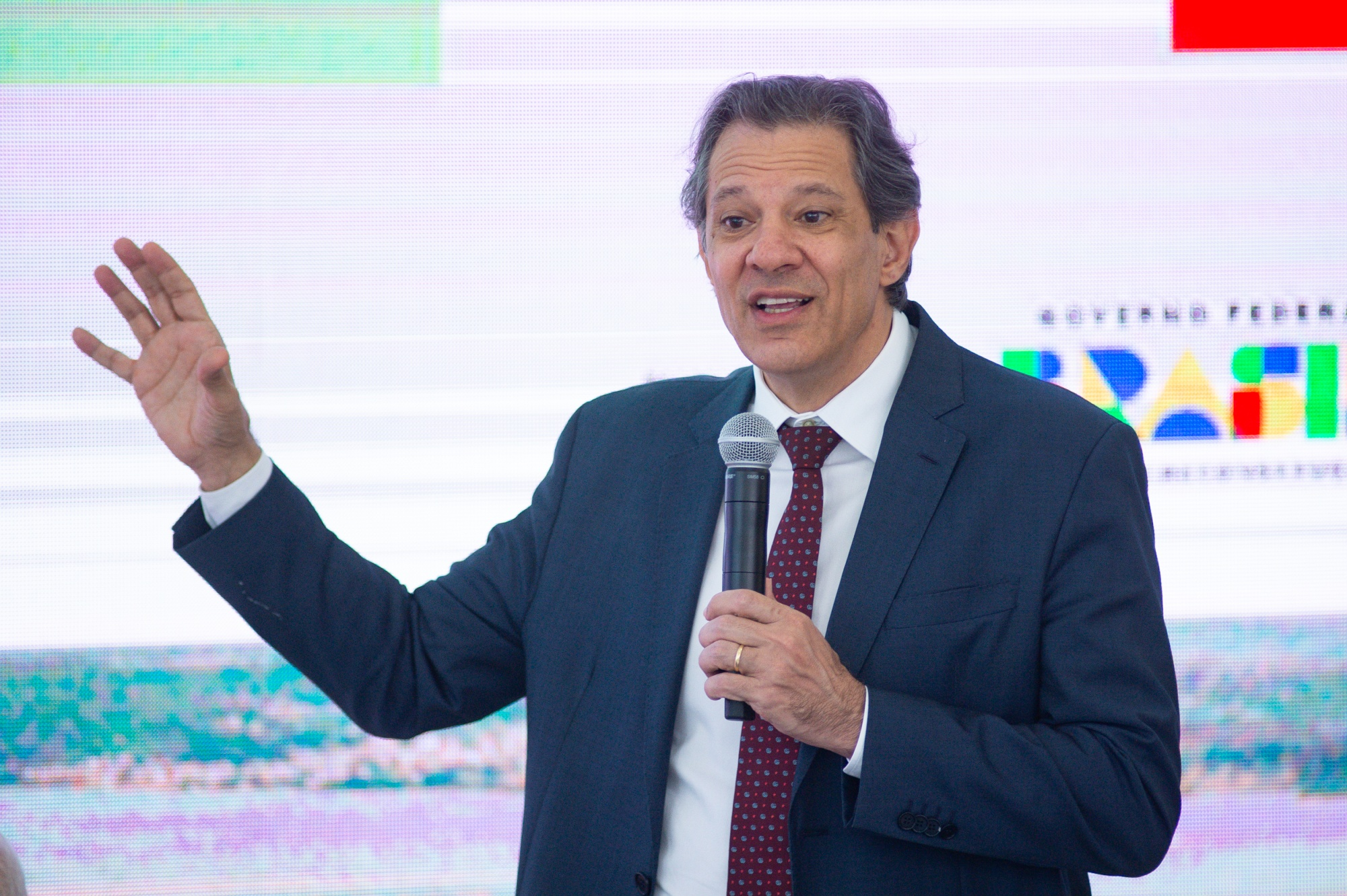
Brazil’s Finance Minister, Fernando Haddad, denied reports on Monday suggesting that the country was considering imposing taxes on U.S. tech companies in response to President Donald Trump’s proposed 25% tariff on all U.S. steel imports.

The speculation arose after a report from the Brazilian newspaper Folha de S.Paulo, which claimed that the administration of President Luiz Inácio Lula da Silva was contemplating levying tariffs on major tech firms as a retaliatory measure.

Haddad quickly refuted the claims on social media, emphasizing that the information was inaccurate. He reiterated that the Brazilian government would only make official statements based on concrete decisions, not speculative announcements that could be misinterpreted or later changed.

The report had suggested that tech giants such as Amazon (AMZN.O), Meta Platforms (META.O), and Alphabet (GOOGL.O) could be targeted by such a tax. However, Haddad’s remarks clarified that no such plans were under consideration at this time.

Brazil, a significant supplier of U.S. steel imports, also serves as a key market for many large tech companies, which would have been affected by such a tax. The denial comes as Trump is set to introduce additional tariffs on steel and aluminum imports, escalating his trade policy strategy.

AI Chip Firm Cerebras Partners with Mistral, Claims AI Speed Record

Cerebras Systems, a Silicon Valley-based AI chip manufacturer backed by UAE tech firm G42, announced on Thursday its partnership with French AI company Mistral, helping it achieve a new speed record for AI responses.

Mistral, known for its open-source AI technology, aims to rival competitors such as Meta Platforms and China’s DeepSeek, both of which are challenging OpenAI’s dominance in the AI space. On Thursday, Mistral launched a new app, Le Chat, capable of generating responses at a speed of 1,000 words per second.

Cerebras provided the computational power to achieve this speed, which it claimed surpasses the performance of both OpenAI and DeepSeek, making Mistral’s Le Chat the fastest AI assistant globally.

Cerebras, which has filed for an initial public offering currently under U.S. regulatory review due to G42’s involvement, is one of the few major challengers to Nvidia in the AI chip market for training large models. However, its collaboration with Mistral focuses on inference, the process of serving model-based applications to users in real-time.

Andrew Feldman, Cerebras CEO, emphasized that speed in delivering answers has become a key focus as competitors close in on OpenAI’s models. “You want better answers. And to get better answers, you need more compute at inference time,” Feldman told Reuters. He also expressed pride in the collaboration with Mistral, calling it Cerebras’ first major win with a top-tier AI model developer.