Yazılar

Meta unveils smart glasses with built-in display, eyes AI “superintelligence”

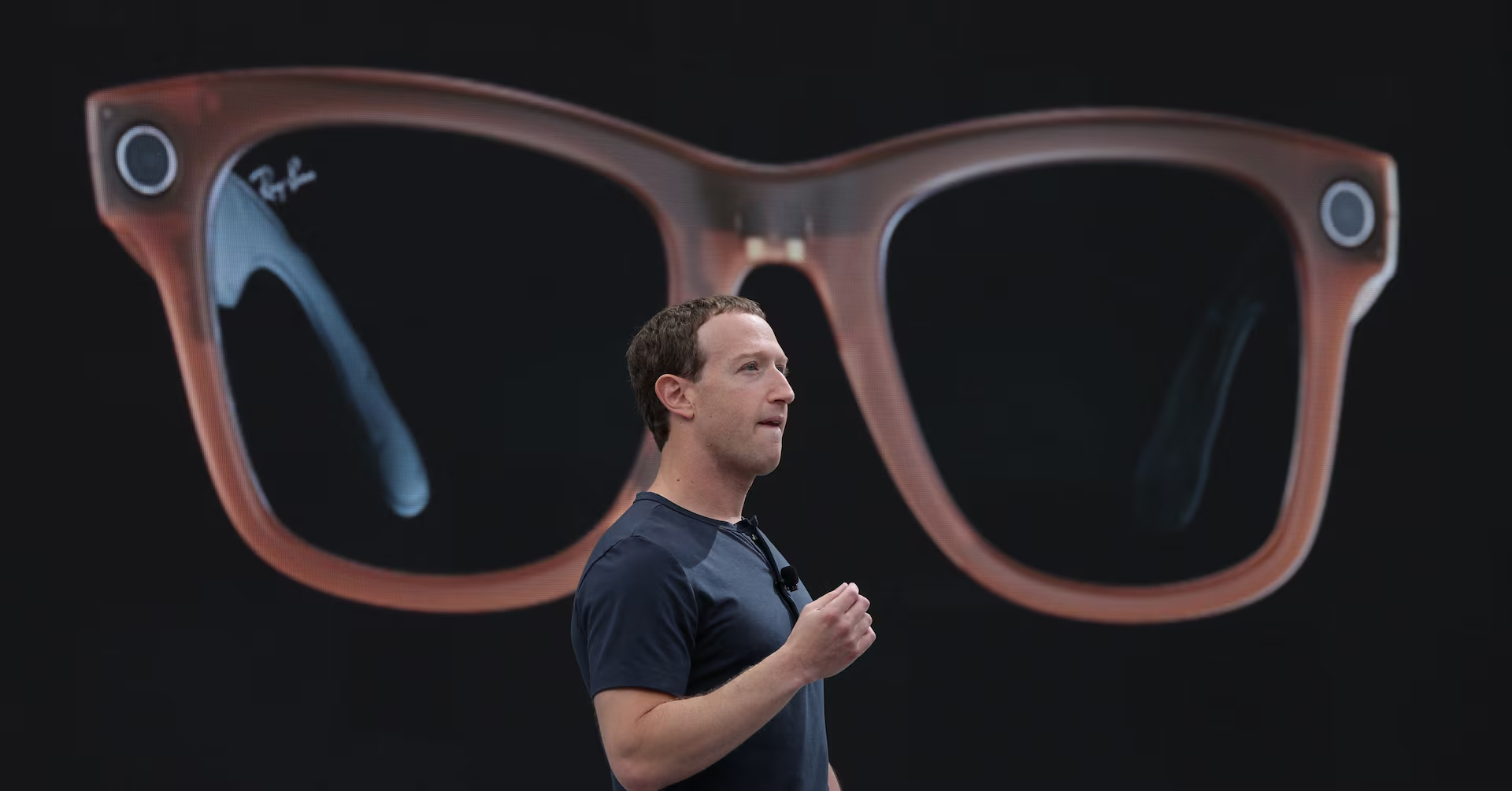
Meta Platforms (META.O) launched its first consumer-ready smart glasses with a built-in display on Wednesday, expanding its Ray-Ban line as part of CEO Mark Zuckerberg’s push toward artificial intelligence “superintelligence.”

Unveiled at Meta’s annual Connect event in Menlo Park, California, the new Ray-Ban Display glasses include a digital screen embedded in the right lens for tasks such as notifications. Priced at $799, they will be available starting September 30 and ship with a wristband that translates hand gestures into commands like responding to messages or answering calls.

“Glasses are the ideal form factor for personal superintelligence, because they let you stay present in the moment while getting access to all of these AI capabilities that make you smarter, help you communicate better, improve your memory, improve your senses, and more,” Zuckerberg said.

The launch highlights Meta’s bid to stay competitive in the AI race, even as it lags behind rivals like OpenAI and Google (GOOGL.O) in advanced model development. The company is investing tens of billions of dollars in AI chips and talent as it pursues its long-term vision of “Orion” glasses, slated for 2027.

Meta also introduced Oakley Vanguard glasses aimed at athletes, priced at $499, with features like real-time performance stats synced to Garmin and Strava, nine-hour battery life, and availability from October 21. Its existing Ray-Ban line also received an update, with improved cameras and nearly doubled battery life at $379.

Despite the splashy debut, analysts expect modest near-term sales for the Display glasses. IDC research manager Jitesh Ubrani said the tech offered “great value” but noted the software still needs to mature. Forrester’s Mike Proulx compared the launch to Apple’s early smartwatch push—functional but still needing to prove everyday utility.

The debut comes as Meta faces heightened scrutiny over safety issues on its platforms, with regulators and whistleblowers raising concerns about the impact of its technologies on children.

Zuckerberg, who fumbled a live demo call on stage, laughed off the glitch. “I don’t know what to tell you guys. I keep on messing this up,” he said, drawing applause from the audience.

IDC forecasts global shipments of AR/VR devices and smart glasses without displays to grow 39.2% in 2025 to 14.3 million units, with Meta expected to drive much of the increase through its more affordable Ray-Ban line.

FTC Probes AI Chatbots from Alphabet, Meta, OpenAI and Others

The U.S. Federal Trade Commission (FTC) announced on Thursday that it has launched an inquiry into major providers of AI-powered consumer chatbots, including Alphabet (Google), Meta Platforms, OpenAI, Character.AI, Snap, and xAI.

Focus of the Inquiry

The FTC is demanding details on:

  • How chatbots are tested, measured, and monitored for potential negative impacts.

  • Monetization strategies, including how companies profit from user engagement.

  • Processing of user inputs and the generation of responses.

  • Use of conversation data, and whether it is exploited for advertising, training, or other commercial purposes.

Rising Scrutiny

Generative AI tools have recently drawn criticism following safety scandals:

  • Reuters revealed internal Meta policies that allowed chatbots to engage in romantic conversations with children.

  • OpenAI is facing a lawsuit alleging ChatGPT contributed to a teenager’s suicide.

  • Character.AI is under a separate lawsuit tied to another teen death.

Company Responses

  • Character.AI: said it will cooperate, highlighting new safety features rolled out over the past year.

  • Snap: welcomed the FTC’s focus, saying it supports policies that balance innovation with community protection.

  • Meta: declined to comment.

  • Alphabet, OpenAI, xAI: did not immediately respond.

Bigger Picture

The inquiry reflects Washington’s growing concern over AI risks, especially for children and vulnerable users. Regulators are looking to balance innovation with consumer protection, while lawsuits and scandals raise urgency for stricter oversight.

Meta and TikTok Win EU Court Challenge on Tech Fees, Regulators Must Recalculate

Meta Platforms and TikTok secured a legal victory on Wednesday against the European Commission over the way EU regulators calculated supervisory fees under the Digital Services Act (DSA). The General Court in Luxembourg ruled that the methodology used to determine the fees was flawed and must be reworked.

Both companies had challenged the 0.05% levy on annual worldwide net income, arguing the system unfairly imposed disproportionate costs. The fee is intended to fund the EU’s monitoring of large platforms’ compliance with the DSA, which requires them to better police harmful and illegal online content.

Court Ruling

The judges said the fee calculation method should have been set under a delegated act, rather than through implementing decisions, giving regulators 12 months to fix the legal framework. Importantly, the court said fees already paid for 2023 will not be reimbursed.

Reactions

  • The European Commission said the ruling requires only a “formal correction” and that it will adopt a delegated act to formalize the methodology.

  • TikTok welcomed the decision, pledging to monitor the new process.

  • Meta emphasized that the current system unfairly burdens profitable companies while large loss-making platforms avoid payment, despite imposing heavy regulatory costs.

Wider Context

The DSA, which came into effect in November 2022, gives the EU sweeping oversight powers and allows fines of up to 6% of global turnover for non-compliance. Other major platforms subject to supervisory fees include Amazon, Apple, Google, Microsoft, Booking.com, X (formerly Twitter), Snapchat, and Pinterest.

The cases were filed under references T-55/24 (Meta Platforms Ireland v Commission) and T-58/24 (TikTok Technology v Commission).