
Yazılar

Microsoft Generative AI Research VP Set to Transition to OpenAI

Microsoft recently announced that Sebastien Bubeck, its vice president of Generative AI research, will be departing the company to join OpenAI, the organization behind the ChatGPT technology. This move underscores the ongoing evolution and competition within the AI landscape, particularly as companies race to develop more advanced artificial intelligence solutions. While specifics regarding Bubeck’s new position at OpenAI remain unclear, his expertise in generative AI is expected to significantly contribute to the company’s ambitious goals.

The transition comes at a time when Microsoft has been heavily investing in artificial intelligence, integrating AI capabilities into its products and services. Bubeck’s departure marks a notable shift within the tech giant, as he has been a key figure in shaping its AI research direction. A Microsoft spokesperson acknowledged Bubeck’s decision, emphasizing that the company looks forward to maintaining a collaborative relationship with him in his new role at OpenAI, highlighting the interconnectedness of the two organizations in the pursuit of advancing AI technologies.

Sebastien Bubeck’s work at Microsoft has focused on pushing the boundaries of generative AI, particularly in the areas of natural language processing and machine learning. His experience will be invaluable at OpenAI, which is at the forefront of developing advanced AI models. As OpenAI continues to innovate and expand its capabilities, Bubeck’s insights and leadership could play a crucial role in shaping the future of artificial general intelligence (AGI).

This development also reflects a broader trend in the tech industry, where talent mobility between leading companies is common, particularly in specialized fields like AI. As organizations seek to harness the potential of generative AI, the exchange of ideas and expertise will be essential for driving innovation. Bubeck’s transition is not just a significant change for Microsoft but also signals exciting possibilities for OpenAI as it strives to further its mission of ensuring that AGI benefits all of humanity.
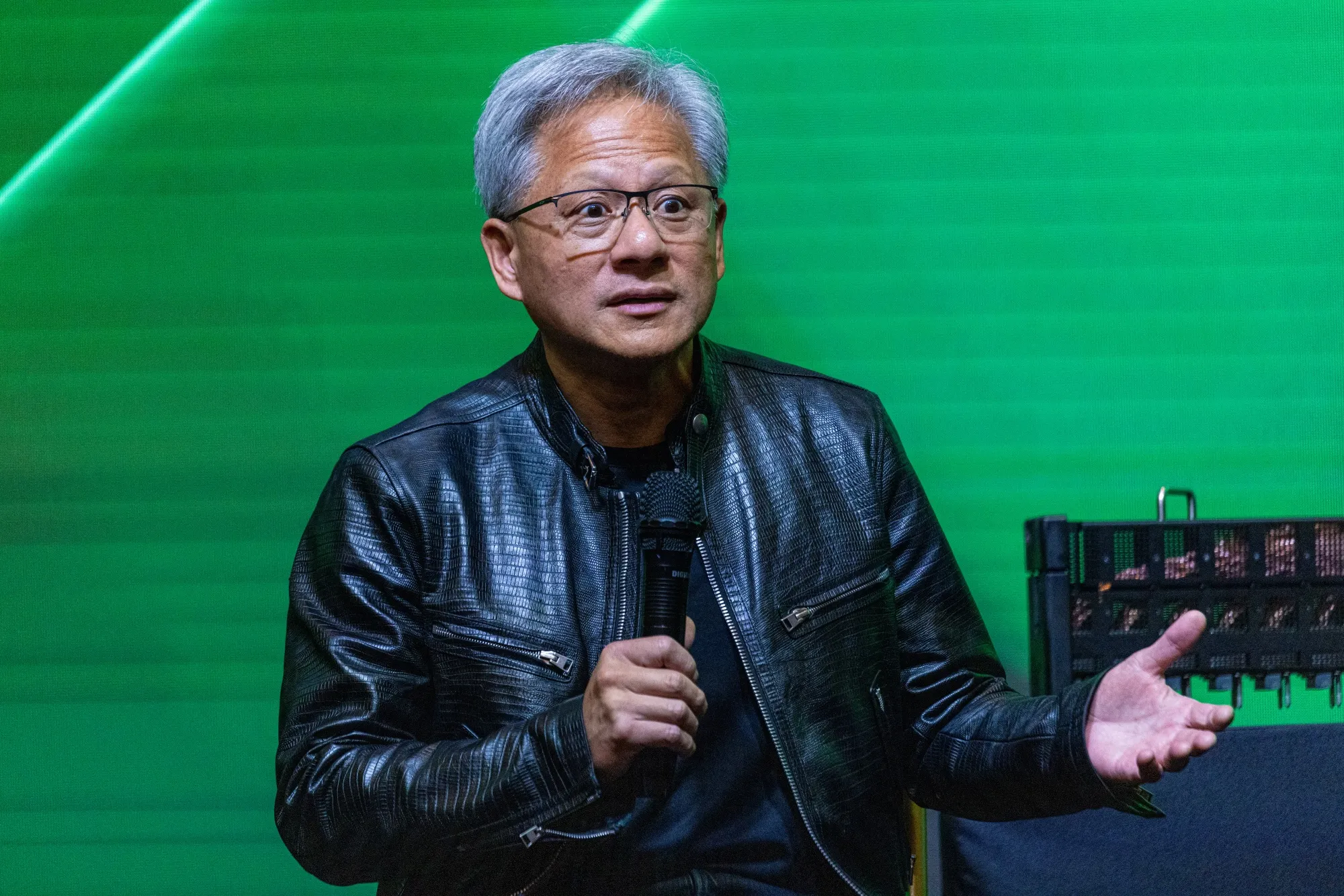

Nvidia CEO Highlights Need for Affordable Computing to Drive ‘Reasoning’ AI

Nvidia CEO Jensen Huang has outlined a vision for the future of Artificial Intelligence (AI), where AI systems will be capable of “reasoning” rather than simply responding to inputs. Speaking during a podcast with Arm Holdings CEO Rene Haas, Huang emphasized that achieving this advanced level of AI will depend on making computing more affordable. Current AI tools, like OpenAI’s ChatGPT, which Huang personally uses daily, are powerful but still limited in their ability to carry out complex reasoning processes. To reach the next stage, AI will need to be able to analyze queries through hundreds or even thousands of steps, reflecting on its conclusions.

This capability would represent a significant leap forward from current AI models, which are highly efficient at generating responses but lack the depth of self-reflection and reasoning. Huang explained that future AI systems will differ by being able to process and interpret information with a much greater degree of complexity. This new form of AI will be more dynamic, capable of reasoning through multiple scenarios before arriving at conclusions, making it more adaptive and intelligent.

To make this vision a reality, Nvidia plans to continue enhancing its hardware capabilities. Huang stated that Nvidia will increase the performance of its chips by two to three times annually, while keeping the cost and energy consumption at current levels. This continuous improvement in chip technology is essential to lowering the cost of computing and making advanced AI systems more accessible. Huang believes that this will lay the foundation for AI models capable of handling inference, or the ability to spot patterns and draw conclusions, at a much more sophisticated level.

The transition to reasoning AI will be transformative, reshaping how AI systems operate and interact with the world. However, Huang noted that this leap will only be possible once the infrastructure required to support such advanced computation becomes affordable. With Nvidia at the forefront of this technological advancement, the company is positioning itself to play a pivotal role in making reasoning AI a mainstream reality.

Square Enix Plans to Bring Final Fantasy 16 to Xbox Following PC Launch

Final Fantasy XVI’s Xbox Release Remains Uncertain as Square Enix Prioritizes PC Version

Final Fantasy XVI, which initially launched exclusively for the PlayStation 5 in 2023, has now made its way to PC, much to the excitement of action-RPG fans. However, players on Xbox Series S and X are still left waiting, with no confirmed release date for the game on Microsoft’s consoles. Despite ongoing speculation and demand, publisher Square Enix has not yet provided a clear timeline for when—or if—the game will arrive on Xbox platforms. The lack of certainty around the release has led to both anticipation and frustration among Xbox users.

Naoki Yoshida, the renowned producer behind Final Fantasy XVI, better known as Yoshi-P, recently provided an update on the game’s potential Xbox port. In an interview with Video Games, Yoshi-P confirmed that Square Enix is indeed interested in bringing FFXVI to Xbox. However, the company is unable to offer any specifics regarding a release date at this time. “We do want to release it on Xbox,” Yoshida noted, “but when it comes to the specifics such as when the game would be available, we are not in a position to be able to share anything.”

Yoshida’s comments have sparked further discussions about the complexities involved in porting high-profile games to multiple platforms. The process of adapting a game like Final Fantasy XVI, which was designed to leverage the hardware capabilities of the PS5, can be challenging when transitioning to platforms with different technical specifications, such as the Xbox Series S/X. Although the Xbox Series X boasts performance on par with the PS5, the Xbox Series S’s lower hardware specifications may require additional optimization, potentially delaying the game’s release.

Square Enix’s focus on the PC version of Final Fantasy XVI has been apparent, with the company releasing the game on that platform last month. The decision to prioritize PC over Xbox could be attributed to the larger install base of PC players and the growing demand for high-end RPG experiences on that platform. The release of the PC version has already expanded the game’s audience, and Square Enix is likely gauging its performance before committing resources to an Xbox port.

While Xbox players may feel left out for now, Square Enix has shown a willingness in the past to support Microsoft’s consoles with Final Fantasy titles. Previous games in the franchise, including Final Fantasy XV and the Final Fantasy VII Remake Intergrade, eventually made their way to Xbox after timed exclusivity periods on PlayStation. This history suggests that an Xbox version of Final Fantasy XVI is not out of the question, but it may be part of a long-term strategy rather than an immediate priority for the publisher.

Ultimately, the question remains: when will Final Fantasy XVI come to Xbox? As of now, Square Enix has not provided a definitive answer. With Yoshi-P emphasizing that the company is still planning an Xbox release, fans can remain hopeful, though patience will be required. In the meantime, the focus remains on the PC version, and any Xbox release will likely depend on the continued success and reception of the game across existing platforms. For Xbox players eagerly awaiting the game, it seems that the wait will continue for the foreseeable future.