Yazılar

U.S. Tightens Semiconductor Restrictions to Prevent China’s Access to Advanced Chips

The U.S. Department of Commerce has implemented stronger restrictions on the export of advanced computing semiconductors, aimed at curbing the diversion of high-end chips to China. The new regulations impose broader licensing requirements on chip manufacturers and packaging companies seeking to export specific advanced chips. These measures are designed to limit China’s access to crucial chips used in military applications and advanced technology sectors.

The restrictions build on previous efforts by the U.S. to prevent China from acquiring semiconductors critical to maintaining a military advantage. By controlling the flow of these high-end chips, the U.S. seeks to mitigate potential security risks posed by China’s growing technological and military capabilities.


US Targets Chinese Companies Over AI Chips and Military Concerns

The Biden administration has blacklisted more than two dozen Chinese entities, including Zhipu AI, a prominent developer of large language models, and Sophgo, a company implicated in using Taiwan Semiconductor Manufacturing Company (TSMC) chips for Huawei’s AI processors. This move is part of the U.S.’s ongoing efforts to curb China’s access to advanced technology, particularly in the fields of artificial intelligence (AI) and military applications.

The U.S. Commerce Department added 25 Chinese companies, along with two Singapore-based companies, to its Entity List, effectively restricting their access to U.S. goods and technology without special licenses, which are typically denied. Zhipu AI, backed by major investors like Alibaba and Tencent, was blacklisted for its involvement in advancing China’s military AI capabilities. Sophgo, which supplied a chip found in Huawei’s Ascend 910B AI system, also came under scrutiny for its role in supporting Huawei’s AI ambitions, a company already restricted since 2019.

In response, Zhipu AI denied the allegations, claiming the decision lacked factual basis and wouldn’t significantly impact its operations. Similarly, Sophgo, an affiliate of Bitmain, a leading bitcoin mining equipment supplier, also rejected claims of any direct ties with Huawei.

The U.S. also implemented stricter rules for the export of semiconductors, specifically those used in AI applications, particularly targeting advanced chips at or below 14 or 16 nanometer nodes. The new regulations aim to prevent these chips from being used in military technologies or high-tech surveillance systems, further tightening restrictions on Chinese companies like Changxin Memory Technologies, a major DRAM producer.

The expanded controls also hold chipmakers accountable for ensuring that their products do not end up in the hands of restricted entities, including companies potentially linked to Huawei’s operations.

These moves are part of broader efforts by the U.S. to limit China’s access to critical technology, especially in areas like AI and advanced military systems, and to curtail the risk of sensitive technologies being diverted to entities like Huawei.


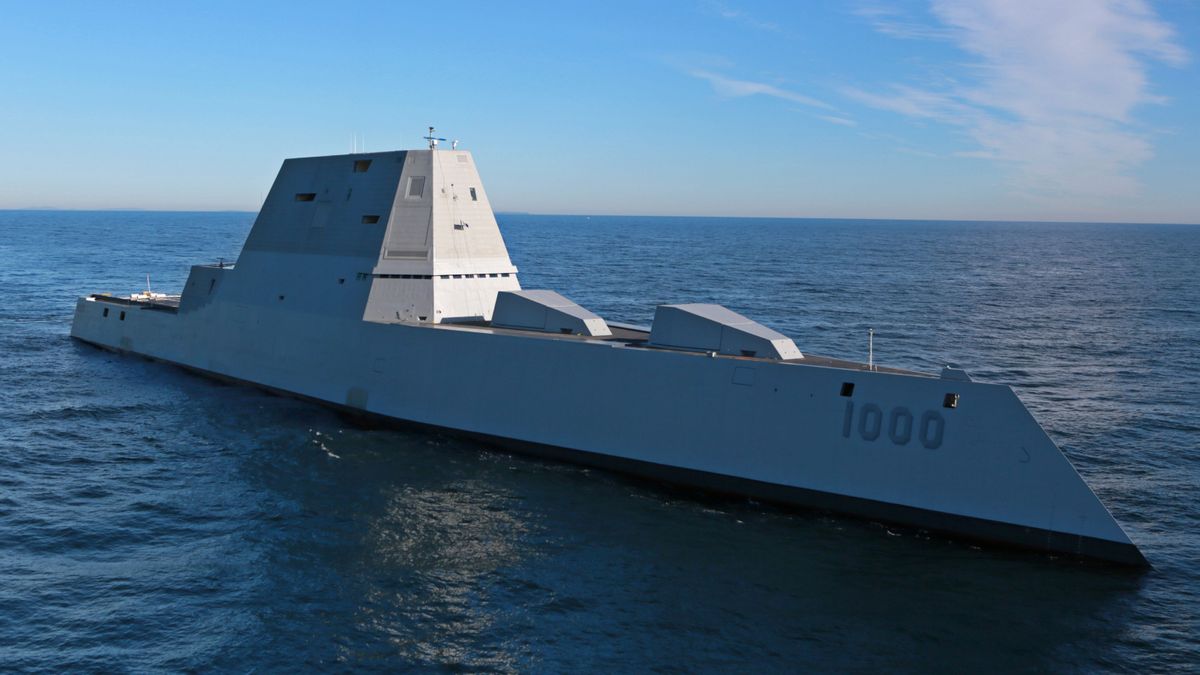
USS Zumwalt to Be Equipped with Hypersonic Missiles for Enhanced Long-Range Strike Capability

The USS Zumwalt, one of the United States Navy’s cutting-edge stealth destroyers, is set to receive a major upgrade to accommodate advanced hypersonic missiles as part of the Conventional Prompt Strike (CPS) program. These weapons, capable of traveling at speeds exceeding five times the speed of sound, mark a significant leap forward in non-nuclear strike capabilities. By integrating hypersonic missiles, the USS Zumwalt will enhance its capacity for long-range, high-precision attacks, providing the Navy with a powerful new tool for strategic operations.

Hypersonic missiles are a revolutionary class of weaponry designed for speed, accuracy, and survivability. According to reports, the CPS system employs a hypersonic glide vehicle that can reach speeds of up to Mach 8—about 6,140 miles per hour—far surpassing the capabilities of traditional ballistic missiles. The Zumwalt-class destroyers, known for their stealth and advanced technology, will be equipped with four launch tubes, each capable of housing three of these state-of-the-art missiles. This configuration ensures a formidable offensive capability while maintaining the ship’s stealth profile.

One of the standout features of hypersonic weapons is their high-altitude trajectory, with missiles capable of reaching altitudes of up to 50 miles above sea level. This design minimizes air resistance, allowing the missiles to maintain their incredible speeds while reducing the chances of interception by advanced defense systems. Military analysts highlight this capability as a key advantage, as it enables hypersonic missiles to evade even the most sophisticated missile defense networks, providing a near-unmatched offensive edge.

The integration of hypersonic missiles into the USS Zumwalt represents a pivotal moment in modern naval warfare. By combining the destroyer’s stealthy design with these advanced weapons, the U.S. Navy aims to stay ahead in the race for military innovation. As the CPS program progresses, the Zumwalt-class destroyers are poised to play a critical role in redefining long-range strike capabilities, setting a new standard for the future of naval combat.