Yazılar

SpaceX Falcon 9 Successfully Launches Athena Lander and NASA’s Lunar Trailblazer Mission to the Moon

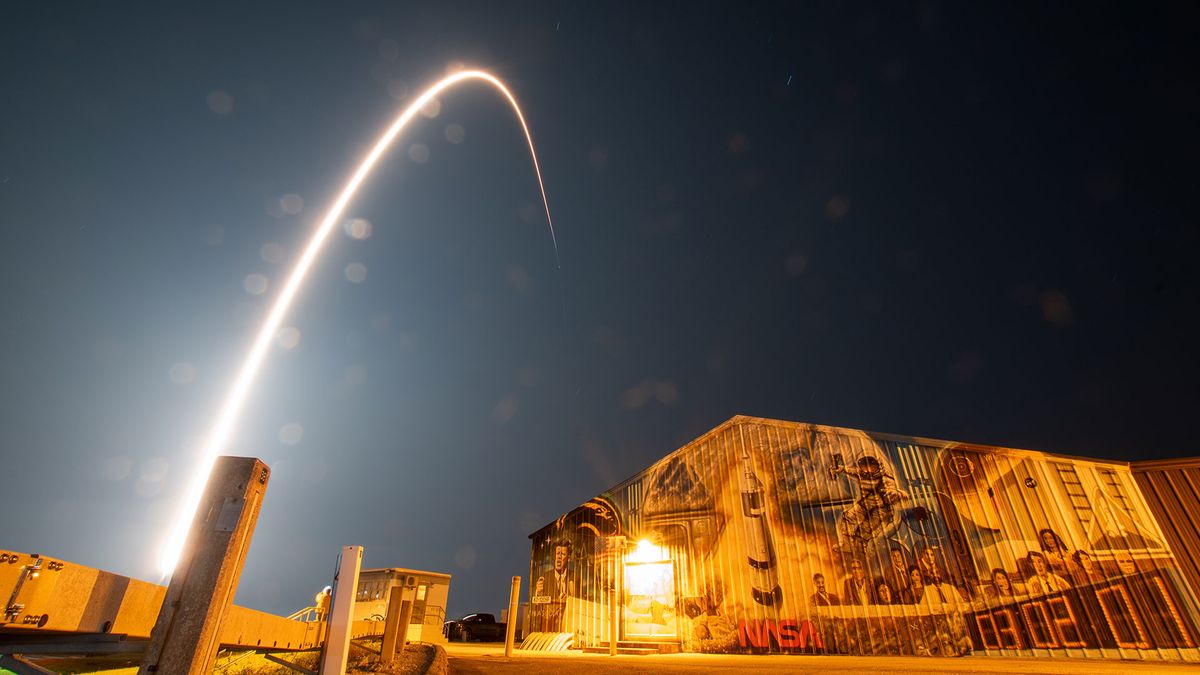
A SpaceX Falcon 9 rocket successfully launched from Kennedy Space Center, carrying both the Athena lunar lander and NASA’s Lunar Trailblazer orbiter on a mission to the Moon. The launch took place at 7:16 p.m. EST from Launch Complex-39A, marking an exciting milestone in the ongoing exploration of the lunar surface. The Athena lander, developed by Intuitive Machines, is designed to conduct detailed investigations of lunar water ice deposits, while the Lunar Trailblazer orbiter, built by NASA, will map these deposits from orbit. Together, the two missions aim to enhance our understanding of the Moon’s water ice distribution, a key component for future lunar exploration and potential resource utilization.

Athena is equipped with a suite of ten scientific instruments, including the Polar Resources Ice Mining Experiment 1 (PRIME-1), which will be central to its mission. Among the tools on board are the Regolith Ice Drill for Exploring New Terrain (TRIDENT) and the Mass Spectrometer for observing lunar operations (MSolo). These instruments will work together to extract and analyze samples from beneath the lunar surface, focusing on the presence of water ice. This data is expected to play a crucial role in advancing in-situ resource utilization (ISRU) technologies, which could enable long-term lunar exploration by utilizing local resources for fuel, water, and other necessities.

In addition to Athena’s on-the-ground research, NASA’s Lunar Trailblazer orbiter will complement the mission by mapping water ice deposits across the Moon’s surface. This data will be particularly valuable in understanding the distribution of ice in shadowed regions like Mons Mouton, where Athena is expected to land. By providing a comprehensive overview of lunar ice, Lunar Trailblazer’s findings will inform future missions and help scientists pinpoint the most promising sites for resource extraction. This coordinated approach between lander and orbiter will create a detailed picture of the Moon’s water ice reserves, which is critical for future sustainable exploration.

The Athena mission is expected to reach lunar orbit in about four to five days, with the actual landing anticipated to occur between 1.5 and three days after entering orbit. The mission is planned to last approximately ten Earth days. To extend its capabilities, Athena carries two secondary exploration vehicles: MAPP, a rover developed by Lunar Outpost, and Grace, a hopping robot created by Intuitive Machines. Grace is designed to explore shadowed lunar craters that are difficult for wheeled vehicles to access, while MAPP will help establish a lunar communications network using Nokia Bell Labs’ Lunar Surface Communications System (LSCS). These innovative technologies aim to support long-term lunar missions and ensure reliable communication between Earth and the lunar surface.

The Athena mission follows the company’s earlier IM-1 mission, which marked the first soft lunar landing by a private company but faced challenges with landing precision that affected data transmission. Intuitive Machines has focused on improving landing accuracy for IM-2, as noted by Trent Martin, the Senior Vice President of Space Systems at Intuitive Machines. The lessons learned from IM-1 will be invaluable in ensuring the success of this mission, which has the potential to lay the groundwork for future exploration of lunar resources and support the broader goals of human space exploration.
Artemis IV Powered by NASA’s SLS Block 1B: Greater Payload, Greater Potential

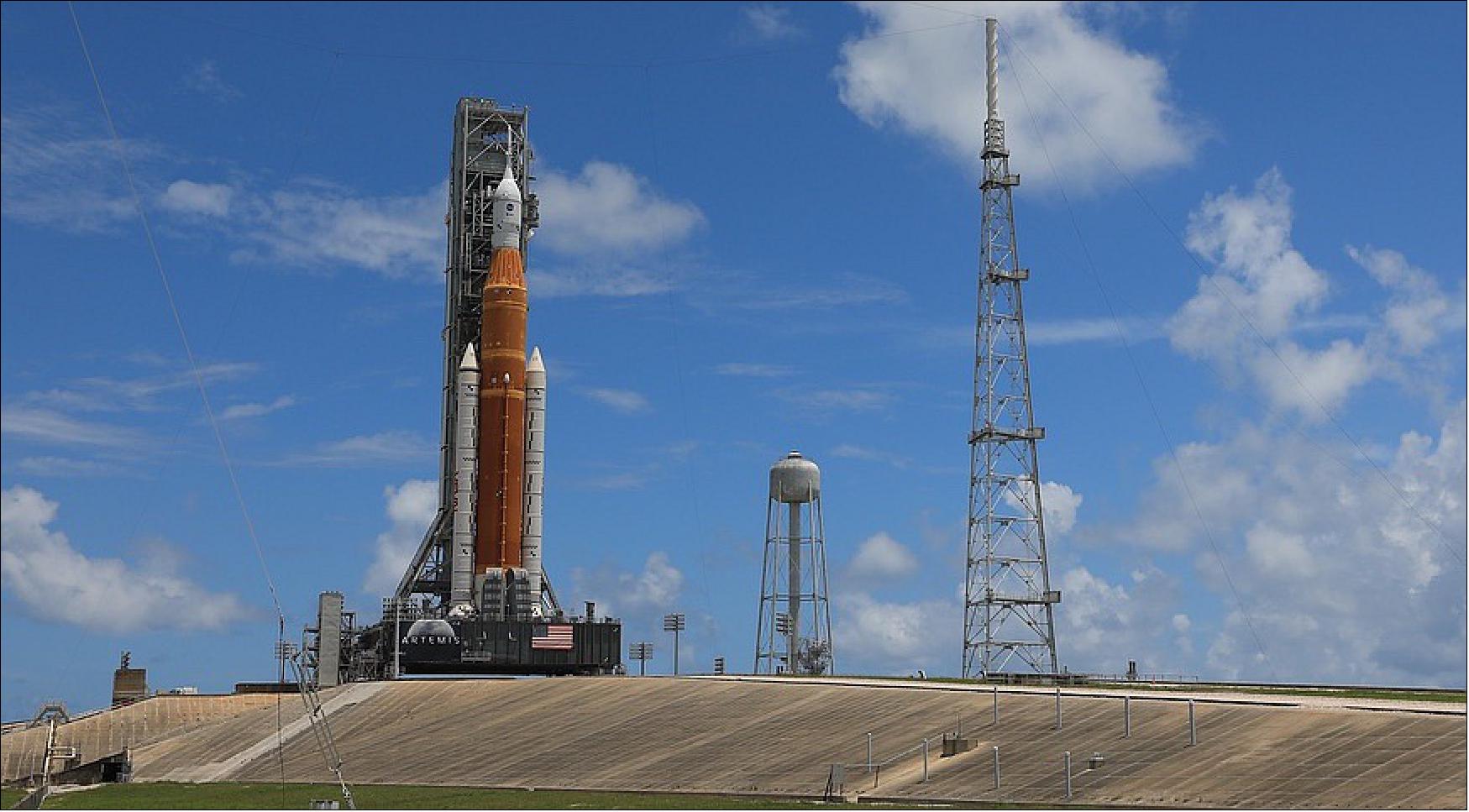
NASA’s Artemis program continues to push the boundaries of deep space exploration, with the upcoming Artemis IV mission set to introduce a significant upgrade to the Space Launch System (SLS). This mission will mark the debut of the SLS Block 1B variant, featuring the powerful Exploration Upper Stage (EUS). The enhanced design significantly increases payload capacity, making it possible to transport heavier and more complex components, such as the Orion spacecraft and the European Space Agency’s Lunar I-Hab module. These advancements are crucial for the Gateway lunar space station, a key element in sustaining long-term human presence on the Moon and beyond.

Advanced Structural Design for Payload Integration

A critical component of the SLS Block 1B is the payload adapter, an essential structure developed at NASA’s Marshall Space Flight Center in Huntsville, Alabama. This adapter facilitates the secure attachment of diverse payloads to the rocket and has undergone extensive innovation to optimize efficiency. Constructed from eight composite panels reinforced with an aluminum honeycomb core and supported by aluminum rings, the adapter is both lightweight and strong. To ensure precise assembly, engineers have employed structured light scanning technology, which eliminates the need for traditional, expensive tooling methods.

Cost-Effective and Adaptive Engineering

NASA has highlighted the advantages of the structured light scanning technique, which significantly reduces manufacturing costs while improving flexibility. This method allows for quick adjustments to the adapter’s dimensions based on mission requirements. According to Brent Gaddes, Lead for the Orion Stage Adapter and Payload Adapter at NASA Marshall, the technology enables rapid design modifications without the need for extensive retooling. This adaptability ensures that the SLS Block 1B can accommodate a wide range of payload sizes, making it a versatile launch system for future deep space missions.

A Step Forward for Lunar Exploration

With its increased payload capacity and adaptable engineering, the SLS Block 1B is set to play a crucial role in the Artemis IV mission and beyond. The successful deployment of this upgraded rocket variant will lay the foundation for more ambitious lunar and deep space missions, bringing NASA closer to its long-term goal of sustained human presence on the Moon and eventual crewed missions to Mars. As Artemis IV takes shape, it represents a major milestone in space exploration, demonstrating the power of innovation and international collaboration in pushing the boundaries of human spaceflight.

SpaceX Achieves Major Milestone: Starship Booster Successfully Caught in Fifth Test Flight

SpaceX achieved a groundbreaking engineering feat on Sunday during its fifth test flight of the Starship rocket, successfully returning the Super Heavy booster to its Texas launch pad using giant mechanical arms. This marks a critical advancement in SpaceX’s efforts to develop a fully reusable rocket system designed for missions to the moon, Mars, and beyond.

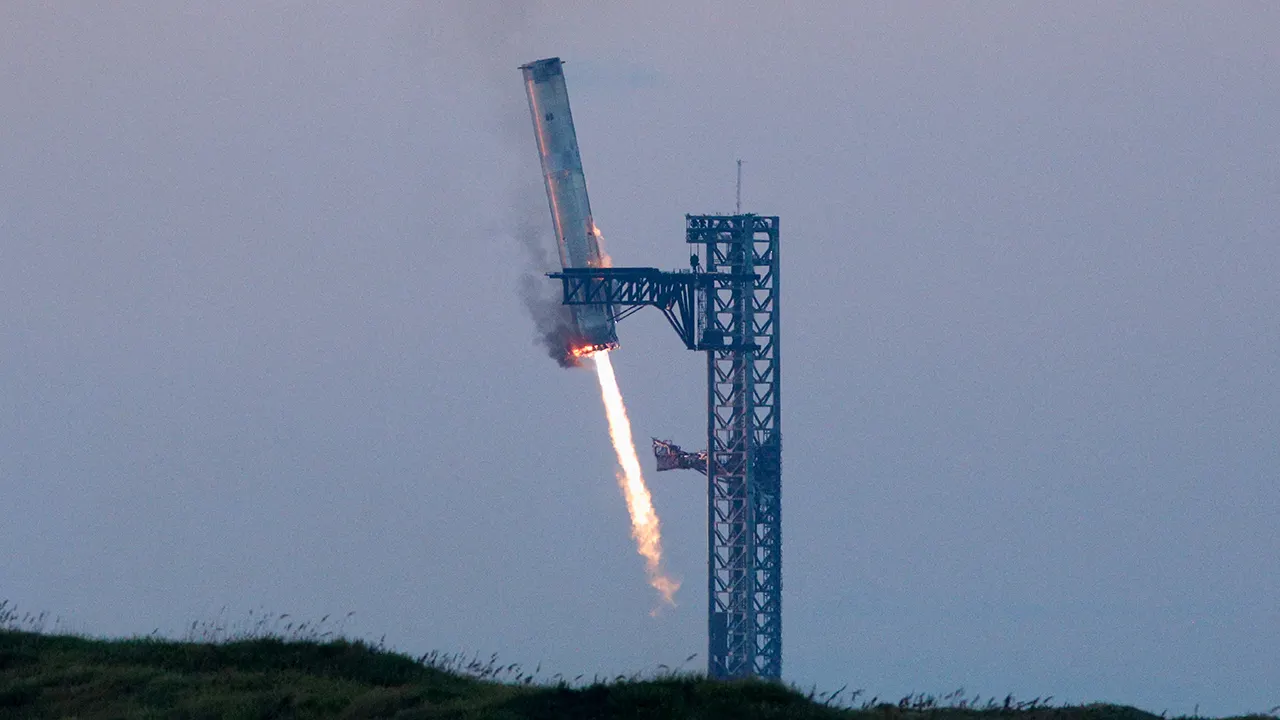
The mission began at 7:25 a.m. CT (1225 GMT) when the Super Heavy booster lifted off from SpaceX’s Boca Chica facility in Texas, propelling the Starship second stage toward space. After separation at an altitude of approximately 70 kilometers (40 miles), the Super Heavy booster initiated its descent back to the launch site in a dramatic sequence. As it neared the pad, the booster reignited three of its 33 Raptor engines to control its descent, targeting the 400-foot launch tower equipped with large metal arms designed to “catch” the rocket.

In a first for SpaceX, the booster hooked itself into place using tiny protruding bars under its four grid fins, which had steered the rocket during its descent. Elon Musk, SpaceX’s CEO, celebrated the success by posting, “The tower has caught the rocket!!” on X (formerly Twitter). Engineers at SpaceX were seen cheering on the company’s live stream as the novel landing method succeeded.

Pushing the Limits of Reusability

This successful catch-landing is part of SpaceX’s ambitious mission to develop fully reusable rockets, an essential feature for deep-space exploration and reducing the costs of space missions. Starship, the rocket system’s second stage, also played a key role in the test flight, accelerating to speeds of 17,000 miles per hour at an altitude of 89 miles before heading toward a targeted splashdown in the Indian Ocean.

Upon reentry, Starship encountered superheated plasma, with onboard cameras capturing the spectacular display as it streaked through Earth’s atmosphere. The heat shields, now made up of 18,000 improved tiles, were enhanced following the previous test flight in June, when the Starship’s heat shields sustained damage, complicating its reentry.

Controlled Splashdown and Explosion

The test flight concluded with Starship re-igniting one of its six Raptor engines to reorient itself for a simulated landing in the ocean near Western Australia. While the ship successfully landed on target in the waters, it toppled onto its side soon after, and moments later, a fireball explosion illuminated the area. Although it remains unclear whether the explosion was a controlled detonation or due to a fuel leak, SpaceX engineers were heard celebrating the mission’s outcome, confirming that the Starship landed “precisely on target.”

Regulatory Approvals and Tensions

SpaceX’s fifth test flight was cleared for launch just a day before by the U.S. Federal Aviation Administration (FAA), ending a period of tension between the company and the regulatory body over the pace of launch approvals. The FAA had previously fined SpaceX over its Falcon 9 rocket, which is the company’s workhorse for launching satellites and crew missions. Despite these regulatory hurdles, the successful test highlights SpaceX’s commitment to advancing its spaceflight technology and achieving its long-term vision of interplanetary travel.

Conclusion

This latest test is a significant step in SpaceX’s test-to-failure development strategy for creating reusable rocket technology capable of supporting NASA’s lunar missions and Musk’s vision of human colonization of Mars. Though setbacks like the Starship’s post-landing explosion remain, the key achievements of this mission—such as the booster catch—bring SpaceX closer to its ambitious goal of developing a rocket system that can be reused for multiple deep-space missions, drastically cutting costs and paving the way for the future of space exploration.