Yazılar

NASA Announces New Launch Date for SPHEREx and PUNCH Missions

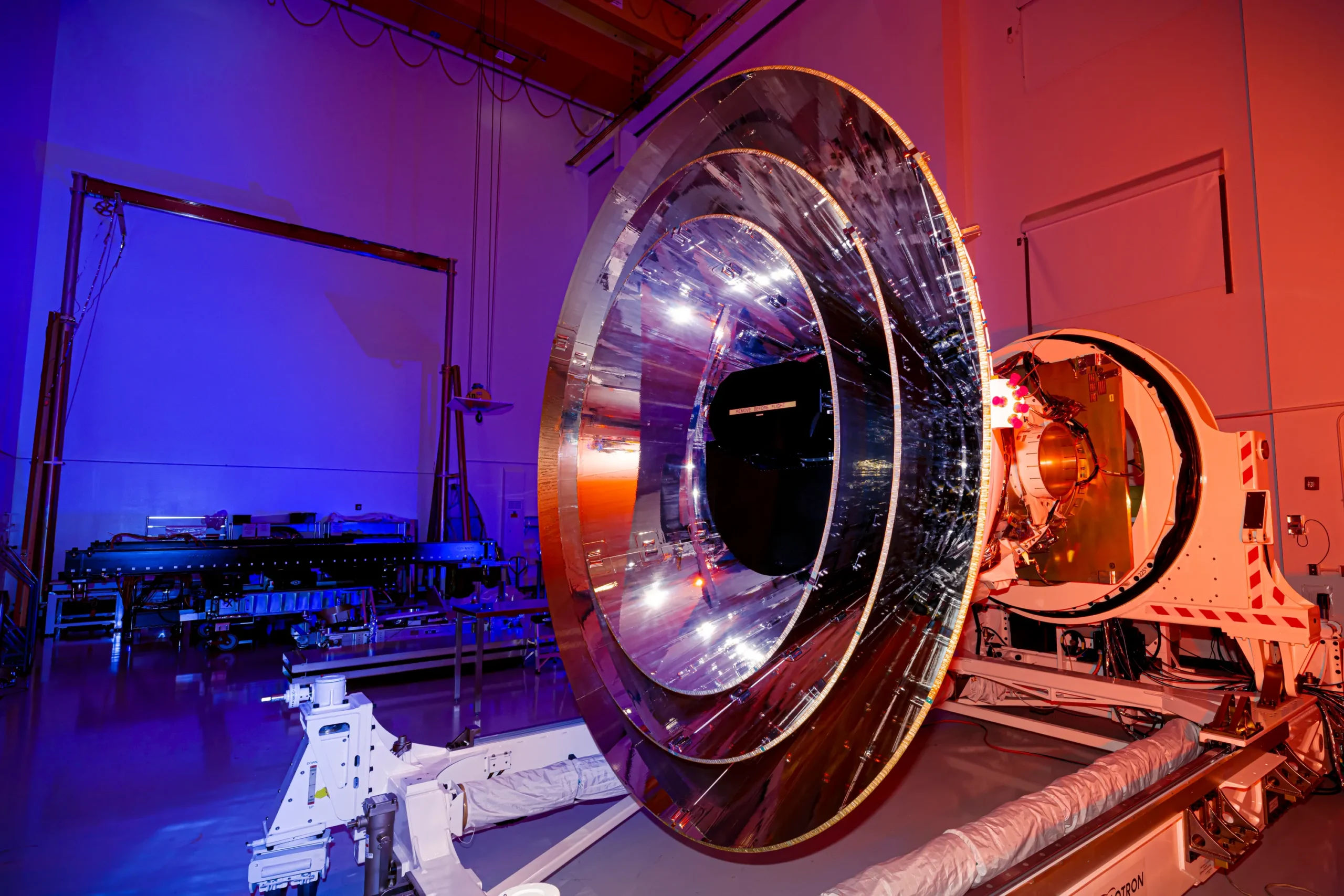
NASA has announced another delay for its SPHEREx and PUNCH missions, which are now scheduled for launch on March 7. Initially set for February 27, the launch has encountered several setbacks, with the most recent delay moving the date from March 4. The two missions will launch aboard a SpaceX Falcon 9 rocket from Vandenberg Space Force Base in California, with liftoff now expected at 10:09 p.m. EST from Launch Complex 4E. The delay is primarily due to scheduling constraints at the launch site, particularly involving the availability of a launch window on the Western Range.

The reasons behind the earlier delays were tied to extensive checks and processing of the Falcon 9 rocket, ensuring all systems are functioning correctly for the missions. The latest postponement, however, stems from the complexities of coordinating launch windows at Vandenberg, a crucial aspect of timing for space missions. Despite these delays, both SPHEREx and PUNCH are poised to contribute valuable data to their respective scientific fields.

SPHEREx, which stands for the Spectro-Photometer for the History of the Universe, Epoch of Reionization, and Ices Explorer, is an infrared telescope with a mission to survey the sky and gather data on the early universe. Unlike the James Webb Space Telescope, which focuses on deep-space observations, SPHEREx will offer a broader, all-sky view in infrared wavelengths. This mission aims to explore key cosmic phenomena such as the formation of galaxies, stars, and planetary systems.

The PUNCH mission, or the Polarimeter to Unify the Corona and Heliosphere, will study solar activity through four small satellites. These satellites will focus on phenomena like coronal mass ejections (CMEs), which can cause disturbances on Earth, including radio blackouts and potential threats to satellite communications. By improving predictions of space weather, PUNCH aims to enhance our understanding of the Sun’s influence on the solar system and help mitigate the impact of space weather events on modern technology.

Study Suggests Enceladus’ Geysers May Have a Different Origin Than Its Underground Ocean

Saturn’s moon Enceladus has long captivated scientists due to its dramatic geysers, which were thought to be directly connected to a vast underground ocean beneath its icy crust. This subsurface ocean has been considered a potential habitat for extraterrestrial microbial life, making Enceladus a key target for astrobiological exploration. However, new research challenges this assumption, suggesting that the geysers may instead originate from a slushy, salt-laden layer within the ice shell itself rather than from the deep ocean. This discovery reshapes our understanding of the moon’s geologic activity and its potential for supporting life.

A study published in Geophysical Research Letters by researchers from Dartmouth College proposes that Enceladus’ plumes do not necessarily require fractures that extend all the way down to the underground ocean. Instead, the study suggests that a semi-liquid layer within the ice shell, rich in salts, could be responsible for the observed eruptions. Because salts lower the freezing point of water, certain regions of the ice may remain in a slushy state, providing a reservoir for the plumes without needing a direct link to the ocean below.

The research also highlights the role of “tiger stripe” fractures in Enceladus’ southern hemisphere, where these eruptions occur. Scientists propose that friction between ice layers, a process known as shear heating, could generate enough warmth to maintain pockets of briny water within the shell. This process would explain how water vapor and ice particles are ejected into space without requiring a deep-seated oceanic source. If this theory is correct, it could mean that Enceladus’ geysers are more localized surface phenomena rather than direct windows into the moon’s global ocean.

This new perspective on Enceladus’ geysers has significant implications for future space missions. If the plumes are not directly linked to the subsurface ocean, they may not be as useful for detecting potential signs of life as previously hoped. However, the presence of liquid reservoirs within the ice shell still suggests intriguing geologic activity that warrants further investigation. As scientists continue to study Enceladus, upcoming missions such as NASA’s Europa Clipper and potential future probes to Saturn’s moons could help clarify the true nature of these mysterious eruptions.

Astronaut Captures Stunning Image of ‘Gigantic Jet’ Lightning Reaching 50 Miles Above Earth

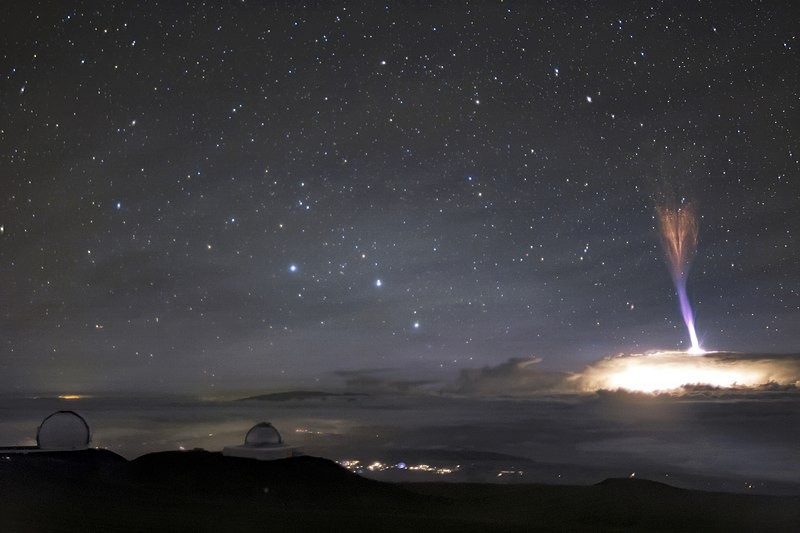
A rare and stunning phenomenon known as a “gigantic jet” of lightning has been captured in a photograph taken from space. The image, which shows the lightning reaching nearly 50 miles above the Earth’s surface, was taken by an astronaut aboard the International Space Station (ISS) on November 19, 2024. However, the photograph wasn’t immediately shared by space agencies. It wasn’t until photographer Frankie Lucena, who specializes in documenting rare lightning events, discovered the image on NASA’s Gateway to Astronaut Photography of Earth website that it gained widespread attention. The images were later featured by Spaceweather.com on February 26, 2025, highlighting the remarkable capture.

The gigantic jet is believed to have originated from a thunderstorm near New Orleans, Louisiana. Spaceweather.com reports that the ISS was flying over the Gulf of Mexico when the photograph was taken, offering clues as to where the storm may have occurred. However, due to the dense cloud cover visible in the image, pinpointing the exact location of the event proved difficult. In total, four separate lightning events were identified in the astronaut’s photo sequence, but it was the unique upward-shooting jet that caught the most attention, standing out from the usual downward lightning strikes seen in typical thunderstorms.

Gigantic jets are a rare and fascinating phenomenon in the world of atmospheric science. Unlike traditional lightning, which typically strikes downward, gigantic jets extend upward from thunderstorms, reaching into the ionosphere, which is about 50 miles above Earth’s surface. These powerful electrical discharges are the result of inverted charge layers within clouds, causing them to shoot high into the atmosphere. The jets glow with a blue hue due to interactions with nitrogen in the upper atmosphere, creating an ethereal and almost otherworldly appearance. However, they are extremely brief, lasting for less than a second, making them incredibly difficult to observe.

This rare occurrence provides scientists with an important opportunity to study these powerful electrical phenomena. While gigantic jets are known to happen sporadically, capturing one from space allows for a deeper understanding of their behavior and the conditions that cause them. These high-altitude lightning discharges remain one of the many mysterious and captivating aspects of Earth’s weather systems, continuing to intrigue both scientists and skywatchers alike.