Yazılar

NASA’s SPHEREx Mission: Unraveling the Universe and Tracing the Origins of Life

NASA is preparing to launch a pioneering mission that aims to unlock the secrets of the universe’s origins and the fundamental ingredients for life. The SPHEREx (Spectro-Photometer for the History of the Universe, Epoch of Reionization, and Ices Explorer) telescope will be at the center of an upcoming NASA briefing scheduled for 12 p.m. EST on Friday, January 31. With a planned launch no earlier than February 27, this mission is expected to provide groundbreaking insights into cosmic evolution, the formation of galaxies, and the distribution of life-forming molecules throughout the Milky Way.

The SPHEREx observatory will conduct a comprehensive survey of the entire sky using near-infrared light, allowing scientists to probe deep into the history of the universe. One of its primary objectives is to study how galaxies have evolved over time, shedding light on the large-scale structure of the cosmos. Additionally, it will play a crucial role in identifying water and complex organic molecules in the regions where stars and planets are born. By mapping over 450 million galaxies and 100 million stars in our galaxy, SPHEREx will help answer fundamental questions about the distribution of essential compounds that may support life.

To achieve its mission, the spacecraft is equipped with advanced technology designed to enhance measurement accuracy. Developed by BAE Systems, the telescope features a unique structure incorporating three concentric cones, which help minimize interference from heat and light. This innovative design ensures that SPHEREx can capture precise data even from the faintest celestial objects. The telescope’s ability to observe in near-infrared wavelengths will enable it to detect subtle cosmic signals that were previously beyond our reach.

International collaboration has also played a key role in preparing for the mission. The Korea Astronomy and Space Science Institute has contributed a cryogenic test chamber, essential for ensuring the spacecraft’s instruments can function in the extreme conditions of space. With cutting-edge technology and global scientific partnerships, SPHEREx is poised to become a transformative mission in our quest to understand the universe and the origins of life itself.
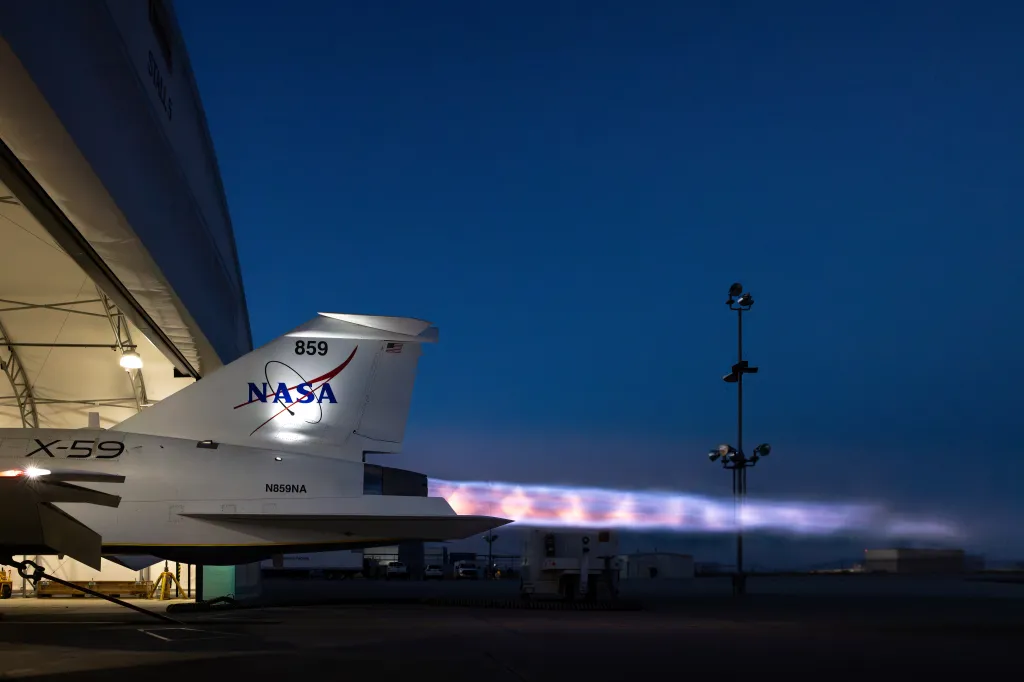
NASA’s X-59 Jet Undergoes Afterburner Test Ahead of Supersonic Flight Trials

NASA’s X-59 supersonic jet, developed in collaboration with Lockheed Martin, has achieved a major milestone with the successful completion of afterburner engine tests. This aircraft is a key component of NASA’s Quesst program, which aims to revolutionize supersonic travel by significantly reducing the disruptive sonic booms that have long restricted such flights over populated areas. Conducted at Lockheed Martin’s Skunk Works facility in Palmdale, California, the tests showcased the X-59’s ability to meet supersonic performance benchmarks, bringing it closer to its first flight.

Performance Evaluation of Engine Systems

The X-59 is powered by the General Electric F414-GE-100 jet engine, a modified version of the one used in Boeing’s F/A-18 Super Hornet. NASA subjected the engine to rigorous afterburner trials to evaluate its performance under supersonic conditions. These tests assessed whether the engine could operate within safe temperature limits while maintaining sufficient airflow to sustain high-speed travel. Lockheed Martin shared images on X (formerly Twitter) highlighting the afterburner tests, which involved injecting fuel into the exhaust system to increase thrust. The trials also ensured compatibility between the engine and other onboard subsystems.

Flight Testing and Public Reaction Studies

With successful engine tests completed, the next phase for the X-59 involves ground testing and final flight preparations. Once ready, NASA will conduct a series of flight tests, during which F-15 aircraft equipped with specialized probes will analyze the shockwaves produced during supersonic travel. This data will be critical in validating the X-59’s quiet supersonic technology. Unlike traditional supersonic jets that produce loud sonic booms, the X-59 is designed to create a much softer “sonic thump.”

A Step Toward Commercial Supersonic Travel

NASA’s long-term goal is to use the X-59 to gather public response data by flying over select residential areas in the United States. Researchers will measure how people perceive the aircraft’s reduced sonic impact, providing crucial insights for regulatory agencies. If successful, this program could pave the way for future commercial supersonic flights over land, ultimately transforming air travel by significantly cutting flight times without the disruptive noise that has hindered supersonic aviation in the past.

Unveiling Alaska’s Auroras: NASA’s Dual Rocket Mission

NASA’s Dual Rocket Mission to Decode Alaska’s Auroras

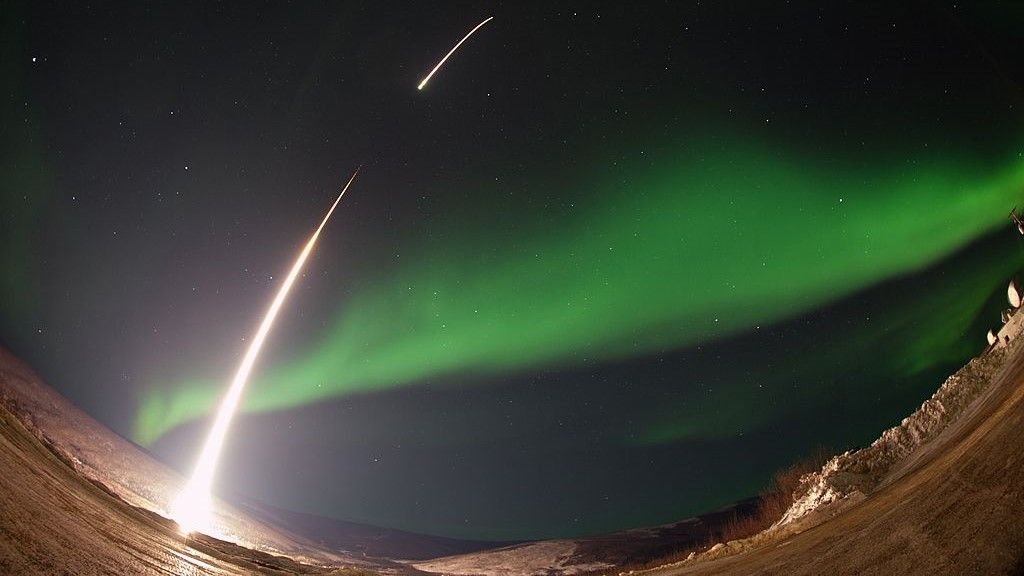
NASA is gearing up for a groundbreaking mission to explore the mysteries of the aurora borealis over Alaska. By launching two rockets through these dazzling light displays, scientists aim to investigate the underlying mechanisms that create the auroras’ flickering patterns and the enigmatic dark patches known as “black auroras.” The launches, set to take place at the Poker Flat Research Range in Fairbanks, form part of a broader effort to understand how solar particles interact with Earth’s magnetic field, shaping these celestial phenomena.

Investigating Auroral Pulsations with GIRAFF

One of the two missions, known as GIRAFF (Ground Imaging to Rocket Investigation of Auroral Fast Features), is led by NASA scientist Robert Michell. This mission will focus on analyzing the rapid pulsations and flickering seen in auroras. Equipped with specialized instruments, the rocket will gather data on the energy, density, and movement of charged particles responsible for these shimmering effects. By studying these variations, researchers hope to unlock new insights into the complex dynamics of auroral formation.

Probing the Mystery of Black Auroras

The second mission, the Black and Diffuse Aurora Science Surveyor, led by Marilia Samara, will turn its attention to a lesser-known phenomenon—black auroras. These unusual dark voids appear as patches of missing light amid the vibrant auroral display. Scientists suspect that they may result from electrons being deflected or reversed before reaching the atmosphere. By capturing high-resolution data during the rocket’s flight, the mission aims to confirm whether these reversed electron flows are responsible for the phenomenon.

Advancing Our Understanding of Space Weather

Together, these two missions represent a major step forward in auroral research, shedding light on the intricate processes that drive space weather. Understanding how charged particles behave in Earth’s upper atmosphere has broader implications, particularly for satellite operations and communication systems affected by geomagnetic activity. As NASA continues to push the boundaries of space science, these auroral investigations will provide critical knowledge about the interactions between our planet and the Sun’s energetic emissions.