Yazılar

NASA Announces Crew for Axiom Space’s Fourth Private Astronaut Mission in 2025

NASA Finalizes Crew for Axiom Space’s Fourth Private Astronaut Mission in 2025

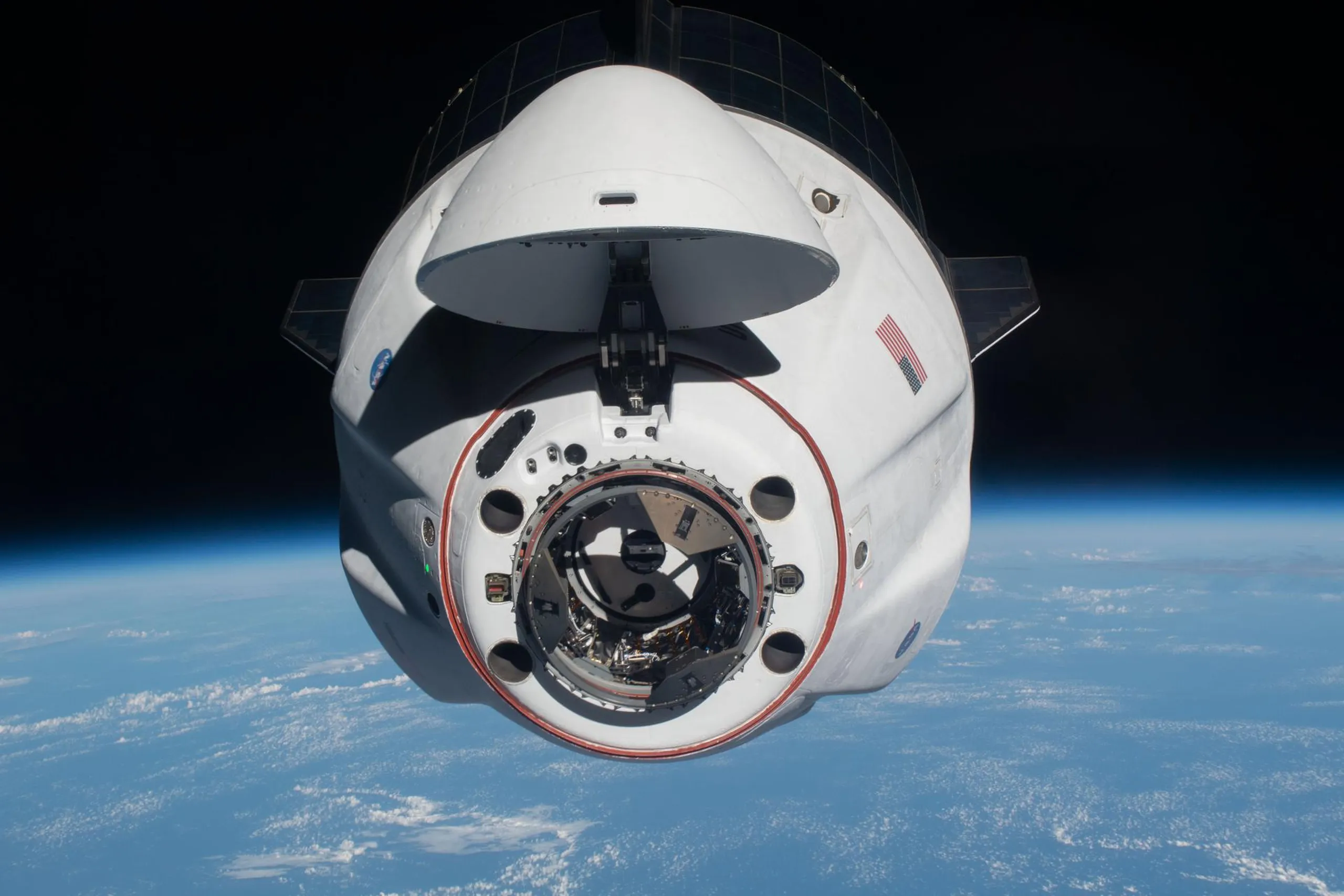
NASA and its international partners have officially confirmed the crew for Axiom Space’s fourth private astronaut mission, which is set to launch no earlier than spring 2025. The mission, departing from NASA’s Kennedy Space Center in Florida, will see four astronauts travel aboard a SpaceX Dragon spacecraft to spend up to 14 days aboard the International Space Station (ISS). The team includes former NASA astronaut and Axiom Space’s director of human spaceflight, Peggy Whitson, who will serve as the mission commander, along with ISRO astronaut Shubhanshu Shukla as pilot. Additionally, mission specialists Sławosz Uznański-Wiśniewski from the European Space Agency (ESA) and Tibor Kapu from Hungary will join the crew.

Expanding Access to Space Through Private Missions

Private astronaut missions have played a crucial role in advancing operations in low Earth orbit, according to NASA’s ISS Program Manager, Dana Weigel. These missions are opening the door for more commercial activities in space and enabling a greater number of scientists and researchers to access the microgravity environment of the ISS. The upcoming mission is especially significant as it will be the first time an astronaut from the Indian Space Research Organisation (ISRO) will visit the ISS, underscoring the growing international collaboration in space exploration. It will also mark the first stay on the ISS for astronauts from Poland and Hungary, further broadening the global reach of these private spaceflights.

Axiom Space’s Role in Private Space Exploration

Axiom Space has been rapidly expanding its private spaceflight program, with the upcoming mission marking another milestone for the company. Since its first mission in April 2022, Axiom has steadily increased its presence in commercial space operations. The most recent mission, Axiom Mission 3, saw astronauts spend 18 days aboard the ISS in January 2024, continuing the trend of extended stays. Peggy Whitson, who also commanded Axiom Mission 2 in May 2023, has emphasized the importance of international cooperation in private space exploration, noting that each mission fosters new opportunities for collaboration and growth in the commercial space sector.

The Significance of the Mission for Global Space Partnerships

The inclusion of astronauts from various space agencies highlights the increasing importance of international partnerships in the field of space exploration. Axiom Space’s missions are becoming platforms for global cooperation, bringing together astronauts from different nations to work together aboard the ISS. These missions not only contribute to the growth of commercial spaceflight but also enable valuable scientific research and technological advancements that benefit humanity as a whole. With each new mission, Axiom Space and its collaborators are shaping the future of space exploration, making space more accessible to a wider range of countries and organizations.

Chinese Astronauts Achieve Breakthrough in Space by Producing Oxygen and Rocket Fuel via Artificial Photosynthesis

Chinese astronauts aboard the Tiangong space station have made a significant advancement by successfully producing oxygen and rocket fuel using artificial photosynthesis. This achievement marks a pivotal moment in space exploration, as it offers a potential solution for sustainable resource generation during long-term missions. By utilizing water and carbon dioxide, the astronauts were able to simulate the natural photosynthesis process, producing not only breathable oxygen but also hydrocarbon fuel components. This breakthrough could be particularly beneficial for China’s ambitious plans to establish a lunar base, as it would reduce reliance on Earth-based supplies, enabling astronauts to generate essential resources directly on the Moon.

The experiment, carried out by the Shenzhou-19 crew, employed a system that mimics the photosynthesis process found in plants, with the aid of a semiconductor catalyst. The compact apparatus, designed like a drawer, facilitated the conversion of carbon dioxide and water into oxygen and fuel. This artificial photosynthesis method is a step forward in creating self-sustaining habitats for space travelers, where resources like oxygen and fuel can be generated locally, thus reducing the challenges and costs associated with transporting them from Earth.

One of the most notable aspects of this experiment is its energy efficiency. The artificial photosynthesis system requires significantly less energy compared to the electrolysis method currently used on the International Space Station (ISS) to generate oxygen. Electrolysis, while effective, can consume up to a third of the ISS’s power supply, a considerable amount for long-term space missions. The new method developed by the Chinese astronauts offers a more energy-efficient alternative, potentially making future space explorations more sustainable and cost-effective.

Looking ahead, the implications of this technology could extend beyond the Tiangong space station. Researchers believe that by adjusting the catalyst used in the reaction, this artificial photosynthesis system could be fine-tuned to produce different types of fuel, such as methane or formic acid. These fuels could play a vital role in supporting missions to the Moon, Mars, and beyond, contributing to the development of space stations, lunar bases, and interplanetary travel, all while minimizing the need for supply shipments from Earth.

New Research Reveals Active Lunar Tectonics, Challenging Moon’s Long-Standing Dormancy

A new study has challenged the long-held belief that the moon has been geologically dormant for billions of years. Recent findings show that tectonic activity might still be occurring beneath the lunar surface, potentially altering our understanding of the moon’s geological history. Researchers have identified small ridges on the far side of the moon that appear to have formed within the last 200 million years, indicating that the moon may not be as inactive as previously thought.

The research, published in The Planetary Science Journal on January 21, 2025, was conducted by a team from the Smithsonian Institution and the University of Maryland. The study revealed 266 previously unknown ridges located in volcanic regions on the far side of the moon, which are believed to be around 3.2 to 3.6 billion years old. However, the ridges themselves appear much younger, suggesting that tectonic processes are still shaping the lunar surface today.

The team used a technique known as crater counting to estimate the ages of the ridges. According to Jaclyn Clark, an Assistant Research Scientist at the University of Maryland’s Department of Geology, the presence of fewer craters on the ridges suggests they formed after other surface features had already been impacted. By examining the way the ridges cut through existing craters, the researchers were able to conclude that the lunar surface has experienced tectonic movement relatively recently—within the past 160 million years.

These findings could have profound implications for future lunar exploration. If the moon is still undergoing tectonic activity, it could affect the planning of lunar missions and the construction of infrastructure such as habitats or research stations. Understanding the current geological processes of the moon will be crucial as humanity looks to establish a more permanent presence on the lunar surface in the coming decades.