The Need for Lunar Timekeeping: Why Scientists Urgently Want to Send Clocks to the Moon
The idea that time behaves differently depending on where you are in the universe has been well-established since Einstein’s theory of relativity. On Earth, the differences are minute and often negligible for most people, but as humanity sets its sights on establishing permanent lunar bases, the idiosyncrasies of time become critical.
On the lunar surface, a day would be approximately 56 microseconds shorter than on Earth due to weaker gravity and other relativistic effects. This might seem like an insignificant difference, but over time, it could lead to substantial inconsistencies in timekeeping, which are crucial for coordination and navigation in space exploration.

Creating a Lunar Time Scale
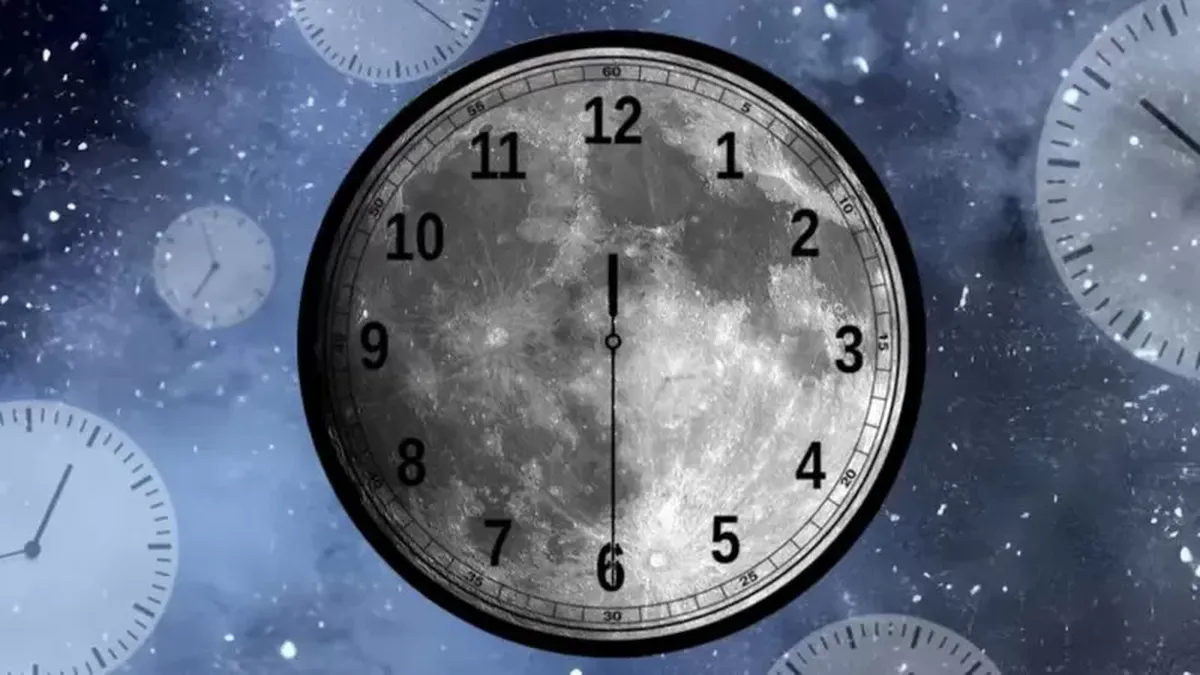
NASA and its international partners are working on creating a new “time scale” specifically for the moon. This system of measurement would account for the unique way time passes on the lunar surface. Unlike simply establishing a lunar time zone, this time scale would require an entirely new framework to ensure that seconds on the moon are accurately measured and can be related back to Earth time.
The White House has recently directed NASA to develop this time scale by the end of 2026, aligning with NASA’s goal to return astronauts to the moon. This directive underscores the importance of precise timekeeping for future lunar missions and settlements.
The Challenges of Lunar Timekeeping
Timekeeping on Earth is standardized through Coordinated Universal Time (UTC), which is maintained by a network of atomic clocks. These clocks account for the effects of gravity on time by adjusting for the slower ticking of clocks at lower elevations, where gravity is stronger.
However, on the moon, the situation becomes more complex. Time not only ticks faster due to weaker gravity but is also influenced by the moon’s motion and the need for synchronization with Earth time. NASA and other space agencies are considering deploying a network of precise clocks on the moon, potentially using atomic clocks and crystal oscillators, to establish this new time scale.
Practical Applications and Next Steps
Accurate timekeeping will be essential for lunar operations, including navigation, communication, and scientific experiments. Astronauts on the moon will need to synchronize their activities with both lunar and Earth time, which requires clocks that can operate with extreme precision in the moon’s unique environment.
The exact type of clocks to be used, their placement, and who will bear the cost are still under discussion. However, a network of synchronized clocks, potentially placed on satellites or on the lunar surface, would likely be necessary to maintain this new lunar time scale.
As humanity prepares to return to the moon and potentially establish a permanent presence there, solving the problem of lunar timekeeping is a crucial step. The next few years will be pivotal in developing and implementing the systems that will allow us to track time accurately on our closest celestial neighbor.