Yazılar

Trump–Xi call breathes life into TikTok U.S. asset sale talks

A call between U.S. President Donald Trump and Chinese President Xi Jinping has revived hopes for a deal that would see ByteDance divest TikTok’s U.S. assets, though key details remain unsettled.

Trump posted on Truth Social that he appreciated Xi’s “approval of the TikTok deal,” though China’s readout stopped short of endorsing a sale. Beijing instead emphasized respect for market-based negotiations that comply with Chinese law. Analysts said the difference in tone suggests both leaders want to project progress while keeping leverage in ongoing talks.

The tentative breakthrough comes after months of deadlock. Congress mandated ByteDance sell TikTok’s U.S. assets by January 2025 or face a nationwide ban, but Trump has repeatedly extended deadlines, citing TikTok’s popularity with American voters and its political value. The latest extension runs until December 19.

Still, major hurdles remain: the ownership structure, the degree of Chinese control over TikTok’s algorithm, and whether Congress will sign off. Reuters has reported that any U.S. version of TikTok under new ownership would likely continue using ByteDance’s algorithm, a sticking point for lawmakers worried about data security and influence operations.

China blocked a similar deal earlier this year amid trade tensions, and experts say it may do so again if U.S. demands cross Beijing’s red lines. “The contours of the conversation better align with China’s interests than U.S. interests,” said Scott Kennedy of CSIS, noting structural reforms were not on the table.

Wendy Cutler of the Asia Society Policy Institute called the talks “positive and constructive” but stressed that the algorithm question remains unresolved.

For now, the deal remains fragile: Beijing wants to protect its tech assets, Washington wants to claim victory on national security, and Trump is balancing political calculations against congressional pressure. Months of negotiations still lie ahead.

Quantum Computing Firm Infleqtion to Go Public via $1.8B SPAC Deal

Infleqtion, a quantum computing and precision sensor company, announced Monday it will go public through a merger with Churchill Capital Corp X, a SPAC led by Wall Street dealmaker Michael Klein, valuing the startup at $1.8 billion pre-investment.

The transaction is expected to provide Infleqtion with over $540 million before costs, including $416 million from the SPAC’s trust account and more than $125 million in PIPE funding from investors such as Maverick Capital, Counterpoint Global, and Glynn Capital.

The merged company will list under the ticker “INFQ” on a North American exchange, with closing expected by late 2025 or early 2026.

Founded in 2007, Infleqtion has raised $283 million to date and employs about 185 staff. Its quantum systems and sensors are already in use by Nvidia, NASA, the U.S. Department of Defense, and the UK government. The company reported $29M in trailing 12-month revenue as of June 30 and projects $50M in booked and awarded business by end-2025.

Proceeds from the deal will accelerate product development and expand quantum applications in AI, national security, and space exploration.

Quantum peers IonQ, Rigetti, and D-Wave have also gone public via SPACs in recent years, though with mixed results amid challenges scaling the technology commercially. Infleqtion hopes its government partnerships and enterprise clients give it an edge in bridging R&D with practical deployment.

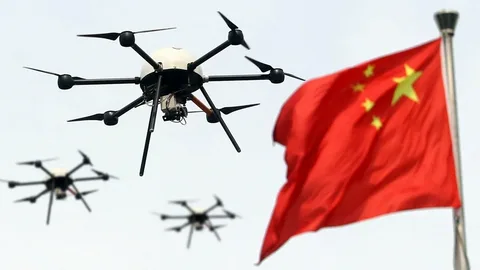
U.S. to Restrict Chinese Drone and Heavy-Duty Vehicle Imports Over Security Concerns

The Trump administration is preparing new rules that could restrict or ban imports of Chinese-made drones and medium-to-heavy duty vehicles, citing national security risks tied to foreign technology. The Commerce Department said Friday it expects to issue the regulations as soon as this month but did not provide details on the scope of the restrictions.

Chinese firms currently dominate the U.S. drone market, with DJI alone accounting for over half of all commercial drone sales. Washington has grown increasingly wary of Chinese technology embedded in vehicles and aircraft, warning that onboard computers, communications systems, flight controls, and data storage could expose U.S. infrastructure to espionage or cyberattacks.

The move builds on earlier measures targeting Chinese cars and trucks, with rules finalized in January under the Biden administration that will bar nearly all Chinese-made vehicles from the U.S. by late 2026. The Commerce Department has also opened national security probes into both drones and heavy-duty vehicles, which could pave the way for new tariffs.

Trump has already signed executive orders this year to boost domestic drone manufacturing and harden defenses against “threatening drones.” Meanwhile, Congress passed legislation in December, under Biden, that could eventually ban DJI and Autel from selling new drone models in the U.S.

The latest restrictions underscore bipartisan concern in Washington over supply chain dependence on China, as well as the push to secure strategic sectors like transportation and aerospace against foreign influence.