Yazılar

Asia-Pacific Markets Mostly Rise as Investors Weigh China Stimulus Measures

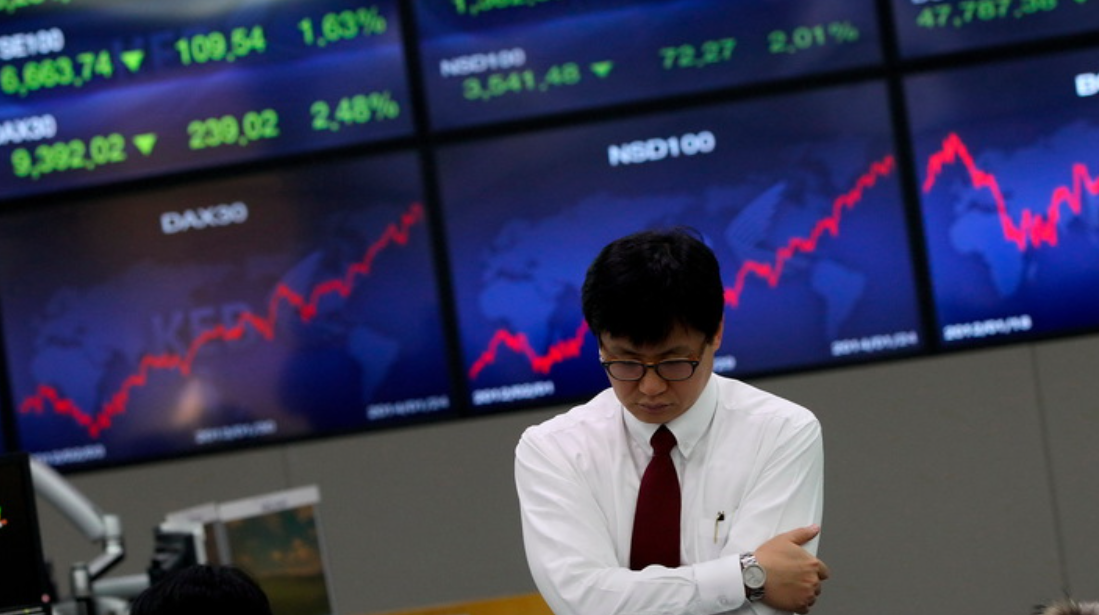
Asia-Pacific markets saw mixed performances on Wednesday, with Hong Kong’s Hang Seng Index extending its gains by 2.2%, driven by investor enthusiasm for China’s newly announced stimulus measures. The Hang Seng rally was supported by strong performances in the energy and basic materials sectors, with the Hang Seng Mainland Properties Index rising 3.6%.

Chinese markets have been reacting positively to the People’s Bank of China’s (PBOC) recent economic support measures. On Tuesday, the Hang Seng Index experienced its best day in seven months, while mainland China’s CSI 300 Index saw its largest one-day gain in over four years. By Wednesday, the CSI 300 continued its upward trend, rising by 1.73%.

The PBOC announced another rate cut, reducing the medium-term lending facility (MLF) rate from 2.3% to 2%. This marked the second rate cut in three months, following a previous reduction from 2.5% to 2.3% in July. In response, the offshore yuan briefly strengthened to 6.995 against the U.S. dollar, breaking the 7.00 level for the first time since May 2023.

Investors are also closely monitoring Australia’s inflation data. The country’s consumer price index rose by 2.7% year-on-year in August, in line with economists’ expectations, and easing from July’s 3.5% increase. Australia’s S&P/ASX 200 Index edged up slightly, recovering from two days of losses.

Elsewhere in the region, Japan’s Nikkei 225 rose 0.32%, while the broader Topix Index gained 0.11%, reversing earlier losses. South Korea’s Kospi was up 0.4%, with the Kosdaq rising 0.43%. South Korea also unveiled its new “Korea Value Up Index,” set to start trading next week. The index will feature 100 companies, with IT and industrial stocks making up over 40%.

In the U.S., markets also had a positive day on Tuesday. The S&P 500 gained 0.25%, closing at a record 5,732.93, while the Dow Jones Industrial Average rose 0.2%, reaching a new high of 42,208.22. The Nasdaq Composite added 0.56%, with Nvidia leading the charge, climbing nearly 4%. This came after a regulatory filing indicated that Nvidia CEO Jensen Huang had concluded his recent stock sales.

Asia-Pacific Markets Mixed as China Rebounds and Australia Nears Record High

Asia-Pacific markets showed mixed results on Friday, with mainland Chinese markets recovering from a six-year low and Australia approaching a near-record high.

China’s CSI 300 index edged up after closing at its lowest level since January 2019, at 3,127.47 on Thursday. Meanwhile, Australia’s S&P/ASX 200 gained 0.21%, pushing closer to its all-time high of 8,148.7.

Market Performance Overview

In South Korea, the Kospi index dropped by 0.26%, while the Kosdaq, focusing on small-cap stocks, declined 0.42%. Samsung Electronics saw nearly a 3% dip due to an ongoing workers’ strike at its India plant.

Japan’s Nikkei 225 fell 0.89%, with the broader Topix down 0.84%. In currency markets, the yen strengthened 0.49% against the U.S. dollar, sitting at 141.1, close to its nine-month low of 140.7 reached earlier this week.

Hong Kong’s Hang Seng index gained 1.11%, contributing positively to the mixed performance across the region.

Global Market Context

In the U.S., major indices performed well overnight. The S&P 500 extended its winning streak to four days, rising by 0.75%, while the Dow Jones Industrial Average increased by 0.58%. The Nasdaq Composite led with a 1% gain.

These developments come ahead of next week’s Federal Reserve meeting, following data on the U.S. producer price index (PPI) showing a 0.2% month-on-month increase, matching forecasts. On an annual basis, the PPI rose by 1.7%.


European Stocks Open Lower After Consecutive Declines, U.S. Jobs Data in Focus

European stocks opened lower on Thursday following three consecutive declines in September, with the Stoxx 600 index sliding after closing above 525 points last Friday. Market sentiment has been negatively impacted by weaker-than-expected U.S. economic data, particularly from manufacturing surveys and jobs openings, sparking concerns of a potential slowdown in the world’s largest economy. This has reignited debate over whether the Federal Reserve might cut interest rates by 50 basis points, rather than the anticipated 25 basis points, at its next meeting.

Investors are now closely monitoring upcoming U.S. jobs data, with initial jobless claims set for release on Thursday and the highly anticipated nonfarm payrolls and unemployment rate reports on Friday. A weaker-than-expected jobs report in July had contributed to a broad sell-off at the beginning of August, raising fears of an economic slowdown. However, some analysts, including George Lagarias, chief economist at Forvis Mazars, suggest that while a slowdown is evident, the U.S. economy is still far from entering a recession, implying that the Federal Reserve may avoid aggressive rate cuts.

In addition to the jobs data, the technology sector has weighed heavily on European markets this week, with a 3.2% drop in tech stocks on Wednesday. U.S. chipmaker Nvidia saw a sharp decline earlier this week, dragging down global chip stocks, though the company denied reports of a Department of Justice subpoena related to antitrust issues.

Meanwhile, Wall Street index futures were relatively stable early Thursday after a volatile start to the month. In Asia-Pacific markets, losses continued, with Japan’s Nikkei 225 posting the steepest decline amid softer wage growth in August, potentially providing the Bank of Japan with more room to consider a rate hike.