Nvidia’s Market Capitalization Plummets by $279 Billion Amid Wall Street Decline
Nvidia’s Recent Quarterly Forecast Falls Short of Investor Expectations, Sparking Concerns Over AI Market Devamını Oku

Nvidia’s Recent Quarterly Forecast Falls Short of Investor Expectations, Sparking Concerns Over AI Market Devamını Oku
Intel had a tumultuous week, stirring both excitement and concern on Wall Street about the company’s future. The chipmaker, which has lost over half its value in the last two years, saw its stock rise 11%, its best week since November. The surge followed major announcements, including the separation of its manufacturing division from its core business of designing and selling processors.
The week culminated with reports that Qualcomm had approached Intel about a potential takeover, which could become one of the largest deals in tech history. While it remains unclear if Intel has engaged in any formal discussions with Qualcomm, both companies have declined to comment.
Intel’s CEO Pat Gelsinger, who has faced numerous challenges since taking over in 2021, has expressed his intention to maintain Intel’s independence. He insists that the company’s manufacturing and design divisions are “better together” but revealed a new governance structure for the foundry business. This move is aimed at attracting outside capital and reassuring investors of Intel’s commitment to serious changes as it embarks on a complex revival plan.
Intel is tasked with addressing two significant hurdles: investing over $100 billion through 2029 to build chip factories in four U.S. states, while also making inroads into the booming AI market, currently dominated by competitors like Nvidia. Gelsinger has made a bold bet on Intel’s foundry business, hoping that increased domestic manufacturing will appeal to U.S. chipmakers concerned about reliance on Taiwan Semiconductor Manufacturing Company (TSMC) and Samsung.
Despite these efforts, Intel’s core business of producing processors for PCs, laptops, and servers continues to struggle, losing market share to competitors like Advanced Micro Devices (AMD) and facing steep revenue declines. Intel’s client computing and data center divisions have both seen significant drops in revenue, while its AI initiatives have yet to make a substantial impact.
The separation of the foundry business is seen as a way to attract more external customers, as many companies are hesitant to partner with Intel due to concerns about intellectual property. Despite landing Amazon as a customer for a networking chip, meaningful sales from external clients are not expected until 2027. Intel’s foundry efforts face stiff competition from TSMC, which currently manufactures chips for companies like Nvidia, Apple, and Qualcomm.
The U.S. government has emerged as Intel’s most significant supporter. The Biden administration awarded the company $8.5 billion under the CHIPS Act to bolster domestic chip production, with the possibility of an additional $11 billion in loans. This financial backing aims to reduce U.S. dependence on foreign semiconductor manufacturers. Intel has also secured $3 billion in funding to build chips for military and intelligence agencies in a classified program.
Even as Intel navigates these challenges, analysts remain skeptical about its long-term prospects. Gelsinger’s decision to maintain Intel as a unified entity could lead to a future spin-off of the foundry division, according to some market experts. JPMorgan Chase analysts have suggested that separating the two businesses could ultimately lead to a more favorable outcome for Intel in the coming years.
Despite this week’s developments, Intel still faces a steep road ahead. Its PC and server chip divisions continue to experience declining revenues, and the company is struggling to compete in the AI chip market, which Nvidia currently dominates. With Intel’s main businesses under pressure and its foundry ambitions years away from delivering results, investors are left wondering if the chipmaker can regain its former dominance or if more drastic measures are needed.
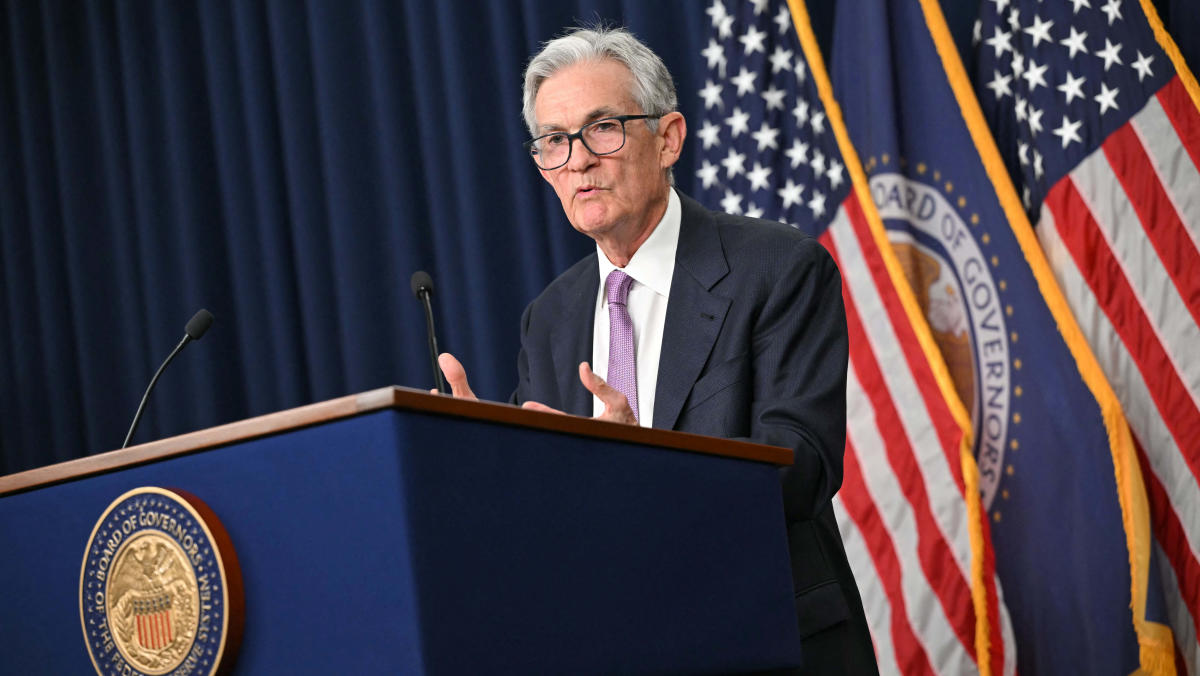
The Dow Jones Industrial Average closed at a new record on Friday, capping off a significant rally following the Federal Reserve’s first major interest rate cut in four years. The 30-stock Dow edged up 38.17 points (0.09%) to close at 42,063.36, marking a fresh high. However, the S&P 500 dipped slightly by 0.19% to 5,702.55, while the Nasdaq Composite fell 0.36% to end at 17,948.32. Earlier in the week, the Dow surpassed 42,000, and the S&P 500 crossed the 5,700 threshold for the first time.
All three major indexes recorded weekly gains, with the S&P 500 rising 1.36%, marking its fifth positive week in six weeks. For the year, the index is up over 19%. The Dow saw a weekly increase of 1.62%, and the Nasdaq gained 1.49%.
The market surged following the Federal Reserve’s decision on Wednesday to slash interest rates by a half percentage point, its first reduction since 2020. While the immediate market reaction was muted, Thursday saw stocks rally, particularly in tech, with Nvidia and Home Depot benefitting from expectations of lower borrowing costs.
Federal Reserve Governor Christopher Waller commented on Friday, noting that inflation is falling more quickly than anticipated, supporting his decision to back the half-point rate cut. Mark Hackett, Nationwide’s chief of investment research, stated, “Investors viewed the aggressive rate cut as a positive catalyst,” adding that the Fed has effectively assured markets that this cut was a proactive step to sustain economic momentum rather than a reaction to faltering conditions.
However, sentiment was dampened slightly by FedEx’s reduced earnings outlook, which caused its shares to drop over 15%. Competitor UPS also declined by 2.7% in sympathy.