Yazılar

Larry Ellison reemerges as tech and media power player

Forty-eight years after co-founding Oracle, Larry Ellison is once again at the center of global business headlines. Oracle’s stock surged 35.9% on the back of blockbuster cloud computing deals tied to AI, propelling Ellison’s net worth to nearly $400 billion—second only to Elon Musk.

Adding to his influence, Ellison’s family-controlled Paramount is preparing a bid for Warner Bros Discovery, a move that could dramatically reshape Hollywood. At the same time, his son David Ellison has begun steering CBS News with a more conservative tilt, hiring former Hudson Institute CEO Kenneth Weinstein as ombudsman and reportedly courting journalist Bari Weiss for a leadership role.

Ellison has also entrenched Oracle in the TikTok saga, providing U.S. infrastructure for the Chinese-owned app since 2022 amid national security scrutiny. Behind the flash of yachts, Hawaiian islands, and movie cameos—he played himself in Iron Man 2—Ellison has steadily bet big on AI.

Oracle became a major AI landlord, securing marquee clients including Meta, Elon Musk’s xAI, and OpenAI, which committed to a $300 billion compute deal over five years. This pivot helped Oracle’s booked revenue soar more than four-fold to $455 billion.

Unlike rivals Microsoft, Amazon, and Google, Oracle chose not to build custom AI chips, instead deepening ties with Nvidia. At a 2024 dinner with Musk and Nvidia CEO Jensen Huang, Ellison reportedly said, “Please take our money”—and soon after, Oracle secured GPU supplies that fueled the Stargate project with OpenAI.

Oracle’s cloud revival—after a failed 2016 launch—has proven cheaper and more adaptable. Its rapid scaling during the Zoom pandemic traffic surge and smooth takeover of TikTok’s U.S. user data in 2022 highlighted technical strength.

Still, huge risks remain. Oracle outsources critical infrastructure like land, data centers, and power, making it reliant on partners. Analysts warn that dependence on a small group of AI clients—particularly OpenAI—could expose Oracle to shocks if those firms stumble.

Ellison’s career has long swung between hubris and vindication, but with AI reshaping the tech landscape, the Silicon Valley “bad boy” may yet have the last laugh.

Malaysia Slows Data Centre Boom, Complicating China’s AI Chip Access

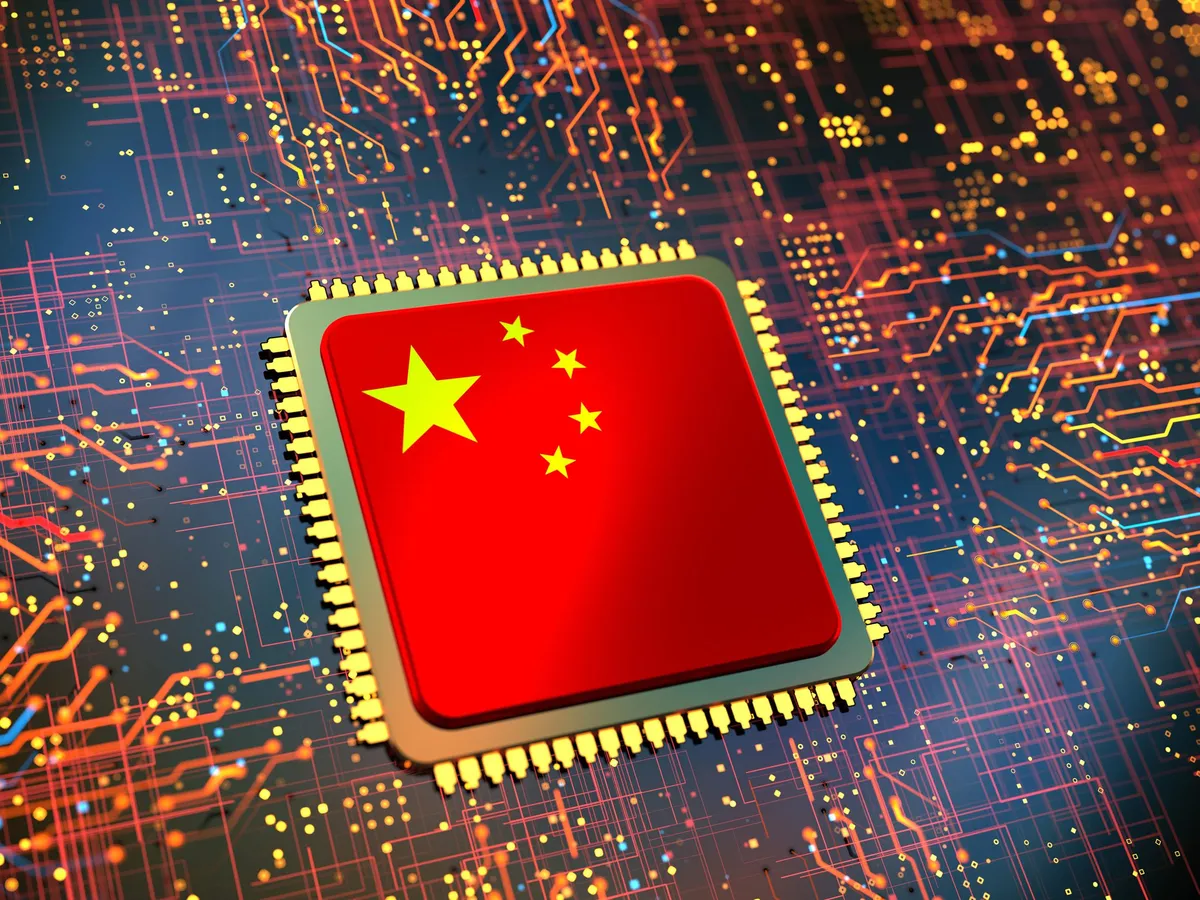
Malaysia, once the fastest-growing hub for data centre expansion in Southeast Asia, is now reining in the pace of growth — a move that could restrict China’s access to U.S.-made AI chips crucial for advanced model training.

Key Developments

  • Dominant role: Malaysia accounts for two-thirds of all data centre capacity under construction in Southeast Asia, led by Johor near Singapore.

  • Growth drivers: Lower costs and spillover from Singapore’s capacity constraints made Malaysia attractive to U.S. giants (Microsoft, Amazon, Google) and Chinese firms (Tencent, Huawei, Alibaba).

  • New restrictions: In July, Malaysia required permits for all exports, trans-shipments and transits of U.S.-made high-performance chips like Nvidia’s, tightening regulatory control.

U.S. Pressure and Trade Tensions

  • Washington fears Malaysia could serve as a backdoor for China to access restricted U.S. chips for AI and potential military applications.

  • Malaysia is simultaneously seeking to finalize a trade deal with the U.S., which increases scrutiny of Chinese-linked data projects.

  • The U.S. Commerce Department has warned that overseas-trained AI models could bolster China’s military edge.

China’s Overseas Push

  • Under Xi Jinping’s “AI Belt and Road” strategy, Chinese operators were urged to expand abroad.

  • GDS Holdings built a major campus in Johor but later spun off its international arm into DayOne, distancing from its Chinese parent amid U.S. pressure.

  • Xi’s April visit to Malaysia ended with pledges of deeper ties in data linkages, 5G and AI infrastructure.

Johor’s Role

  • By mid-2025, Johor had 12 operational data centres (369.9 MW) with 28 more planned (898.7 MW), worth $39B in investments.

  • Johor introduced a vetting committee in 2024, rejecting ~30% of applications for unsustainable energy or water practices. Approval rates have since improved as firms adapt.

Risks for China

  • Chinese AI chips still lag behind Nvidia’s in performance. While Malaysia leaves room for in-country use of U.S. chips, scrutiny is rising.

  • Chinese firms are increasingly rebranding or restructuring overseas operations to avoid geopolitical pressure.

  • Analysts warn Southeast Asia may become a less reliable outlet for China’s AI ambitions as U.S. tariffs and regulatory scrutiny intensify.

SK Hynix Prepares HBM4 Production to Defend Market Lead Over Rivals

SK Hynix (000660.KS) announced on Friday that it has completed internal certification of its HBM4 (high-bandwidth memory 4) chips and established a production system, positioning itself to maintain its dominance in the advanced memory market.

Key Developments

  • In March 2025, SK Hynix shipped 12-layer HBM4 chip samples to customers.

  • The company aims to complete mass production preparations for these chips within H2 2025.

  • Shares rose 7% to a record high of 328,500 won ($236.71), outperforming the benchmark KOSPI’s 1.5% gain.

Market Context

  • HBM technology: First introduced in 2013, HBM stacks DRAM vertically to save space, cut power use, and process vast data volumes required by AI workloads.

  • Market share: SK Hynix is projected to hold about 60% of the HBM market in 2026, down slightly from its current 66%, according to Meritz Securities.

  • Customers: Nvidia remains its largest client, though Samsung Electronics and Micron supply smaller volumes.

Rival Strategies

  • Samsung Electronics: Plans to use a 1c-nanometer node for HBM4, compared to SK Hynix’s 1b-nanometer process, signaling a push to catch up despite a weaker track record. Samsung already provided HBM4 samples to customers and plans to start supply in 2026.

  • Micron: Competing with custom-built logic dies (“base dies”) that make it harder for customers to switch suppliers.

Industry Impact

  • SK Hynix’s first-mover advantage in HBM4 is expected to secure early contracts with major AI players like Nvidia.

  • Analysts note that customer-specific base dies mark a technological shift that could lock buyers into long-term supplier relationships.

Market Performance YTD

  • SK Hynix: +88.9%

  • Samsung Electronics: +41.7%

  • Micron (Nasdaq): +78.9%

  • KOSPI benchmark: +41.5%