Yazılar

Broadcom Soars on $10B AI Chip Deal, Likely With OpenAI

Broadcom shares surged 15% Friday after unveiling a $10 billion AI chip order from a new, unnamed customer—an announcement that cements its role as a key custom chip supplier in the race to expand generative AI infrastructure. The blockbuster order immediately sparked speculation that the buyer is OpenAI, with analysts at J.P. Morgan, Bernstein, and Morgan Stanley pointing to the timing and scale of the deal.

If confirmed, the partnership would mark OpenAI’s biggest move yet toward developing its own in-house processors, reducing reliance on Nvidia and AMD, whose stock prices dipped 2% and 5% respectively after Broadcom’s news. Reuters previously reported that OpenAI had been working with Broadcom on a custom chip project.

The deal highlights Big Tech’s broader trend of diversifying away from Nvidia’s costly, supply-constrained GPUs. Microsoft, Amazon, Google, and Meta are already designing their own silicon. Broadcom, which already supplies custom AI chips to Google and Meta, now appears positioned to capture even more of the rapidly expanding market.

The rally added more than $200 billion to Broadcom’s valuation, boosting its market cap above $1.44 trillion. Analysts now forecast Broadcom’s AI revenue could surpass $40 billion in fiscal 2026, far above last quarter’s $30 billion projection.

Adding to investor optimism, longtime CEO Hock Tan confirmed he would remain in charge for at least another five years. Under his leadership, Broadcom has transformed into a central player in the global AI supply chain.

Germany Launches Nvidia-Powered Jupiter Supercomputer to Compete in Global AI Race

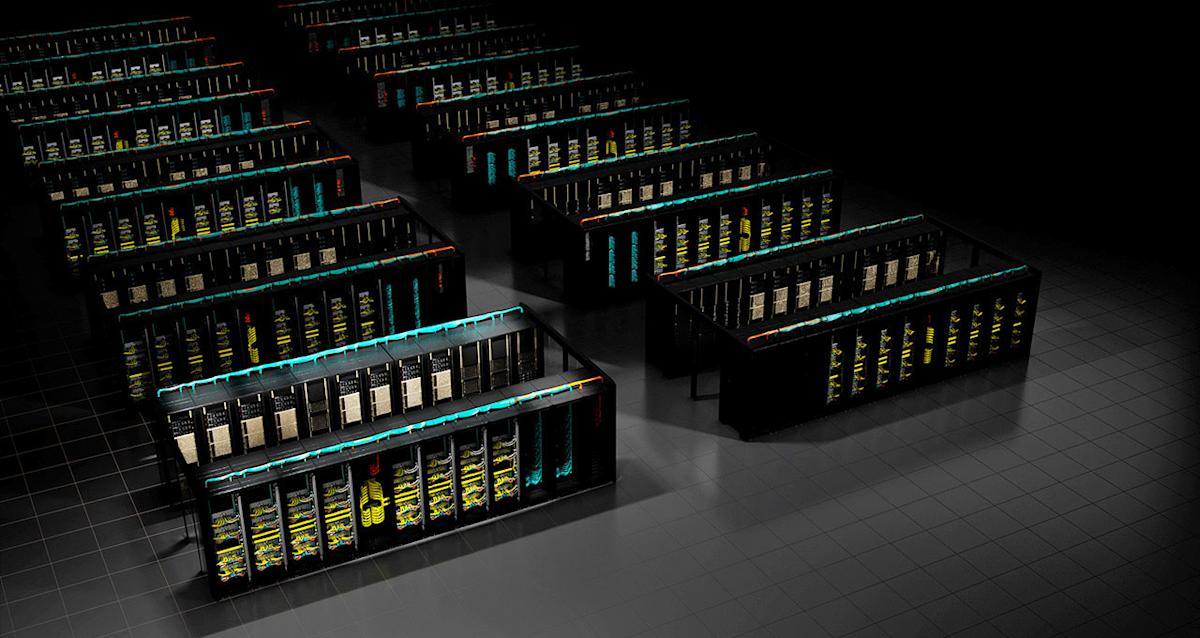
German Chancellor Friedrich Merz on Friday inaugurated Jupiter, a Nvidia-powered supercomputer that ranks as the fourth-fastest in the world and Europe’s first Exascale-class machine. Located at the Juelich Research Centre, Jupiter can perform one billion billion (10^18) calculations per second—equivalent to the power of about 10 million laptops.

Built in partnership with France’s Atos and Germany’s ParTec, Jupiter represents a landmark effort for Europe to catch up with the U.S. and China in high-performance computing and AI infrastructure. “We are today witnessing a historic European pioneering project,” Merz said, stressing that Europe has the opportunity not only to close the gap but also to remain competitive in the long run.

Beyond its symbolic importance, Jupiter is expected to advance research in biotechnology, climate modeling, and AI development, reducing Europe’s reliance on foreign digital infrastructure. Ralf Wintergerst, head of German tech association Bitkom, called for easy access to the system for startups and established firms to maximize its impact on innovation.

With Jupiter now operational, Germany positions itself at the heart of Europe’s AI and scientific research ecosystem, while aiming to balance global competition with technological sovereignty.

Cadence Design to Acquire Hexagon’s Engineering Unit for $3.16 Billion

Cadence Design Systems (CDNS.O) announced on Thursday that it will acquire the design and engineering (D&E) business of Sweden’s Hexagon AB (HEXAb.ST) for €2.7 billion ($3.16 billion). The U.S.-based chip design software leader will finance the deal with 70% cash and 30% in newly issued shares to Hexagon.

Cadence, whose clients include Nvidia and Qualcomm, is a global leader in electronic computer-aided design (ECAD) tools that underpin chip development and verification. By acquiring Hexagon’s D&E unit, which specializes in structural and multibody dynamics simulation, Cadence will expand into adjacent markets such as aerospace and automotive engineering.

Hexagon’s D&E division generated nearly €265 million in revenue in 2024 and employs over 1,100 people worldwide. Its customer roster includes industry heavyweights such as Volkswagen Group, BMW, and Lockheed Martin, providing Cadence with a stronger foothold in the automotive and aerospace sectors.

The deal builds on Cadence’s acquisition of BETA CAE Systems in 2024 for $1.24 billion, further strengthening its simulation and engineering software capabilities. The Hexagon transaction is expected to close in Q1 2026, subject to regulatory approval. Cadence has agreed to pay a reverse termination fee of up to €175 million if the deal falls through.

With this acquisition, Cadence is positioning itself as not only a key player in semiconductor design software but also as a broader engineering solutions provider, extending its reach beyond chips into high-performance industries reliant on advanced simulations.