

NASA’s Juno spacecraft has once again provided stunning insights into the mysteries of Jupiter, offering up close and detailed images of the planet’s swirling storms and its intriguing moons. On October 23, 2024, Juno completed its 66th flyby of Jupiter, this time focusing on the planet’s polar regions. Among the highlights of this close encounter was a remarkable view of Jupiter’s fifth-largest moon, Amalthea. The spacecraft’s JunoCam captured these raw images, which were later enhanced by citizen scientists, revealing vibrant details of Jupiter’s complex atmosphere and its accompanying moon in unprecedented clarity.
One of the most striking images from Juno’s recent pass showcases a region on Jupiter known as the Folded Filamentary Region (FFR), located near the planet’s subpolar areas. These regions are characterized by their intricate cloud formations, including white, billowing clouds and delicate, thread-like filaments that swirl through Jupiter’s atmosphere. Citizen scientist Jackie Branc was responsible for processing this particular image, enhancing the colours and contrast to showcase the planet’s dynamic weather systems in breathtaking detail. The result is a vivid and detailed depiction of Jupiter’s stormy atmosphere, one that has never before been captured with such clarity.
Juno’s mission has not only provided fascinating images of Jupiter’s storms but has also opened up a collaborative space for both amateur and professional scientists. The spacecraft’s raw data, made publicly available, allows enthusiasts and researchers to adjust features like contrast and colour balance, providing new perspectives on the planet’s powerful weather patterns. These images have revealed everything from Jupiter’s characteristic atmospheric bands to its turbulent clouds and swirling vortices, offering a window into the planet’s ever-changing climate.
This ongoing collaboration between NASA and the global scientific community continues to yield exciting discoveries about Jupiter, a gas giant with a weather system that remains one of the most complex and active in our solar system. With every flyby, Juno brings back new details that enhance our understanding of the planet and its moons, helping to piece together the puzzle of how Jupiter’s atmosphere functions. These stunning images not only enrich our scientific knowledge but also fuel our fascination with the mysteries of space.
New Insights into Mars’s Magnetic Field Dynamics
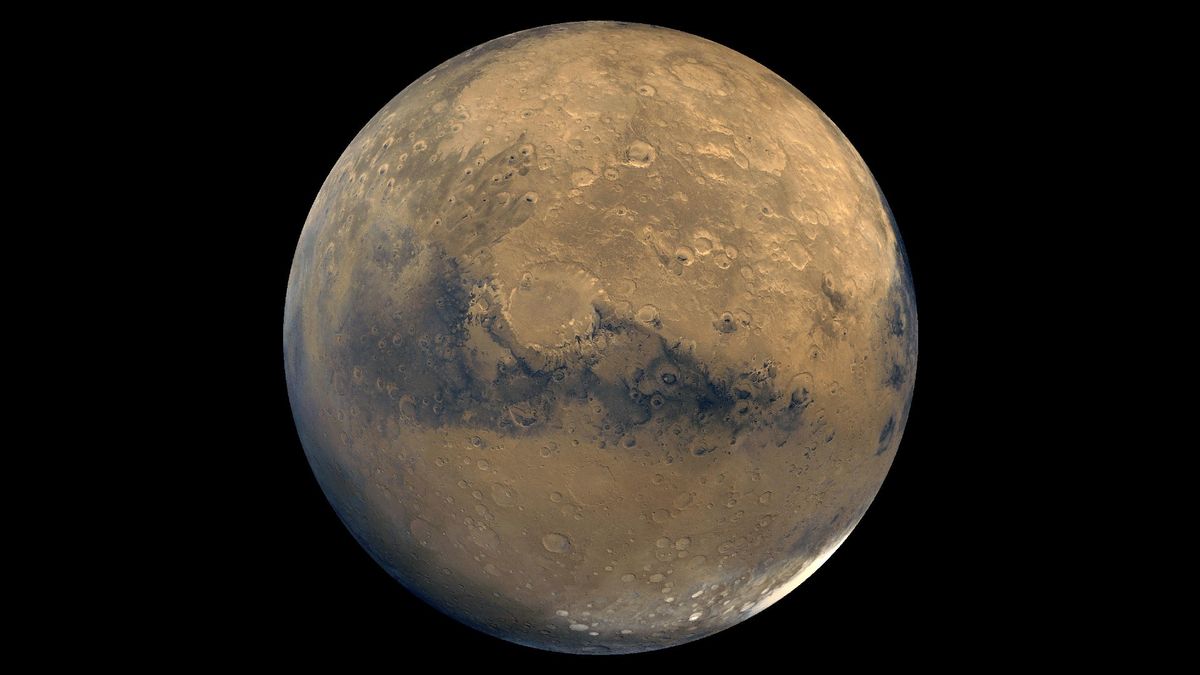
Martian impact basins, previously thought to be demagnetized due to the early cessation of Mars’s planetary dynamo, may instead provide evidence of a reversing magnetic field, according to a new study. Led by Dr. Silpaja Chandrasekar, the research suggests that Mars’s dynamo—the mechanism generating its magnetic field—was active longer than previously believed, with significant implications for our understanding of the planet’s evolution.
Impact Basins and Reversing Fields
Published in Nature Communications, the study delves into the magnetic anomalies in large Martian impact basins, which exhibit weaker magnetism than surrounding regions. Rather than indicating a permanently inactive dynamo, the researchers propose that these weak signals result from prolonged cooling and frequent polarity reversals. By modeling cooling processes within these basins, they demonstrated how these magnetic field reversals diminished the strength of magnetism, creating a demagnetized appearance. This overturns the notion that a dying dynamo alone explains the anomalies.
Extended Dynamo Activity
Traditionally, Mars’s dynamo was assumed to have ceased early in the planet’s history, but recent evidence, including young volcanic rocks and the meteorite Allan Hills 84001, suggests otherwise. The study posits that Mars’s dynamo may have persisted until around 3.7 billion years ago. During this time, the magnetic field experienced regular reversals, forming oppositely magnetized layers in cooling impact basins. This process likely contributed to the weak magnetic signatures detected today.
Implications for Planetary Evolution
These findings reshape our understanding of Mars’s magnetic history and its broader planetary evolution. A prolonged, reversing dynamo could have influenced Mars’s climate stability and surface conditions, offering clues about its transition from a warmer, wetter environment to the arid planet we see today. The study also highlights how magnetic field dynamics play a pivotal role in shaping planetary crusts, offering new perspectives for studying other celestial bodies with similar features.