Yazılar

Emerson Electric Raises Profit Forecast on Lower Tariff Costs, Strong Demand

Engineering solutions firm Emerson Electric (EMR.N) on Wednesday slightly increased its 2025 adjusted profit per share forecast to $6, citing reduced tariff-related cost risks and robust demand for its intelligent devices segment. Despite the positive outlook, the company’s shares fell over 7% in premarket trading.

Emerson’s intelligent devices business saw revenue rise 4% to $3.13 billion during the quarter, driven by increased demand for measurement, analytical components, and pressure-relief and safety valves. Overall quarterly net sales grew 4% to $4.55 billion, slightly below analyst expectations of $4.59 billion.

The company reported a third-quarter adjusted profit of $1.52 per share, narrowly beating the consensus estimate of $1.51 per share. Emerson attributed its updated sales guidance of approximately 3.5% growth to pricing actions supported by reduced tariff expense exposure.

Headquartered in St. Louis, Missouri, Emerson remains optimistic about steady growth supported by market demand and easing trade-related costs.
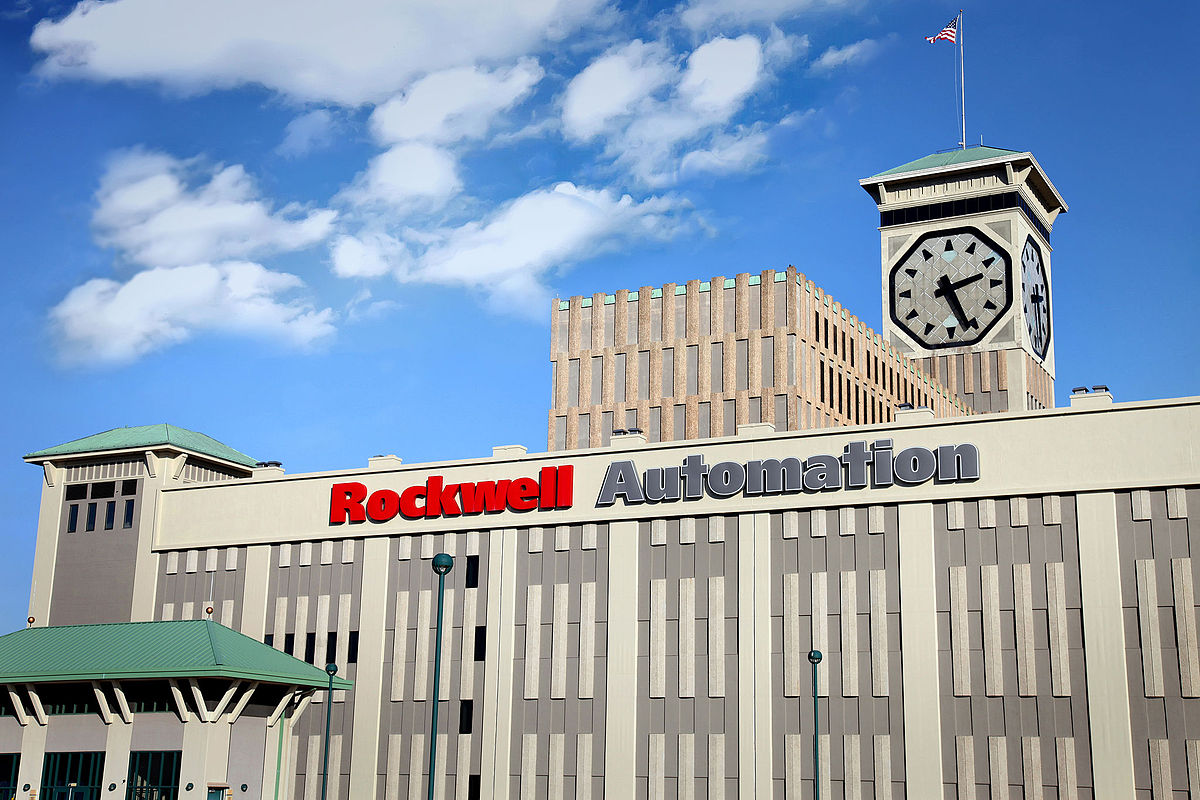

Rockwell Automation Raises Annual Profit Outlook After Margin Gains, Shares Surge 8%

Rockwell Automation (ROK.N) raised its annual profit forecast on Wednesday following cost-cutting measures that boosted margins in the second quarter, driving an 8% surge in premarket trading. Despite a broader slowdown in U.S. manufacturing activity triggered by President Donald Trump’s newly implemented global tariffs, Rockwell has seen resilient demand for industrial automation and software solutions.

The company now expects adjusted earnings per share (EPS) between $9.20 and $10.20, up from its earlier guidance of $8.60 to $9.80. In the second quarter, Rockwell reported:

  • Adjusted EPS of $2.45, surpassing analyst expectations of $2.09 (LSEG data)

  • Revenue of approximately $2 billion, a 6% year-over-year decline, but slightly above the $1.96 billion consensus estimate

Rockwell said it would offset current and future tariff impacts through a combination of price adjustments and supply chain optimizations, a strategy designed to safeguard profitability amid rising input costs.

The company’s outlook aligns with broader trends in the sector, as Emerson Electric (EMR.N) also raised its full-year earnings forecast on Wednesday, reflecting stable demand for industrial upgrades.

Corporate investment in factory automation and digital transformation continues to outpace expectations, as firms seek to improve productivity and cost efficiency, even in a challenging trade and economic environment.

Gartner Hikes 2025 Profit Outlook Despite Revenue Trim, Citing Cost Discipline

Gartner Inc. (IT.N) on Tuesday raised its 2025 profit forecast after posting better-than-expected Q1 earnings, thanks to strict cost-cutting measures and resilient demand for its subscription research services. The company now expects adjusted EPS of at least $11.70, up from its prior estimate of $11.45.

The technology research and advisory firm, which serves clients like Accenture and Cognizant, reported Q1 adjusted earnings of $2.98 per share, surpassing analyst expectations of $2.72, according to LSEG. Despite macroeconomic headwinds such as tariff-driven volatility, Gartner’s research segment, its largest, grew 4.2% year-on-year, helping cushion softness in other areas.

Total Q1 revenue came in at $1.53 billion, a 4.2% year-over-year increase but slightly below analysts’ forecast of $1.54 billion. The company revised its full-year 2025 revenue guidance slightly downward to $6.53 billion, from the earlier $6.56 billion estimate.

Costs rose by just 4.7%, a marked slowdown from the 8.8% increase in the prior quarter, signaling effective cost management. Gartner operates in three core business units:

  • Research (subscription-based insights)

  • Consulting (custom advisory services)

  • Conferences (networking and executive events)

While the company anticipates modest revenue growth, its higher earnings guidance highlights confidence in margin stability driven by efficiency improvements and robust retention in recurring services.