Yazılar

Indian Fintech Paytm Eyes Profitability Within Two Quarters Amid Operational Recovery

India’s leading fintech company, Paytm, announced plans to achieve profitability within one to two quarters following a narrower adjusted loss in the third quarter, as its payments business shows signs of recovery after regulatory setbacks.

Financial Performance Highlights

For the quarter ending December 31, 2024, Paytm reported:

  • Adjusted loss: ₹2.04 billion ($23.6 million), down from ₹4.07 billion in the second quarter.
  • EBITDA (excluding employee stock option costs): Negative ₹410 million, a significant improvement from a negative ₹1.86 billion in the previous quarter.
  • Revenue growth: Operational revenue rose 10.1% sequentially to ₹18.28 billion, driven by:
    • Financial services (including lending): Up 34%.
    • Payment services: Up 8%.
  • Reduced expenses: Down 31% year-on-year and 1% sequentially, primarily due to decreased marketing and employee-related costs.

The company’s Chief Financial Officer, Madhur Deora, expressed confidence in achieving profitability at the PAT (profit after tax) level once its EBITDA metric turns positive.

Operational Challenges and Recovery

In January 2024, the Reserve Bank of India shut down Paytm’s payments bank unit over compliance issues, raising concerns about the company’s digital payments business. However, Paytm’s recent performance suggests a turnaround, with Rahul Jain, Vice President of Research at Dolat Capital, stating, “Paytm’s fundamentals are improving, and regulatory hurdles appear to be largely behind us.”

The company also increased its default loss guarantee for merchant loans disbursed through its lending partner, SMFG India Credit, from ₹2.25 billion to ₹3.5 billion, signaling confidence in the growth of its lending business.

Strategic Focus

  • Lending Business: While its partners remain cautious on unsecured lending, Paytm expects steady growth in merchant loans.
  • Cost Optimization: Reduced marketing and employee expenses have contributed to narrowing losses and improving financial health.

Outlook

With rising operational revenues, controlled expenses, and easing regulatory challenges, Paytm is optimistic about reaching profitability in the near term. The company’s strategy to expand its lending business and maintain financial discipline positions it for sustainable growth in India’s fintech market.
 

SoFi Shares Fall After KBW Downgrade on Valuation Concerns

Shares of SoFi Technologies (SOFI.O) dropped 6% on Thursday following a downgrade from KBW, which raised concerns over the fintech firm’s high valuation and ambitious financial targets. KBW analysts downgraded the stock to “underperform” and set a price target of $8, nearly half of SoFi’s most recent closing price.

The downgrade highlights the challenges faced by startups like SoFi, a digital banking and brokerage platform offering loans, credit cards, and investment services, as they transition into established financial service providers. KBW noted that while the economy is strong, interest rates are low, and SoFi has shown growth in scale and profitability, the stock’s valuation has become “overstretched” across various financial multiples.

Analysts expressed skepticism about SoFi’s ability to meet its 2026 earnings per share forecasts and its long-term target of a 20%-30% return on tangible common equity (ROTCE), deeming these goals difficult to achieve. The company’s stock was last trading at $14.53, and if current levels hold, it is poised to close out its fourth consecutive session of losses. Since October, the stock had nearly doubled in value.

SoFi’s valuation stands at 69 times expected earnings for 2025, compared to the median of 12.2 times for consumer digital lenders, according to KBW.

SoFi did not immediately respond to requests for comment.


JetBlue Cuts Unprofitable Routes and Adjusts Europe Service to Boost Profitability

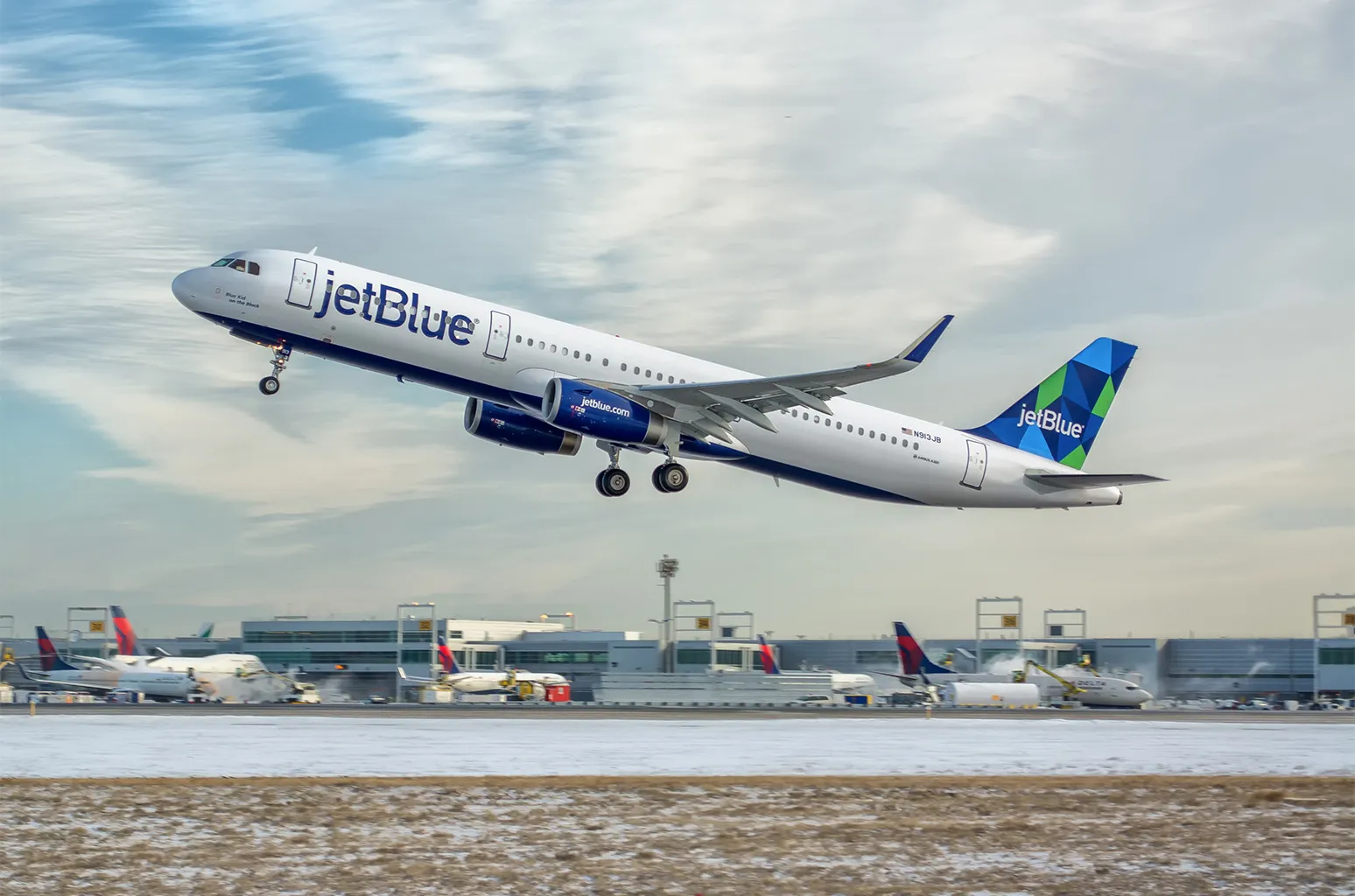
JetBlue Airways announced on Wednesday that it will cut additional unprofitable routes, adjust its European service, and redeploy aircraft with high-value Mint business class cabins to improve its financial performance. The airline aims to streamline its operations and focus on markets with higher demand to achieve consistent profitability.

Among the most notable changes, JetBlue will halt service between Fort Lauderdale, Florida, and Jacksonville, Florida, as well as several routes from New York’s John F. Kennedy International Airport (JFK) to Austin, Texas; Houston, Texas; Miami; and Milwaukee, Wisconsin. The carrier will also discontinue flights from Westchester, N.Y., and Milwaukee, along with ending service to San Jose, California.

One significant change includes the removal of planes equipped with Mint business class from Seattle flights in April. JetBlue stated that it will also cease its JFK-Miami route due to profitability issues in Miami, where legacy carriers like American Airlines and Delta dominate the market. However, the airline will continue to serve Miami from Boston.

“Florida remains a strong geography for JetBlue, but post-COVID, we haven’t been profitable in Miami due to the dominance of legacy carriers,” said Dave Jehn, JetBlue’s vice president of network planning, in a staff memo.

In terms of European operations, JetBlue revealed plans to adjust its service offerings. Starting in the summer 2025 season, it will drop its second daily JFK-Paris flight and the seasonal JFK-London Gatwick route. The carrier is also preparing to announce new European service options next week.

These operational adjustments come after JetBlue reported better-than-expected revenue and bookings for November and December, resulting in an 8% increase in shares on Wednesday. CEO Joanna Geraghty and her leadership team are focusing on cutting unprofitable routes, particularly on the West Coast, and mitigating the impact of engine issues related to Pratt & Whitney engines, while also adapting to post-pandemic demand shifts.

JetBlue assured affected customers that they would be offered alternate flight options or refunds if no other routes were available.

“We’ve made network adjustments in certain markets, removing underperforming flights and reallocating resources, including Mint service, to high-demand markets and new opportunities,” JetBlue said in a statement.