Yazılar

Dollar General Shares Drop 20% as Financial Struggles of Core Customers Trigger Downgraded Outlook

Dollar General’s shares plummeted by 20% on Thursday after the company significantly reduced its sales and profit expectations for the full year, citing growing financial pressures on its core lower-income customer base. The retailer, known for serving rural areas, now anticipates same-store sales growth of only 1.0% to 1.6% for fiscal 2024, down from the previously expected range of 2% to 2.7%. Earnings per share projections were also slashed to a range of $5.50 to $6.20, a sharp decline from the earlier forecast of $6.80 to $7.55.

The earnings report for the latest quarter also fell short of Wall Street’s expectations, with Dollar General reporting earnings per share of $1.70, missing the consensus estimate of $1.79. Revenue came in at $10.21 billion, lower than the anticipated $10.37 billion.

CEO Todd Vasos attributed the disappointing performance to “financially constrained” core customers, while emphasizing the importance of controlling the aspects of the business within the company’s reach. The steep drop in Dollar General’s stock had a ripple effect on its competitor, Dollar Tree, which saw a 6% decline in early trading as investors reacted to the news.

The downturn highlights the continued challenges faced by discount retailers, as inflation and economic uncertainty weigh heavily on lower-income consumers, leading to weaker sales performance across the sector.

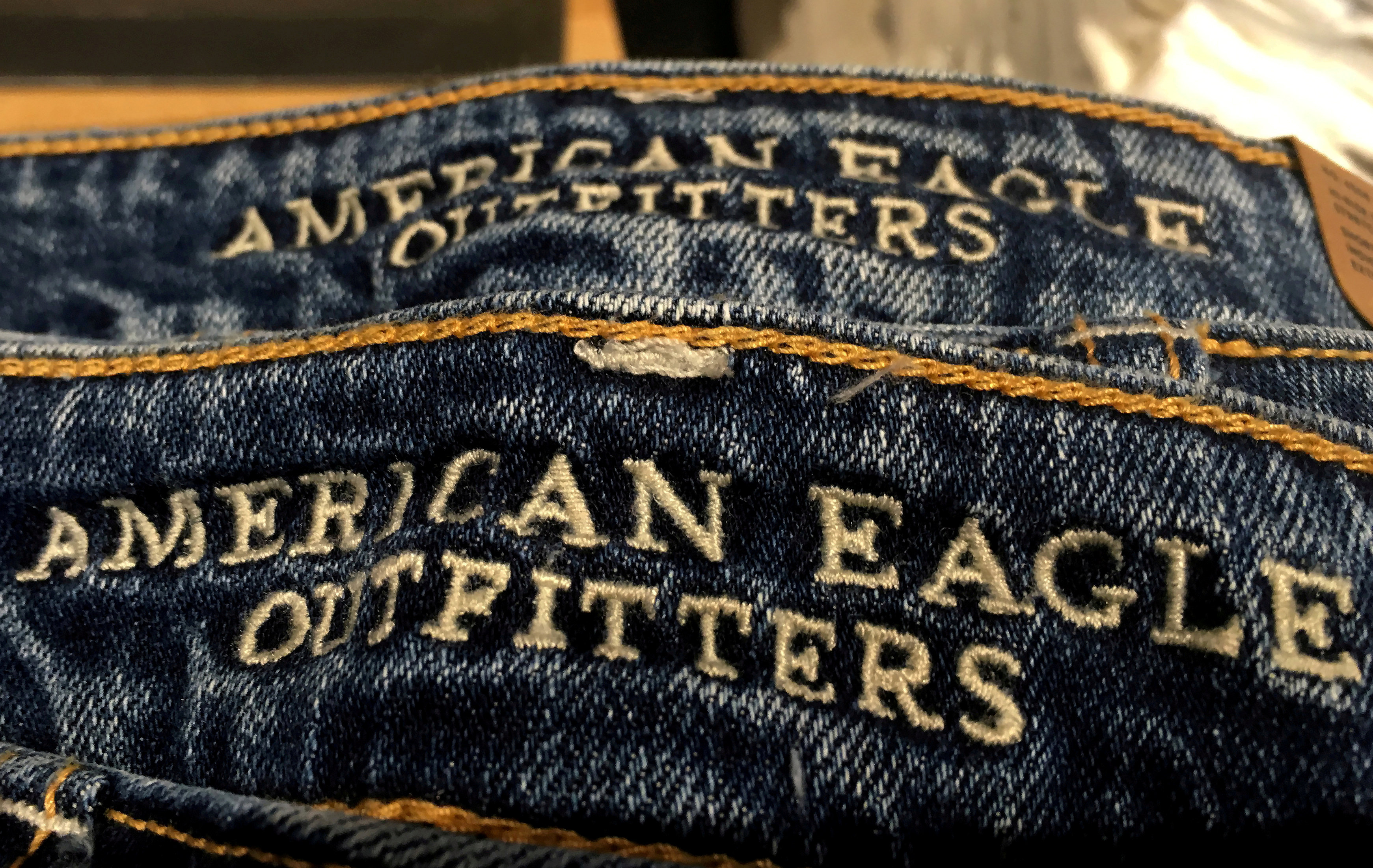
American Eagle’s Profits Surge by 60% Despite Missing Sales Targets Amid Cost Reductions

American Eagle Outfitters reported a significant 60% increase in profits for its second fiscal quarter, even though the company fell short of Wall Street’s sales expectations for the second consecutive quarter. Earnings per share reached $0.39, slightly exceeding the $0.38 predicted, while revenue came in at $1.29 billion, missing the $1.31 billion target set by analysts. This profit surge can be attributed to lower product costs, which helped the company achieve a gross margin of 38.6%, a 0.9% improvement over the previous year.

Net income for the quarter ending August 3 reached $77.3 million, up from $48.6 million in the same period last year, while sales increased by 8%, positively impacted by a calendar shift that added $55 million to the quarter’s revenue. The company’s intimates line, Aerie, saw a 9% growth in revenue, and the flagship American Eagle brand grew by 8%.

Despite strong performance in profitability, American Eagle’s shares dropped by more than 5% in premarket trading. The company has issued a better-than-expected outlook for the current quarter, anticipating comparable sales growth between 3% and 4%. However, its full-year forecast was more cautious, expecting total revenue to increase by 2% to 3%, which falls short of analysts’ expectations.

In response to slower demand for discretionary items, American Eagle has focused on cost-cutting and operational efficiencies to protect profits. The company has implemented a strategy aimed at boosting profits by 3% to 5% annually over the next three years and increasing its operating margin to 10%. For this quarter, American Eagle posted an operating income of $101 million, up 55%, with an operating margin of 7.8%.

Looking ahead, American Eagle remains cautious about the second half of the year due to uncertainties such as Federal Reserve interest rate decisions and potential economic disruptions from the upcoming presidential election.

Best Buy Raises Full-Year Profit Outlook After Beating Earnings and Revenue Expectations

Best Buy raised its profit forecast for the fiscal year after reporting stronger-than-expected earnings and revenue for the recent quarter. The company now anticipates full-year adjusted earnings per share (EPS) between $6.10 and $6.35, an increase from its previous range of $5.75 to $6.20. This comes as Best Buy works through an ongoing sales slump amid softer consumer demand following the pandemic-era tech boom and high inflation pressures.

For the quarter ending August 3, Best Buy exceeded Wall Street’s expectations, posting an EPS of $1.34 compared to the expected $1.16, and revenue of $9.29 billion against the anticipated $9.24 billion. Despite a year-over-year decline in net sales from $9.58 billion to $9.29 billion, the company’s net income grew to $291 million, up from $274 million last year.

While comparable sales fell by 2.3%, this marks a significant improvement from the 6.2% decline seen during the same period last year. The retailer has faced challenges with declining consumer electronics sales, which have been forecasted to drop another 2% in 2024 according to Circana.

Best Buy is positioning itself for recovery through several key initiatives. The company is focusing on boosting sales in computing, appliances, and home theater by deploying trained sales teams to these areas, and it is also launching a marketing campaign to engage consumers, including YouTube videos to highlight tech products.

The retailer is banking on new technology rollouts, such as Apple’s new iPads and AI-enabled laptops from Microsoft, to reignite interest and spur spending as the replacement cycle for pandemic-era tech products begins to take shape. Best Buy anticipates increasing stabilization in the industry as 2024 approaches, despite the ongoing challenges in the consumer electronics market.