
Yazılar

China Retail Sales Surpass October Forecasts Despite Deepening Real Estate Slump

China posted stronger-than-expected growth in retail sales for October, signaling early success from its recent stimulus measures, even as its real estate sector continued to struggle.


Economic Indicators at a Glance

  • Retail Sales: Up 4.8% year-on-year, surpassing the 3.8% forecast and improving from 3.2% in September.
  • Industrial Production: Increased by 5.3% annually, slightly below the expected 5.6%.
  • Fixed Asset Investment: Rose 3.4% year-to-date, missing the 3.5% estimate.
  • Real Estate Investment: Plummeted 10.3% year-to-date, marking the sharpest drop since August 2021’s 10.9% decline.
  • Unemployment Rate: Dropped to 5%, an improvement from 5.1% in September, with youth unemployment also showing signs of recovery.

Stimulus Impact and Sectoral Insights

  1. Retail Recovery:
    • October’s retail sales highlight improved consumer sentiment, bolstered by October’s Singles’ Day shopping festival. Analysts noted robust growth in sectors like e-commerce and consumer electronics.
  2. Real Estate Woes:
    • The property sector’s decline deepened, with new property sales showing narrower declines but remaining weak.
    • Authorities reiterated commitments to stabilize the sector, projecting recovery within 12–18 months.
  3. Manufacturing and Infrastructure:
    • Investments in manufacturing and infrastructure picked up slightly, reflecting a shift toward targeted economic support for foundational sectors.

Policy Landscape

China’s government has rolled out aggressive stimulus measures since September to address its economic challenges:

  • Monetary Policy: Interest rate cuts by the central bank and extended real estate support.
  • Fiscal Measures: A five-year, 10 trillion yuan ($1.4 trillion) program to alleviate local government debt, with hints of further support in 2024.
  • Consumer Incentives: Limited direct measures, but trade-in programs for cars and home appliances have helped bolster sales.

The National Bureau of Statistics emphasized the need for intensified policy implementation to meet the country’s annual growth target of around 5%.


Broader Trends and Challenges

  • Exports Surge, Imports Lag: October saw the fastest export growth in over a year, while imports remained subdued, reflecting weak domestic demand.
  • Inflation: The core consumer price index rose 0.2% year-on-year, slightly better than September’s 0.1%.
  • Golden Week Insights: Spending trends during the holiday remained cautious, though better-than-expected Singles’ Day sales hint at potential resilience in consumer activity.

Economic Outlook

China’s gross domestic product grew by 4.8% in the first three quarters, and authorities remain focused on achieving the 5% growth target for the year. Analysts remain cautiously optimistic, with signs of stabilization in certain sectors tempered by persistent domestic and international headwinds.
 

Alibaba Shares Rise 3% Following 58% Profit Surge in September Quarter

Chinese e-commerce giant Alibaba reported a substantial 58% increase in net profit for the September quarter, outpacing market expectations. The strong earnings performance drove a 3% premarket surge in the company’s U.S.-listed shares, underscoring growing investor confidence.


Key Financial Highlights

  • Net Income: 43.9 billion Chinese yuan ($6.07 billion), significantly exceeding the forecasted 25.83 billion yuan (LSEG).
  • Revenue: 236.5 billion yuan ($32.72 billion), slightly below analyst projections of 238.9 billion yuan.
  • Share Performance: Alibaba’s New York-listed shares have gained nearly 17% year-to-date and climbed 3% in premarket trading following the earnings announcement.

Drivers of Growth

  • Cloud Business Acceleration: A key contributor to Alibaba’s improved profitability, reflecting the company’s diversification beyond traditional e-commerce.
  • Singles’ Day Success: The company reported strong gross merchandise volume (GMV) for its Taobao and Tmall platforms during the annual shopping event, along with a record number of active buyers.
  • Improved Retail Metrics: October retail sales in China rose 4.8% year-on-year, surpassing expectations and indicating a rebound in consumer spending.

Challenges in the Chinese Economy

Alibaba’s results come amid broader economic sluggishness in China, including a protracted real estate market slump and a tepid retail environment. However, recent government stimulus measures — including a five-year, 1.4-trillion-yuan package — aim to revive growth.


Market Outlook

  • Analysts are closely watching Alibaba as a barometer for China’s economic recovery. ING analysts noted that the company’s trajectory remains tightly linked to the broader Chinese economy and regulatory landscape.
  • With a focus on its cloud division and increasing consumer engagement through platforms like Taobao and Tmall, Alibaba appears well-positioned to leverage improvements in domestic economic conditions.

Conclusion

Alibaba’s strong September quarter performance highlights the resilience of its diversified business model, particularly in the cloud computing sector, and signals cautious optimism amid ongoing economic challenges in China. The company’s future growth will likely hinge on the effectiveness of government stimulus measures and the pace of recovery in consumer sentiment.


China’s Q3 GDP Slows to Weakest Pace Since Early 2023, Prompting Calls for More Stimulus

China’s economy grew at its slowest pace since early 2023 in the third quarter, as the country’s ongoing property sector crisis continues to hamper growth. Although consumption and factory output exceeded expectations in September, the real estate downturn remains a significant challenge. Beijing has introduced several stimulus measures, but markets are still waiting for more clarity on the scope of these interventions and how they will support long-term growth.

In the July-September period, China’s GDP expanded by 4.6%, slightly above the forecast of 4.5% but below the 4.7% growth seen in the second quarter. Bruce Pang, Chief Economist at JLL, noted that this performance was largely expected, citing weak domestic demand, a struggling housing market, and sluggish export growth as key factors behind the slowdown. He emphasized that the effects of the late September stimulus package will take time to materialize and bolster growth in the coming quarters.

Despite these challenges, Chinese officials expressed confidence in achieving the government’s annual growth target of around 5%. Sheng Laiyun, deputy head of China’s statistics bureau, stated during a post-data press conference that further policy support, including a reduction in banks’ reserve requirements, would help sustain the economic recovery. He predicted continued stabilization in the fourth quarter, underpinned by improved consumption and industrial output figures.

While industrial output and retail sales data for September beat forecasts, the property sector remains a sore spot. Betty Wang, an economist at Oxford Economics, downplayed the significance of the better-than-expected September numbers, noting that structural issues in the real estate and household sectors persist. She warned that while the recent stimulus measures may cushion downside risks to 2024 growth, they are unlikely to reverse the broader structural downturn.

A Reuters poll suggests China’s economy will expand by 4.8% in 2024, below Beijing’s target, with growth slowing further to 4.5% in 2025.

PROPERTY SECTOR WOES

On a quarter-to-quarter basis, the economy grew by 0.9% in Q3, up from a revised 0.5% in Q2, but below the forecast of 1.0%. The weakness of the property sector remains a central concern, as real estate accounts for 70% of Chinese household wealth and once contributed up to a quarter of the country’s economy. Consumers, wary of the property market’s instability, have cut back on spending, negatively impacting businesses dependent on robust domestic demand. For example, eyewear maker EssilorLuxottica, which produces Ray-Ban and Oakley brands, reported missing revenue targets in Q3 due to weak Chinese consumer demand.

Further compounding worries, new home prices in China fell at the fastest rate since 2015 in September, indicating that the property market remains in crisis despite multiple rounds of policy support over the past year. Additionally, China’s crude steel output fell for the fourth consecutive month, reflecting sluggish demand for construction materials.

While the export sector has been a rare bright spot for China’s economy, growth in exports slowed sharply in September, raising concerns about the sector’s future performance.

DEFLATIONARY PRESSURES AND POLICY RESPONSE

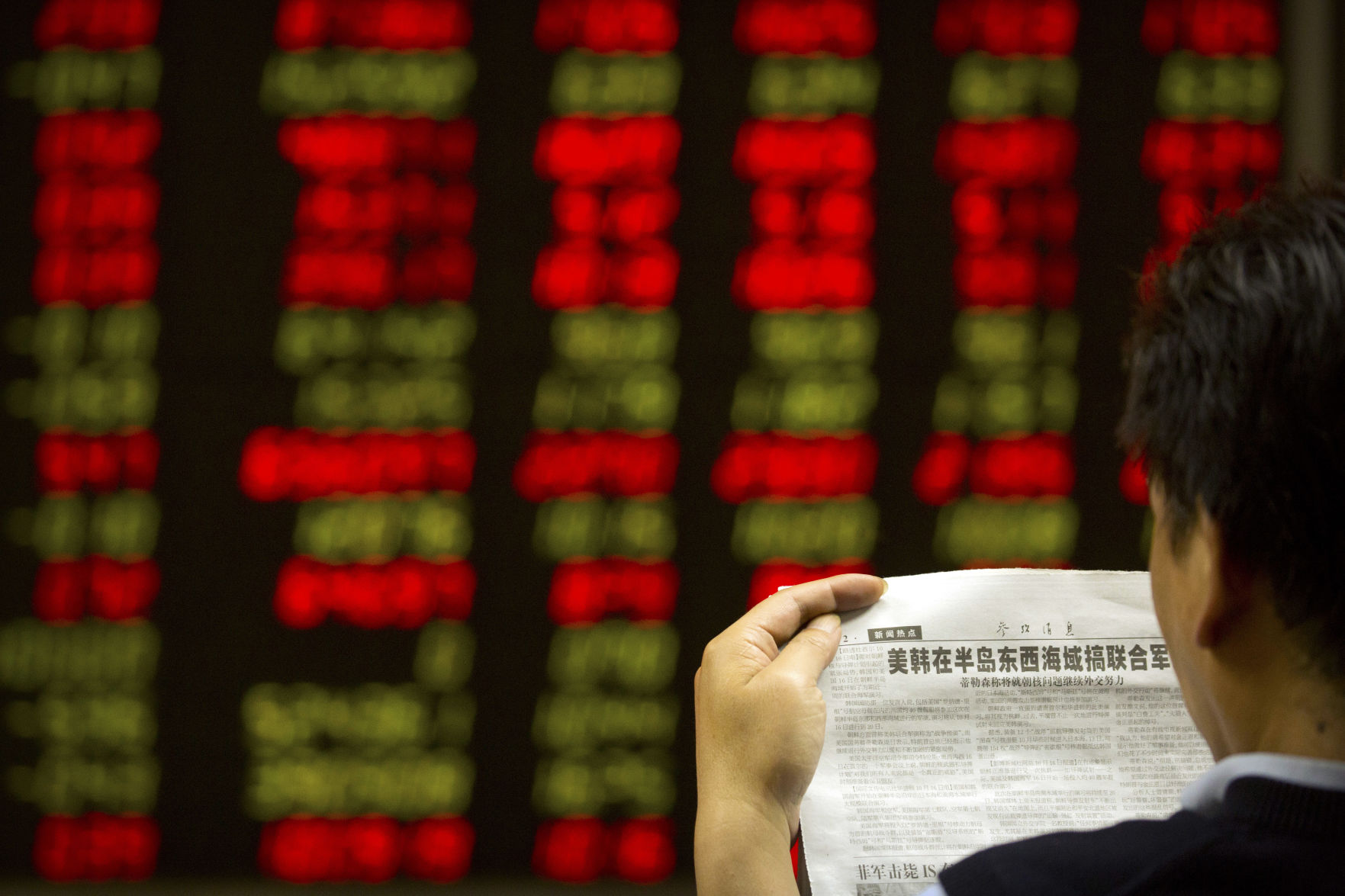
Following the release of the Q3 data, China’s stock markets were volatile but eventually rallied. The blue-chip CSI300 Index rose by 2.5%, and the Shanghai Composite gained 2.0%, boosted by new central bank funding schemes aimed at supporting the equity market. However, some economists believe China is grappling with deflationary pressures, which have persisted since early 2023. Toru Nishihama, Chief Economist at Dai-Ichi Life Research Institute, warned that China faces excess supply and weak demand, suggesting the country may fall into full-fledged deflation.

Policymakers have pledged to shift from relying on infrastructure and manufacturing investments to focus on stimulating domestic consumption. The central bank rolled out aggressive monetary support in late September, the most substantial measures since the COVID-19 pandemic, to bolster the property and stock markets. However, markets remain skeptical, as details about the total size of the stimulus package and the government’s long-term growth strategy remain unclear.

China faces structural challenges, including overcapacity, high debt levels, and an ageing population. Nishihama stressed that while the government has introduced numerous stimulus measures, it has yet to address these fundamental problems, leaving markets uncertain about the future trajectory of China’s economic recovery.