Yazılar

STMicroelectronics Cautious on 2025 Outlook Amid Weak Q1 Forecast

STMicroelectronics (STMicro), one of Europe’s leading semiconductor manufacturers, announced on Thursday that it is too early to provide full-year guidance for 2025, as market uncertainties and inventory corrections continue to weigh on its business. The company warned that sales would decline further in the first quarter, reflecting a prolonged downturn in key markets.

STMicro’s stock fell 6.8% to 22.18 euros by 1226 GMT, hitting its lowest level since June 2020. CEO Jean-Marc Chery told analysts that the company expects the first quarter to mark the low point for 2025 but refrained from offering a full-year outlook due to limited visibility in demand recovery.

The company forecast first-quarter revenue of $2.51 billion, a nearly 28% year-over-year drop, falling short of analysts’ expectations of $2.72 billion, according to LSEG’s IBES data. This follows an earlier warning in November about a steeper-than-usual seasonal revenue decline.

The broader semiconductor industry is facing headwinds, with Texas Instruments, a key competitor, also reporting weak first-quarter projections due to inventory buildup in the automotive and industrial sectors.

To manage the downturn, STMicro plans to significantly reduce production days across its fabrication plants, assembly, and test facilities. Finance chief Lorenzo Grandi stated that some manufacturing sites would undergo temporary closures in the first quarter, with additional reductions likely extending into the second quarter.

Despite these challenges, STMicro reported fourth-quarter net income of $341 million, exceeding analysts’ estimates of $326 million. Strong performance in personal electronics partially offset declining industrial sector revenues.

For 2025, the company plans to scale back capital expenditures, targeting an investment of $2 billion to $2.3 billion, compared to $2.53 billion in 2024 and $4 billion in 2023.

 

Intel Faces Investor Scrutiny Amid CEO Search and Declining Revenue

Key Highlights:

  • Intel is under intense investor scrutiny as it prepares to report its quarterly results, expected to show a 10.4% drop in revenue, primarily due to weak PC sales and shrinking market share in the datacenter sector.
  • The chipmaker recently ousted CEO Pat Gelsinger and appointed two interim co-CEOs, Michelle Johnston Holthaus and David Zinsner, raising questions about its future strategy, especially regarding its contract chip manufacturing business.
  • Intel plans to make its foundry business an independent unit and may consider spinning it off if its 18A chipmaking technology doesn’t succeed.
  • Intel’s market cap is currently around $85 billion, but analysts suggest it should be valued closer to $120 billion, highlighting concerns over its manufacturing lead and lack of progress in the AI boom, dominated by rivals like Nvidia.

Financial Outlook and Challenges:

  • Revenue is projected to fall 10.4% to $13.81 billion in Intel’s fourth-quarter earnings, with a 9 percentage point drop in gross margin to 39.4%.
  • Datacenter revenue, which includes Intel’s server chips, is forecast to decline by more than 15% for the 11th consecutive quarter. This is largely due to the shift by major cloud providers, such as Microsoft, toward AI chips and away from Intel’s traditional server processors.
  • Intel’s personal computer revenue, its largest segment, is expected to fall by 11% as PC sales remain subdued. Rival AMD continues to gain market share, especially in the x86 CPU market.
  • The company is also facing margin pressures, with its Gaudi AI chips, a lower-cost alternative to Nvidia’s expensive processors, failing to meet sales targets.

Strategic Challenges:

  • Intel has been grappling with the high costs of catching up with TSMC in chip manufacturing and is struggling to regain its lead in both the server and personal computer markets.
  • Despite these challenges, analysts note that Intel’s strategic importance to U.S. chip manufacturing remains high, with government support likely to continue.
  • The company’s focus on returning to growth has sparked discussions about the need for a new CEO to lead its recovery efforts and revitalize its position in the semiconductor industry.

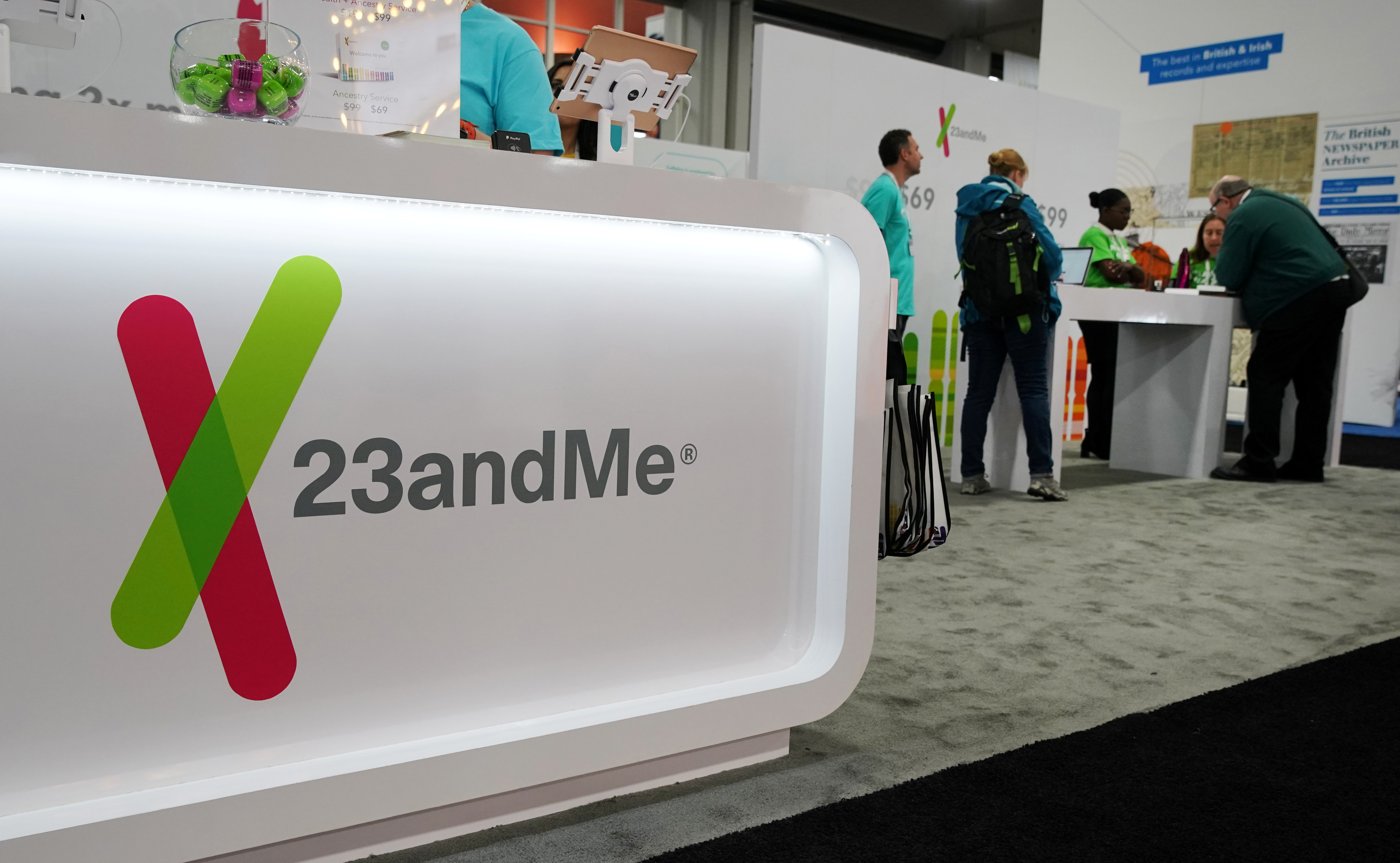
23andMe Announces Major Layoffs and Reports Revenue Decline Amid Strategic Shift

On Tuesday, genetic testing company 23andMe reported a revenue decline for its latest fiscal quarter, following its announcement of significant workforce reductions and the closure of its therapeutics division. The company’s revenue for the fiscal second quarter dropped to $44.1 million from $50 million during the same period the previous year. However, 23andMe did report a reduced net loss, down to $59.1 million (or $2.32 per share), compared to a loss of $75.27 million (or $3.17 per share) a year prior.

As part of a restructuring plan, 23andMe revealed on Monday that it would cut 40% of its workforce, impacting over 200 jobs, and wind down all therapeutics programs and ongoing clinical trials. The company is exploring options, including asset sales and licensing agreements, to derive value from its existing therapeutic programs. CEO Anne Wojcicki expressed gratitude to the affected employees and underscored the importance of these steps to refocus on the company’s core consumer services and research collaborations.

The company’s shares have seen significant drops, falling slightly on Tuesday and down roughly 75% for the year. 23andMe has struggled with maintaining its Nasdaq listing, with shares previously below $1 until an October 1-for-20 reverse stock split. In September, all seven independent board members resigned, citing disagreements with Wojcicki regarding the company’s strategic direction. Since then, three new independent directors have joined the board.

Wojcicki has indicated her intention to take 23andMe private, emphasizing that this direction is the most viable for the company’s future. During Tuesday’s earnings call, she stated that the company had taken steps to regain Nasdaq compliance by reconstituting its board and implementing the reverse stock split. Although she did not discuss privatization plans in detail, a September SEC filing reaffirmed her commitment to pursue this path without considering third-party acquisition offers.